

Audio-book Review
By Chet Yarbrough
Blog: awalkingdelight)
Website: chetyarbrough.blog
A History of France
By: John Julius Norwich
Narrated by: John Julius Norwich

John Julius Norwich (Author, English historian, travel writer, television personality, Royal Navy veteran with degrees in French and Russian from Oxford.)
John Norwich’s “A History of France” is an intimidating summary of a country that makes one understand how young and inexperienced America is in the history of nations.

France is recognized as a nation in 987 with its first King, Hugh Capet, born in 939-died in 996 at the age of 56 or 57. (King of the Franks from 987-996.)
The actual title King of France is not used until the crowning of Phillip II in 1190 (a descendant of Capet) who died in 1223 at the age of 57. Norwich’s “…History…” recounts the many Kings of France since Phillip II.
The longest serving King is Louis XIV (the Sun King) who ruled from 1643 to 1715 (a total of 72 years).

King Louis XIV moved the center of French government to the Palace of Versailles in 1682. He is the third of five Bourbon Kings of France. King Louis XIV is noted to have expanded France’s borders while centralizing power in France. Norwich notes Louis XIV’s wife, Maria Theresa of Austria, plays a significant role in France’s history. Theresa’s three major accomplishments are to create education for serfs, consolidate the French government’s financial system, and create a unified judicial code that became a foundation for Central European Laws.

The last Bourbon King of France is Louis XVI and his queen, Marie Antoinette, who are deposed and beheaded after the 1789 revolution.
The brutality of the revolution is exemplified by factions called Royalists, Jacobins, and Montagnards. The Royalists supported monarchy and the Catholic Church. The Jacobins founded the 1789 Nation Constituent Assembly that wished to moderate authoritarianism, offer equal rights to French citizens with government intervention to insure social change. The Montagnards campaigned for the needs of the working and poorer classes of French society.
The 1789 revolution eventually led to the rise of Napoleon Bonaparte who through ascension and a series of military conquests reestablishes a French monarchy under his rule.

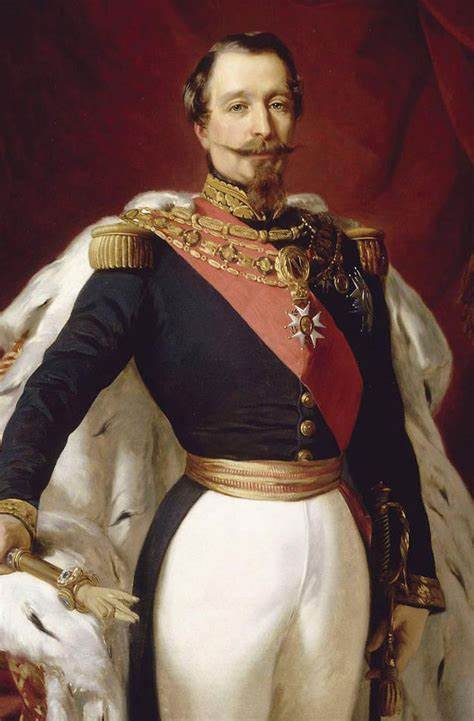
Charles-Louis Napoleon Bonaparte becomes the first president of France which is recognized as a Republic. However, though France is a Republic between 1848 and 1852, Charles reestablishes the monarchy in 1852 until he is deposed in absentia in 1870.
A new faction is formed called the Bonapartists. This faction roiled France throughout the 19th and into the early 20th century.
As the nephew of Napoleon, King Charles oversaw the modernization of the French economy. However, reestablishing the monarchy and his failure in the Franco/Prussian war led to a famine that permanently turned the French against monarchal rule.
Seven French revolutions finally ends France’s monarchy. However, each revolution precipitated chaos, and declarations of war from other monarchies. The final death of French monarchy did not occur until liberation after WWII.
Norwich explains there were actually seven revolutions before France becomes a permanent republic.

The first is the 1789 revolution which is most widely known by Americans. The irony of that revolution’s importance is France’s considerable support of America’s revolution in 1776. The newly established French government did not have a leadership group that could create a republic that could manage the monumental inequities of its long-established French culture. The repression of the poor created by centuries of royal leadership entailed too much animosity to avoid the Reign of Terror that caused the execution of thousands of French citizens. As many as 40,000 people were said to have been killed. It would take six more revolutions to create the lasting Republic of France.

- The French Revolution (1789-1799)
- The Napoleonic Era (1799-1815)
- The July Revolution (1830), a 3 day uprising that overthrew King Charles X because he tried to restore absolutism and censor the press.
- The February Revolution (1848), based triggered by economic hardship, discontent, and social unrest.
- The Second Empire (1852-1870), a coup against Napoleon III despite the improvements made to France, he poorly manages and loses the Franco-Prussian War of 1870.
- The Third Republic (1870-1940) did establish a parliamentary democracy but is tarnished by antisemitism, and WWI that killed millions of French soldiers.
- The Vichy Regime that collaborated with Nazi Germany led to the 7th and final revolution against monarchy and for a Republic.

The collaboration of France’s Vichy Regime and Chamberlain’s appeasement agreement with Hitler’s Germany are lessons for today’s handling of Russia and the invasion of Ukraine.
The world did not fully respond to Hitler with force when Germany invaded Poland. Hitler, like Stalin and Putin, presumed the world would not respond to Germany’s taking of a sovereign country.

Whether Putin directs the murder of any opposition to his rule is not a question that can be answered but the imprisonment of Navalny and the death of Yevgeny Prigozhin is reminiscent of Hitler’s lies to the world.

The question of whether the free world should support Ukraine in every way possible can be answered. The answer is yes because Putin like Hitler will not stop.

 REVIEWS AND VIEWS OF LIFE