

Audio-book Review
By Chet Yarbrough
Blog: awalkingdelight)
Website: chetyarbrough.blog
Looking for the Good War: American Amnesia and the Violent Pursuit of Happiness
By: Elizabeth D. Samet
Narrated by: Suzanne Toren

Elizabeth D. Samet (Author, Professor of English at West Point.)
Elizabeth Samet’s “Looking for the Good War” tells a hard truth about war. Samet’s history of war is like the refrain from the Temptations’ song:
War, huh yeah
What is it good for?
Absolutely nothing, oh hoh, oh
War huh yeah
What is it good for?
Absolutely nothing, say it again y’all

As a professor at West Point, it seems incongruous for Samet to write this book. On the other hand, who would better understand a career for future military officers than a West Point’ professor? The command structure of the military requires soldiers do what they are ordered to do. In that doing, they may lose their minds, their lives, or their physical health. Samet raises the hard truth of every war, i.e., a soldier’s duty is to follow orders and when necessary, kill or be killed.
Samet questions stories, films, and images that glorify war.
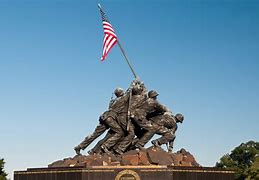
Samet implies, once war is declared, its causes and consequences become fictionalized tales.

Truth of war becomes distorted by memory, and human bias that is memorialized by the visual arts and literature. The support for Samet’s view of war is in art and media representations of its history. From Picasso’s Guernica that illustrates the real horror of war to movies like Sands of Iwo Jima, war’s reality is distorted. Art and literature tell different truths.


Samet often refers to Shakespeare’s plays and his many observations about war, i.e., about its perpetrators and victims. From Julius Caesar to Richard III, to Henry IV, to Henry V, to Henry VIII, Samet quotes Shakespeare’s lines like
“Cry havoc’ and loose the dogs of war, That this foul deed shall smell above the earth With carrion men, groaning for burial.”

Samet argues Tom Brokaw, and Robert Rodat (screenwriter for “Saving Private Ryan”) glorify the winning side of WWII by choosing narratives that distort the true nature of war.
Samet is not alone in her opinion about the history of war distorting truth. American author and television writer, Rebecca Serle says the same. To Serle and Samet, history is a personalized perception, a truth imprinted on the minds of combatants. This personalized truth is an interpretation of what one experiences. War’s events are interpreted by the understanding of those who choose to write, paint, or film war’s events. War’s events become interpretations of interpretations. Samet implies a “…Good War…” is oxymoronic, a contradiction of words because there are no good wars.
American author and television writer, Rebecca Serle, wrote “History, memory is by definition fiction. Once an event is no longer present, but remembered, it is narrative. And we can choose the narratives we tell–about our own lives, our own stories, our own relationships.”

Samet is arguing no war is a good war because war is inherently bad for the mental and physical existence of human life. She argues narratives of America’s Civil War are prime examples of the distortion of truth about a “…Good War…” in the same sense as Brokaw’s WWII narrative. Samet coldly notes America’s idealization of rebel opposition to union and civil rights falls into the same category as the idealization of America’s role in WWII. There were singular brave actions in both wars, but those stories of bravery distort the reality of death and destruction, murder of human beings, an aftermath of coping with loss or permanent injury of loved ones, and the consequence of destroyed homes and economies of warring nations. Both WWII and America’s civil war solved nothing. Discrimination has not disappeared. Mass killings still occur. The only difference is in the organization, execution, and volume of deaths and injuries. There is no “…Good War…”
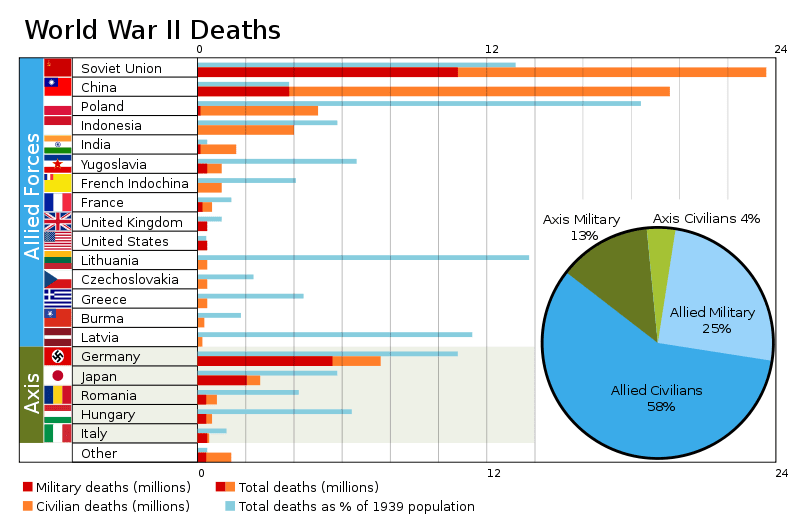

Just as America did not save the world for democracy in WWII, America’s Civil War did not erase institutional racism. Racism hardened after America’s civil war and continues to this day.
Axis powers chose to wage war just as Allied powers chose to defend themselves. The story told by victors tends to view war by focusing on heroic events of conflict rather than war’s atrocity and aftermath. The story told by losers is one of blame for miscreant leaders who misled their countries into war. Both stories are fictions to justify new leader’s perceptions of reality. More importantly, Samet clearly explains how memory distorts the truth of what is accomplished by waging war.
Samet is simply writing about the fundamental truth–war is hell for all human beings, whether victors or losers.

The upside-down world of George Orwell notes “War is peace, Freedom is slavery. Ignorance is strength.” This is the world of which Samet writes. Samet explains what Orwell satirizes. War is hell. “Equal rights” are an unaccomplished ideal. Ignorance of war’s truth is compounded by distorted memories of the past.
As seen in Ukraine, Myanmar, Ethiopia, and Sudan–wars continue to roil the world. War is only a destroyer, not a builder of society. Samet implies the truth of war will continue to be distorted by both victors and losers who tell the tale.

 REVIEWS AND VIEWS OF LIFE
2 thoughts on “WARS TRUTH”