

Audio-book Review
By Chet Yarbrough
Blog: awalkingdelight)
Website: chetyarbrough.blog
Windfall (How the New Energy Abundance Upends Global Politics and Strengthens American Power.)
By: Meghan L. O’Sullivan
Narrated by: Eliza Foss

Meghan L. O’Sullivan (Author, Harvard professor, Former deputy national security adviser on Iraq and Afghanistan, worked in the George Bush administration.)
Meghan O’Sullivan offers an intelligent but flawed view of today’s world. It is true that energy is critical for economic growth and improved human life. It is also true that energy need and development cause international conflicts in the post-industrial world. O’Sullivan does a masterful job explaining the role of energy, noting its cost while explaining fossil fuels are at a turning point in history.
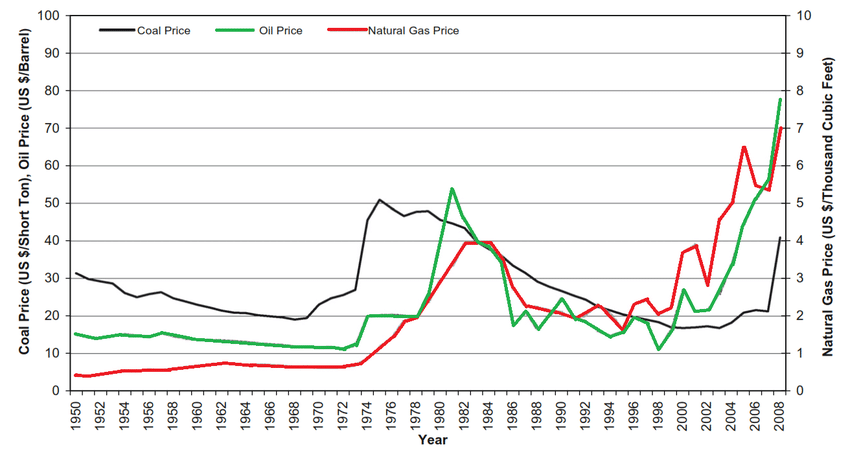
One is the recognition of energy’s environmental consequence and conservationists’ political response; two, energy’s extraction is becoming less costly for most fossil fuels. And three, technological advancement offers alternative sources of energy.
What O’Sullivan correctly notes is that energy will remain a driving force behind international relations.

However, her argument is flawed by suggesting governmental restrictions on discovery and growth of fossil fuels should be weakened. Even in the few years since publication of O’Sullivan’s book, the science of fossil fuel pollution is showing accelerating global warming with potential for a “no-return” human’ consequence. Global warming seems self-evident. That evidence does not change O’Sullivan’s insight to the outsize role energy plays in the real-politic world of today, yesterday, and tomorrow.

O’Sullivan loses a bet with a colleague that Russia would challenge world peace within five years of 2013. She was right, but it took a couple years longer for Russia’s re-invasion of Ukraine.
O’Sullivan correctly foretold Putin’s kleptocratic government’s intent to re-establish Russia’s place in the world by using its fossil fuel abundance to lure Europe and Asia with their need for energy. Putin’s drive to offer oil and/or gas pipelines to Germany, China, and Turkiye are meant to assuage their opposition to Ukraine’s invasion. Though China is somewhat supportive of Putin, it has little to do with its energy need but more to do with China’s opposition to U.S. involvement in their sphere of influence. In response to the Ukraine invasion, Germany found alternative sources for Putin’s pipelined energy with imported LNG (liquified natural gas). To some extent, Putin’s energy ploy worked. China, India, and Turkiye continue to buy oil from Russia despite its invasion of Ukraine. Their national interests outweigh their concern about Russia’s invasion, just as Putin undoubtedly calculated.
Energy’s role in the modern world is well documented by O’Sullivan. She notes the history and future of energy and how it will continue to roil international relations.


The cost of energy influences world leaders to exploit the environment despite its harm to society.
Exxon Valdez Oil Spill.
Coal continues to be burned for energy around the world because it is the least expensive.
Malaysia coal fire plant.
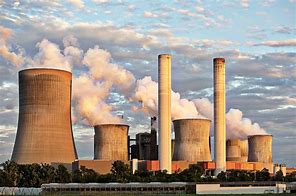
Technological innovation is decreasing natural gas costs which, though less environmental damaging than oil or coal, is becoming more widely used. Natural gas remains a pollutant. It is estimated to be 50-60 percent less polluting than coal and 20-30 percent less polluting than oil. (A caveat to the less pollution from natural gas is that it is being used in newer and more efficient energy producing facilities.) This argument does not change O’Sullivan’s flawed argument that restrictions should be removed, weakened, or moderated for further fossil fuel technological development and extraction.

O’Sullivan remains correct in noting how energy is key to peace in the world. The vast natural gas find by Israel, called the Leviathan Reservoir, makes Israel’s influence in the Middle East much greater. Israelis use their natural gas’ find to improve their relationship with Middle East powers. On the other hand, it seems to give license to Israel to repress dislocated Palestinians as irreconcilable enemies.

Energy is both a weapon and tool of peace.
Where O’Sullivan’s book is less convincing is in its inference that the energy industry should be given free rein to continue developing fossil fuels. Even if energy is critical to the sovereign right of every country in the world, degradation of today’s environment makes fools of us all.

 REVIEWS AND VIEWS OF LIFE