
Audio-book Review
By Chet Yarbrough
Blog: awalkingdelight
Website: chetyarbrough.blog
When Women Ruled the World
The Chancellor
By: Maureen Quilligan By: Kati Marton
Narrated by: Suzanne Torne Narrated by: Alex Allwine, Kati Marton
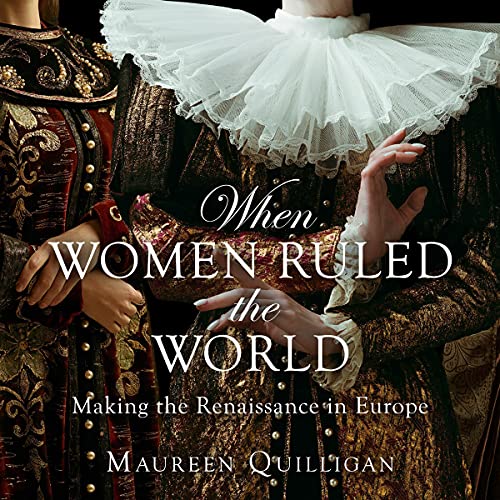

Maureen Quilligan and Kati Marton illustrate how mistaken society is in forsaking women as leaders of the world. Quilligan argues four famous women “…Ruled the World” in the 16th century. “The Chancellor” addresses one woman who “…Ruled the World” in this century.
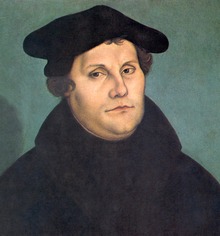
Quilligan explains an overriding conflict in the 16th century is a schism in the church. In 1517, Martin Luther posts the 95 Thesis that accuses the Catholic Church of selling indulgences to forgive sin to pave the way to heaven.
During Henry VIII’s reign (1509-1547) his first marriage to Catherine of Aragon does not produce a male heir to the throne. Henry wishes to dissolve his marriage to Catherine and marry Anne Boleyn. However, he needs an annulment from the Pope to marry Boleyn. The Pope resists.
Henry the VIII takes advantage of the growing schism in the church, exemplified by the 95 thesis. At the same time, as some historians note, Henry wishes to confiscate Catholic property in England to replenish the royal treasury. Henry the VIII creates the “Church of England” in 1534 as an alternative to the Papal Church in Rome. The Church of England annuls Henry VIII’s marriage to Catherine and the confiscation of Catholic Church property begins.
With the formation of the Anglican Church, England becomes Protestant which is the faith of Elizabeth I, the daughter of King Henry and Anne Boleyn.
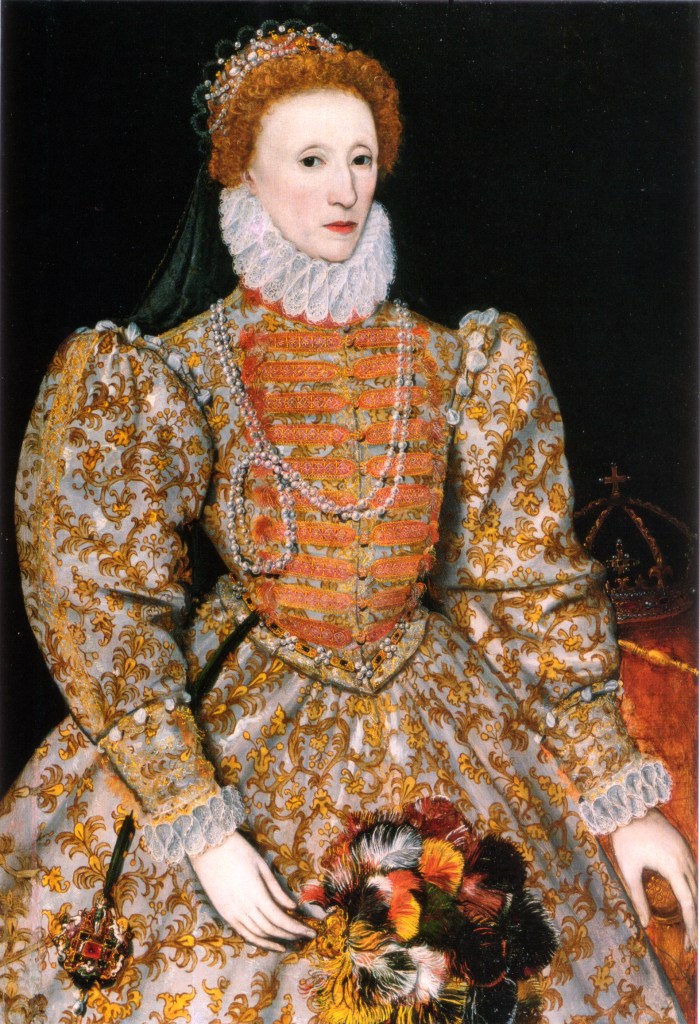
Still, even after the marriage to Boleyn, there is no male heir. Catherine of Aragon remains Catholic, along with her daughter who becomes Queen Mary I of England after Henry’s death. Mary I, as a Catholic, is half sister to Elizabeth I who is Protestant. Mary I rules as a Catholic despite her half sister’s insistence on remaining Protestant.
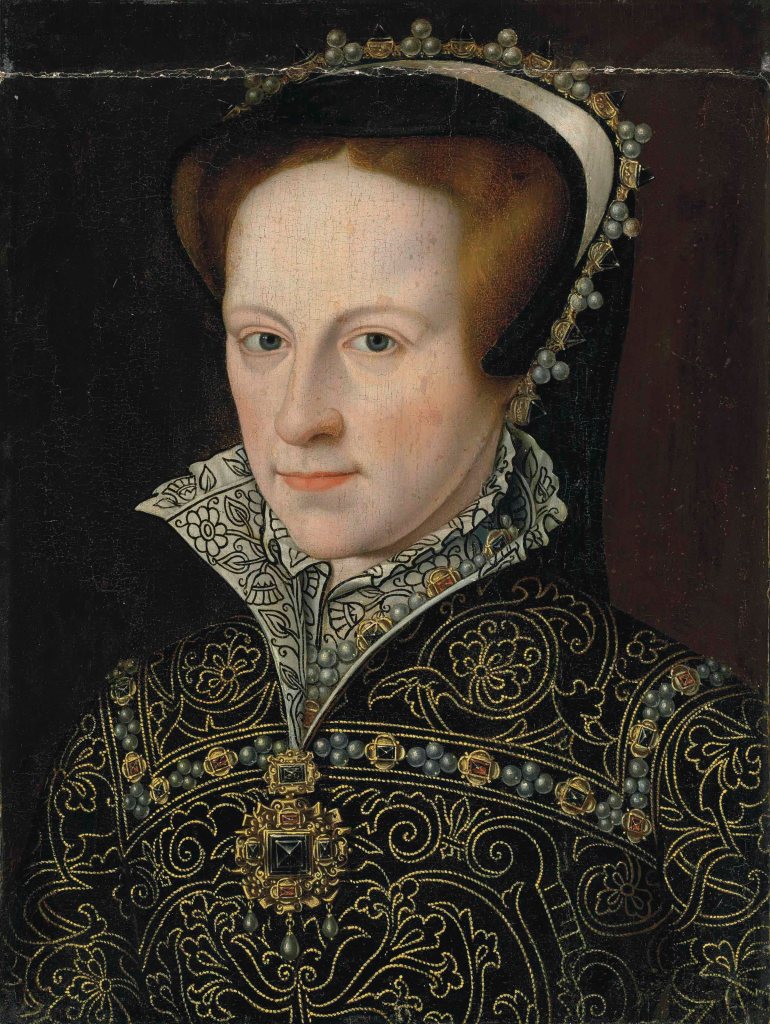
Quilligan recounts the religious differences between Queen Mary I and Elizabeth, but Quilligan suggests they remain close, bound by their father and their sisterhood.
Queen Mary I of England (1516-1558)
Upon the death of Mary I, Elizabeth I ascends the throne as a Protestant Queen replacing England’s Catholic Queen. Quilligan explains religious differences were important but Mary I and Elizabeth I maintain a sister to sister relationship despite there religious difference. Quilligan implies Elizabeth I knew that maintaining a good relationship with Mary meant she would one day become Queen of England.
Quilligan then turns to Scotland’s monarch. Scotland’s history shows Mary Queen of Scots is a committed Catholic leader. She brutally persecutes Protestants during her reign and becomes known as “bloody Mary”.
Mary Queen of Scots (1542-1587)
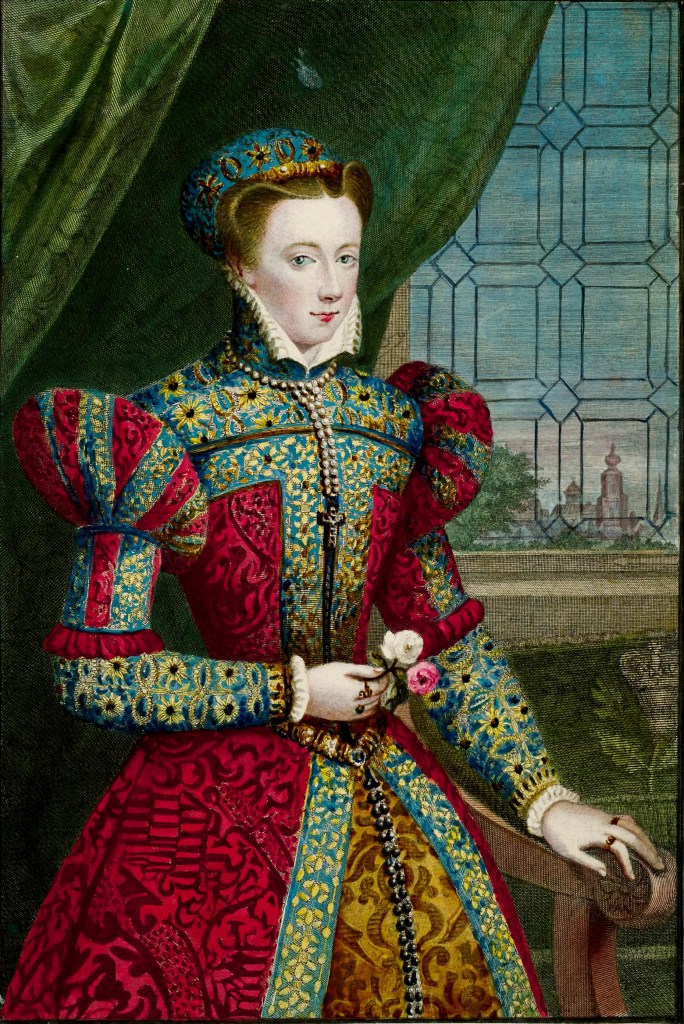
Quilligan characterizes the relationship between Mary Queen of Scots, and Elizabeth I as friendly (almost sisterly), but a plot to assassinate Elizabeth I leads to the beheading of Mary Queen of Scots. The irony of that act is that Elizabeth paves the way for Prince James, the son of Mary Queen of Scots, to become James I, King of England after Elizabeth’s death.
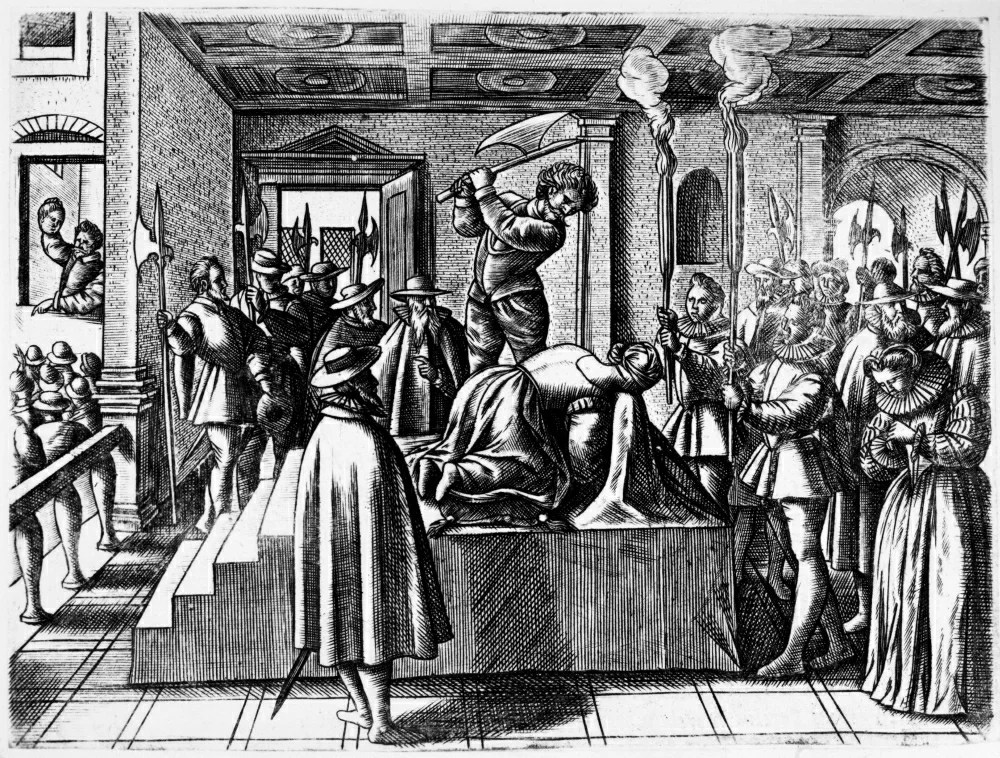
The beheading of Mary Queen of Scots is said to have required two strokes with the first not completely severing her head. To some, Mary Queen of Scots became a martyr.
Elizabeth is known as the virgin queen but her sister-like relationship with the beheaded Scottish Queen gave Elizabeth a somewhat motherly relationship with James. However, Elizabeth (after her long reign) refuses to identify an heir at her death. Other historians note that James I ascends the throne by presumption and selection by remaining leaders of England, after Elizabeth’s death. Quilligan notes James I is a committed Protestant rather than a Catholic like his mother.
Maureen Quilligan’s history is less convincing about women who ruled the world because it relies on recollected details from scant original documents and facts proffered by other historians.
Quilligan’s book about women that ruled the 16th century world seems hyperbolic and only marginally convincing. Quillian’s argument for at least one woman of the 16th century who ruled the world is credible–based on Elizabeth I’s long reign and her acclaim by most historians.

Quilligan explains Elizabeth I, Mary I, Mary Queen of Scots of (bloody Mary), and Queen Catherine de’ Medici of France are world leaders.
Queen Catherine de’ Medici (1519-1589)
They were leaders in the 16th century but the author’s reported facts only fit the book’s catchy title. Quilligan’s history fails to convince listener/readers that women ruled the 16th century world. Spain is noted as the strongest world power of the 16th century. Spain was largely ruled by Kings with only one Queen (Queen Isabella) who ruled for four years of the 16th century.

There are boat loads of original source material that confirm Merkel is a great ruler of the world. Merkel serves Germany while 3 Presidents (George W. Bush, Barack Obama, and Donald Trump) are elected in the U.S. Marton convincedly explains why Merkel is a great woman leader of the 21st century world. Marton explains how Merkel comes to power in Germany. Merkel’s remarkable rise beggars imagination.
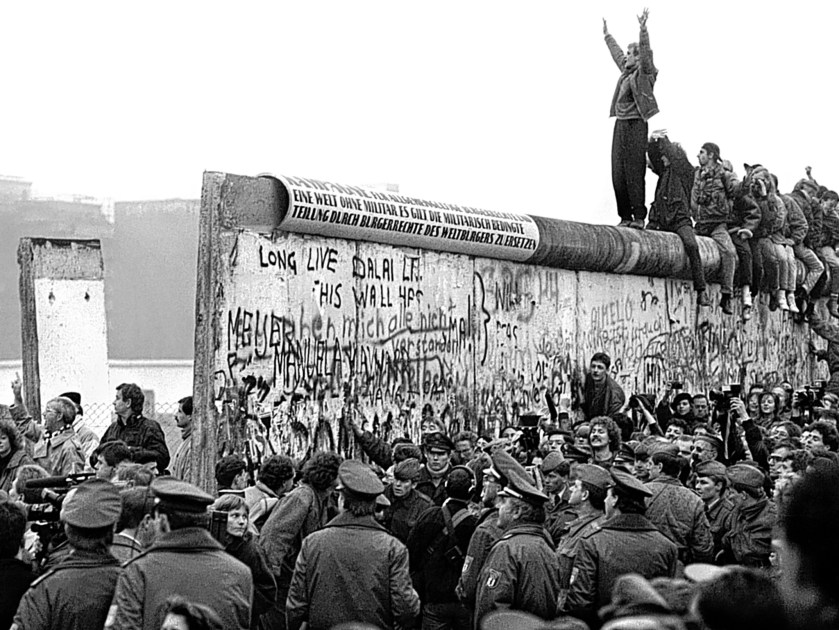
The fall of the Berlin wall in 1989 reunites Germany.
Merkel is raised in East Germany as a scientist, fluent in Russian and German, and then as an English speaker, when she chooses to become a national politician. In 16 years Merkel, an unknown quantum chemist, becomes leader of the third wealthiest country in the world with only the U.S. and Japan having higher GNPs.
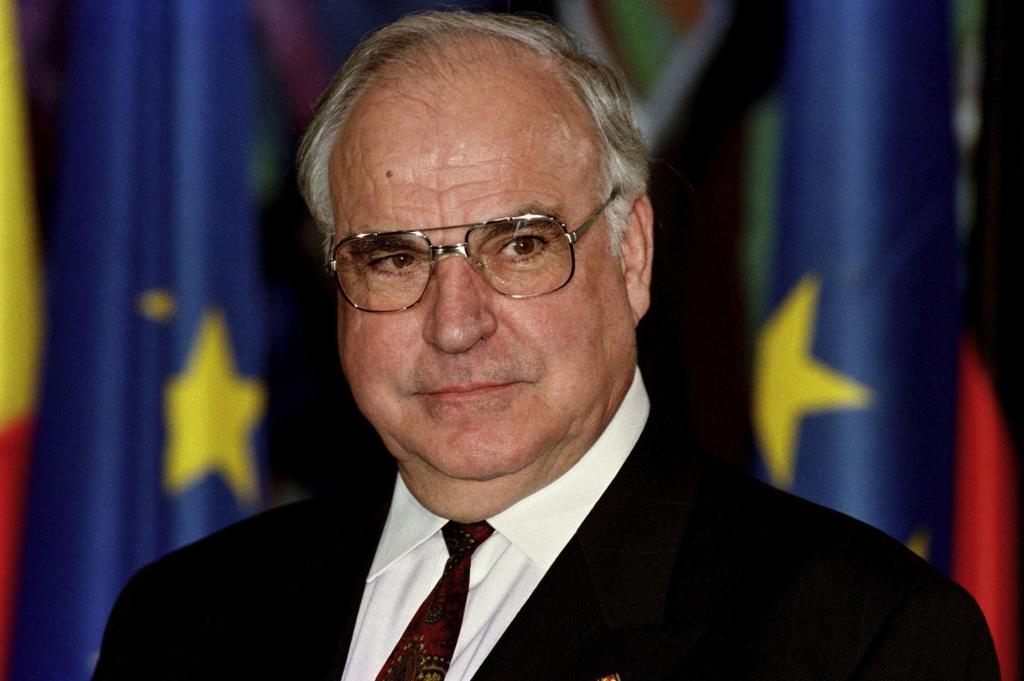
Kohl recognized the political value of Merkel early in her political career. She represented East Germany’s zeitgeist because she lived the life of an East German. When Kohl loses the Chancellorship to Gerhard Schroeder, the table is set for Merkel to challenge Schroder for Germany’s seat of power.

Kohl’s last race is against Schroeder. Kohl is expected to be reelected. An exposed financial scandal ruins Kohl’s chance. He is beaten by Gerhard Schroeder.
Gerhard Schroeder (Former Chancellor of Germany.)
Marton explains what you see is what you get with Angela Merkel. Though much of Merkel’s rise in politics is due to Helmut Kohl’s support and sponsorship, she forthrightly and publicly criticizes Kohl for using an intricate web of secret bank accounts to illicitly finance the party that had got him elected. Schroeder beats Kohl but is challenged by Merkel for Chancellor in 2005. Schroder loses re-election and Merkel becomes the first woman in history to become Chancellor of Germany.
Marton explains how Merkel abjures the macho machinations of Vladimir Putin and directly confronts Putin’s lies about Russia’s Ukraine incursion in 2014.
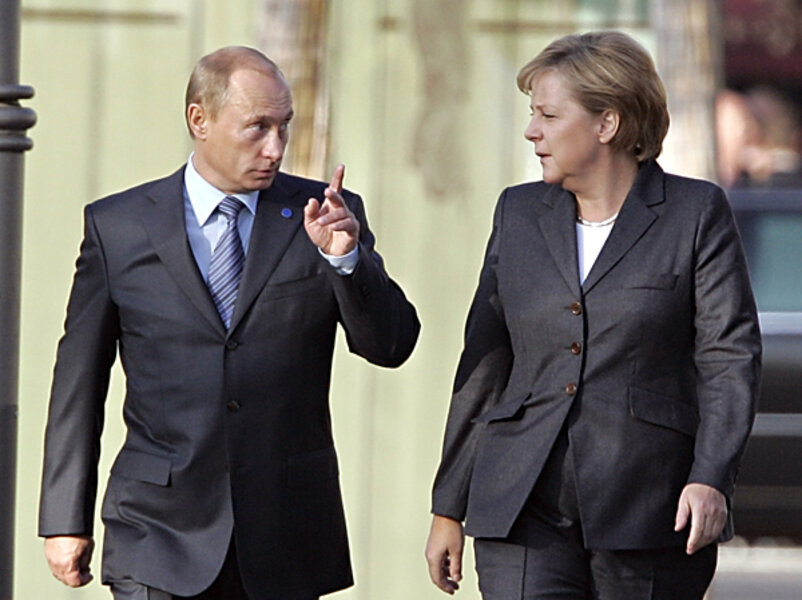
Marton shows Merkel is not a glib politician but a highly intelligent leader, with immense energy, who does what she believes has to be done. Merkel is shown to be an independent thinker who represses her emotions when confronted with the exigencies of political conflict.


Marton goes on to explain her admiration of George H.W. Bush, and Mikhail Gorbachev and their support of independence. In the beginning of Obama’s administration, Merkel initially feels Obama talks a good game but she reserves judgement until she sees positive results. Merkel grows to respect Obama’s intelligence and what he accomplishes but nearly breaks with him when she finds her personal cell phone had been tapped by the U.S.

Marton shows the humanity of Merkel by noting her decision to accept 1,000,000 Muslim refugees from the war torn Middle East in 2015.
Thousands of German citizens welcomed the refugees and offered clothes, food, and support. At the same time there is German opposition to Muslim immigration. Merkel notes the human need of her action but also explains the value of the refugees to an ageing German population that needs more young workers.
Marton’s book reveals a concern that Merkel has about the hardening of German opposition to non-German immigrants. Merkel’s concern is the rise of a right wing party like that which brought Hitler to power.
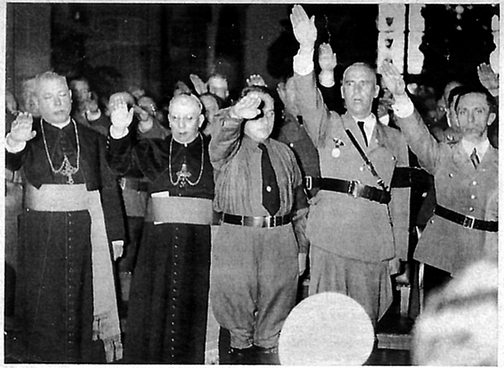
Marton reveals one of Merkel’s speeches in Israel that addresses the Holocaust. Marton implies it is the first speech by a German Chancellor in Israel since WWII.

Marton implies Merkel views Trump as trouble for American democratic values.
Marton gives some insight to reader/listeners on Merkel’s perception of Trump. Trump reinforces beliefs of right wing Germans by denigrating immigrants and supporting right wing authoritarians like Putin in Russia and Pen in France.
One comes away from Marton’s book with admiration for Angela Merkel. Merkel appears to be one of the few politicians in the world that have a “superior perception of reality”, a phrase made famous by the American political strategist Lee Atwater. (One may like the phrase but Atwater is considered by some as the most devious campaign strategist in America. He played a role in electing Republicans Ronald Reagan and George H.W. Bush. Atwater died in 1991 at the age of 40.)

What both Quilligan and Marton make clear is that the world loses half the world’s intelligence and capability by not recognizing women are equals of men. There are no giants among us. We are all human, neither omniscient nor unerringly correct.

 REVIEWS AND VIEWS OF LIFE