
Audio-book Review
By Chet Yarbrough
Blog: awalkingdelight)
Website: chetyarbrough.blog
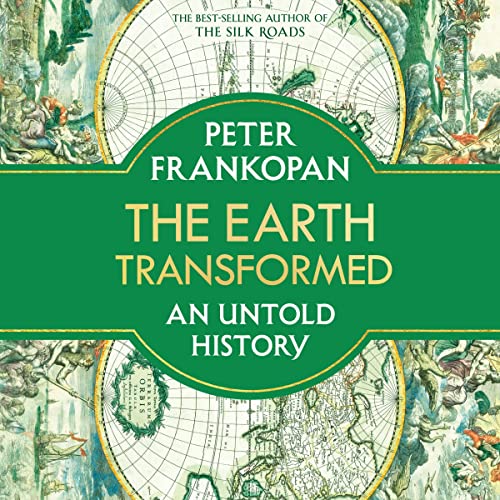
The Earth Transformed: An Untold History
By: Peter Frankopan
Narrated by: Peter Frankopan

Peter Frankopan, (Author, Professor of Global History at Oxford University, Director of the Oxford Centre for Byzantine Research.)
Peter Frankopan journeys from pre-history to the present to offer perspective on the earth’s global warming crisis. He reviews what is either speculated or known of disastrous world events. Frankopan recalls histories of major volcanic eruptions, earthquakes, tsunamis, droughts, famines, pandemics, and epidemics that have changed the course of history.
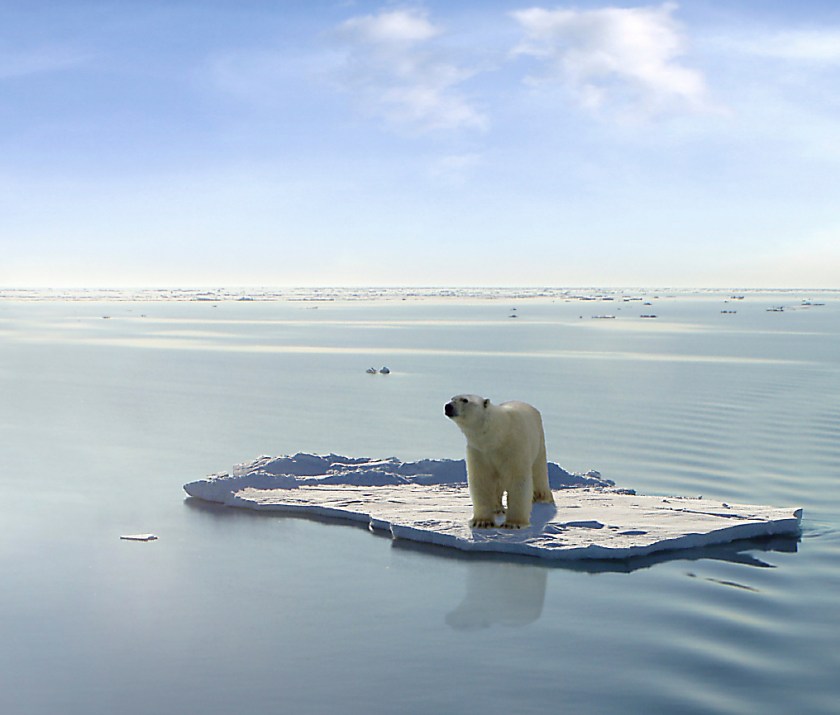
In the beginning, one thinks Frankopan is setting up a rationalization to argue global warming is just another world changing crisis that will be managed by humanity.
However, Frankopan is explaining the history of world crises and how humanity dealt with its eternal recurrence. In broad outline, he suggests world crises are dealt with in two ways, i.e., one, with religion or mysticism, and/or two, with adaptation. In every historical crisis, leadership is the presumed key to survival.

Frankopan explains the common denominator for crises that change the world is death.
Just as America and the world recovers from Covid-19, millions have died. We who remain carry on.
Whether a catastrophic event is geological, climatological, or pathogenic, life is a victim. Before history is written, Frankopan offers explanations of what happened to life based on fossilized remains. Causes for death are either geological (like earthquakes), climatological (like volcanic dust that blocks the sun), pathogenic (like the plague or a virus), or manmade (like the nuclear bomb). When written history begins, Frankopan’s evidence of world crises is more precisely explained. (From an objective perspective of any historian’s story, any history of the past is trapped in His/Her’s interpretation of other’s reported facts.)
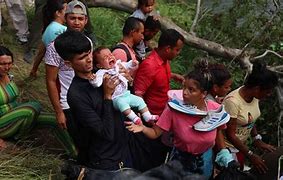
Frankopan argues life on earth has come and gone through centuries of crises.
The evolution of human beings shows they have managed to ameliorate past crises by meeting them head-on. Humans have overcome crises by adapting to change, whether manmade or environmental. If the past is prologue to life’s survival, global warming’s threat will be met and ameliorated by human response. Just as all crises in world history have ended lives, the same is true of global warming. That does not necessarily mean all human life ends. Frankopan’s history infers life will be changed by global warming but leaves unanswered whether human life will end.
Jumping ahead in Frankopan’s scholarly review of history, the age of Sputnik emphasized the growing importance of science in the ecology of the world.
The Russian Launch of Sputnik in 1957.
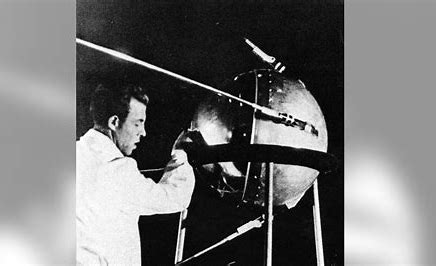
Ironically, Russia’s giant step ahead of America in the space race awakened the world to the importance of science. Frankopan notes the hubris of humanity taking center stage with Khrushchev’s comments about humankind’s need and ability to control nature. To Frankopan, control of nature is a turning point in the hubris of humankind. He notes the U.S.S.R. experiments with weather control as a way to improve agricultural productivity. Frankopan suggests the real objective is to realize the potential of weather control as a weapon of war and goes on to explain how America capitalizes on that idea in the Vietnam war.
The irony and hubris of humanity in believing it can control the weather is evident in the despoiling of earth by human ignorance and action.

The profligate use of carbon-based energy for industrial growth far outstrips any science driven effort by humanity to control the weather. World ecology has proven too complex for constructive control by human beings. It is as though the world is being turned back to religion and myth to explain the phenomenon of world existence.

The last two chapters address overwhelming evidence for causes and consequences of late 20th and early 21st century world’ environmental damage.
From deforestation in the Amazon, to automobile increase in China, to waterway dams and aquifer depletion, a listener/reader’s fear and depression are kindled.

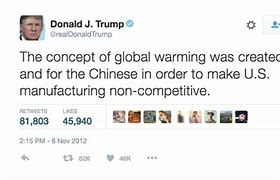
Harvard educated politicians like Ted Cruz and poorly educated Presidents like Donald Trump insist global warming is a hoax. As political power representatives of the wealthiest country in the world, one cannot but be appalled by climate change deniers.
The world’s future is based on an unknown solution to global warming.
Some suggest A.I. is key to solving global warming. Frankopan’s history suggests it is human beings that gave humanity the ability to overcome past crises. A.I. is one of humanities tools. It seems fair to suggest today’s crises will be another difficult chapter in the history of humanity. Judging by Frankopan’s history of human adaptation, global warming may not be humanities last chapter. However, Frankopan warns listerner/readers against the hubristic belief that nature can be controlled by humankind.
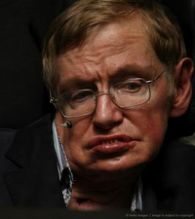
Stephen Hawking suggested humanity will not survive another 1,000 years on Earth and that human survival depends on colonization elsewhere in the Solar System. Frankopan seems to infer, humanity does not have that much time.
Frankopan wryly observes global warming is a crisis, but that human life is more likely to end from some other cataclysmic natural event like that which killed the dinosaurs (a meteor strike), a massive underwater volcanic eruption, or nuclear war before global warming kills us all.
One hopes histories past lessons inform a future that includes a place for the youth of this, the next, and future generations. World change brought on by crises have been overcome in the past through human adaptation. It seems reasonable to presume, despite the ignorance of some national leaders, that humanity will survive today’s global warming crisis.

 REVIEWS AND VIEWS OF LIFE
5 thoughts on “HUMANITY’S TRIAL”