PHYSICS

Becker does not tell listener/readers anything new about reality in his book, but he outlines the difficulty Physics is having in trying to discover “What is Real”. For this reviewer, Einstein remains the sun around which Physics’ scientists revolve.

Books of Interest
 Website: chetyarbrough.blog

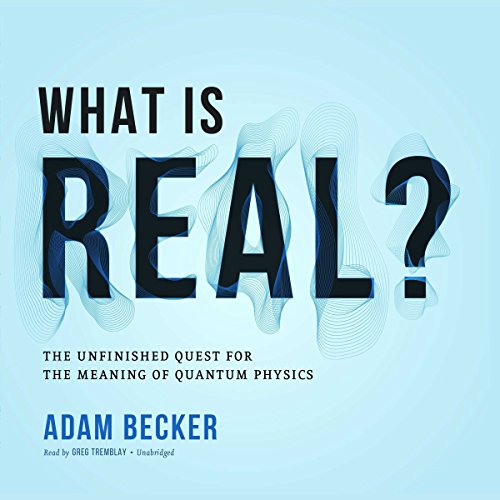
What is Real (The Unfinished Quest for the Meaning of Quantum Physics)

AuthorAdam Becker

Narrated By:  Greg Tremblay

Adam Becker (Author, science writer with a PhD in astrophysics from the University of Michigan and a BA in philosophy and physics from Cornell.)

This is an excellent story about the meaning of quantum physics even though the answer remains elusive. Becker does a great job of revealing the personalities of great physicists of the twentieth century, i.e. Niels Bohr, Albert Einstein, Erwin Schrödinger, David Bohm, Werner Heisenberg, John von Neumann, Hugh Everett III, John Bell, and to a lesser extent, Paul Dirac, and Grete Hermann.
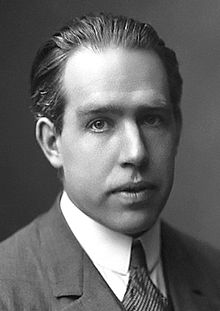
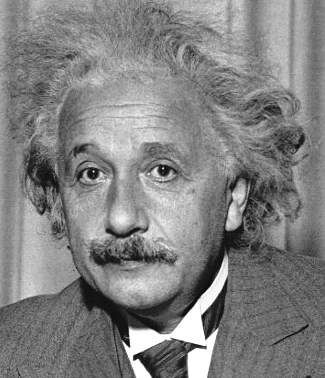
Bohr is shown to be a brilliant person who gathers the luminaries of physics around him like a queen bee to a beehive. Surprisingly, Becker notes Bohr’s abstruse and convoluted verbal and written explanations of physics cloud his brilliance but fascinate and inform young scientists. In contrast, Einstein appears like a sun that physics’ luminaries revolve around. Einstein never accepts the idea of quantum physics that implies we live in a probabilistic world. David Bohm is a brilliant physicist exiled for his political beliefs but importantly theorizes the Pilot-wave theory for quantum physics that suggests wave collapse is immeasurable and therefore meaningless. If true, the “cause and effect” world insisted upon by Einstein is correct. Surprisingly, Einstein demurred but the theory is being resurrected by Logical Positivist today.
Though Heisenberg creates the idea of Quantum theory that argues for a probability world, he becomes a Nazi science leader who fortunately fumbles the mathematics that could have created an atom bomb for Germany during WWII.

As a protege of Bohr, the theory of a Quantum world takes hold of scientists. John von Neumann is shown as a mathematical genius who challenges Bohm’s Pilot-wave theory because quantum mechanics appears to work and is proven by experimentation. Bohm argues, like Einstein, that the universe is fundamentally knowable and deterministic, not probabilistic. Hugh Everett III is taken under the wing of John Wheeler who is Everett’s PhD advisor at Princeton. Everett is characterized as a brilliant student who takes the idea of the disappearance of a collapsed quantum particle not as a collapse but an entry into another world, another dimension of reality.

Having read and partly understood many books about physics, Becker’s history is most entertaining because of added information about physicists’ personalities and disagreements, along with their personal trials and tribulations.

An added benefit is a little more understanding of physics that is offered to dilatants of science like this science ignoramus.
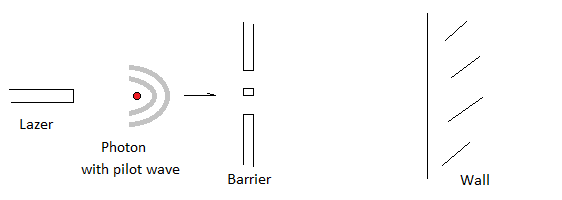
Pilot Wave Theory suggests the collapsing wave shown by quantum experiments is of no concern and that it should be ignored as a factor for non-predictability.

Putting aside collapsing waves in theoretical physics, the pilot wave theory, also known as Bohmian mechanics, was the first known example of a hidden-variable theory, presented by Louis de Broglie in 1927. Its more modern version, the de Broglie–Bohm theory, interprets quantum mechanics as a deterministic theory, and avoids issues such as wave function collapse, and the paradox of Schrödinger’s cat by being inherently nonlocal. This nonlocal experimental proof violates Einstein’s physics beliefs.

The surprising reveal in Becker’s history is the growing belief in Logical positivism which suggests the argument for quantum mechanics is flawed.

As one goes back to Bohm’s Pilot-theory. The surprising reveal in Becker’s history is the growing belief in Logical positivism which suggests the argument for quantum mechanics is flawed. The inability to measure both position and momentum is not proof of the theory because it is not an observable phenomenon. In a backward sense it implies Einstein is still the sun around which physics scientists orbit. An irony is that Becker believes Einstein would not want to be considered a Logical Positivist.

John Stewart Bell (1928–1990) was a Northern Irish physicist whose work reshaped the foundations of quantum mechanics.

Bell is best known for formulating Bell’s Theorem, a landmark result that showed how quantum mechanics predicts correlations between entangled particles that no local hidden-variable theory can explain. In one sense, that theory suggests as Einstein believed, that there is an undiscovered theory that will return physics to a cause-and-effect world. However, belief in non-locality is something Einstein could not accept. He refused to believe in “spooky action at a distance”. Bell was born in Northern Ireland. His fascination with science led him to CERN in Geneva where he worked on foundational questions in quantum theory.

Bell’s work laid the groundwork for quantum information science, including quantum computing and cryptography.

Bell came from a modest background and rose to prominence through sheer intellectual brilliance. He worked at CERN in Geneva, where he pursued foundational questions in quantum theory as a kind of “hobby” alongside his main work in particle physics. His 1981 paper “Bertlmann’s Socks and the Nature of Reality” used a quirky analogy to explain quantum entanglement and the Einstein–Podolsky–Rosen paradox.
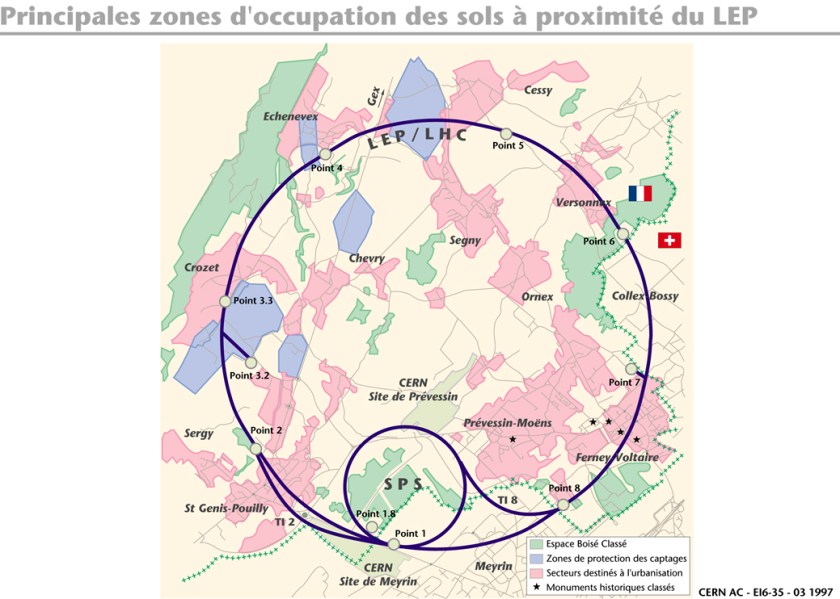
LHC MAP SHOWING CERN SITE

Bell wasn’t just a theorist—he was a philosopher of physics in the deepest sense, asking what quantum mechanics tells us about the nature of reality itself. Bell derived mathematical inequalities—called Bell inequalities. He believed that any local hidden-variable theory must obey these inequalities. However, quantum mechanics predicts violations of these inequalities under certain conditions. Bell is reintroducing the belief that quantum particles are fundamentally probabilistic and interconnected in ways that defy classical intuition. The universe doesn’t follow the rules of local realism. Quantum mechanics is correct, but it’s weird—deeply weird and challenges Einstein’s belief that physics are a local phenomenon that will be predictable based on an undiscovered truth.

Logical positivism and Bell’s Theorem intersect in a fascinating way. Bell’s Theorem challenges some of the foundational assumptions that logical positivists held about science, meaning, and reality. Because of “spooky action at a distance”, his theory defies Einstein’s belief in locality and reintroduces the concept of unpredictability which Einstein refuses to believe.

As a philosopher, Hermann (19o1-1984) had a particular interest in the foundations of physics. In 1934, she argues for a conception of causality with a revised view of quantum mechanics. Her work reinforces Einstein by returning Quantum Physics to predictability and causality. Hermann concludes–despite experiments that showing quantum mechanics are probabilistic, the theory is wrong because of a misunderstanding of nature. This seems like a cop-out supporting Einstein’s belief that there are some undiscovered laws of physics.

Becker does not tell listener/readers anything new about reality in his book, but he outlines the difficulty Physics is having in trying to discover “What is Real”. For this reviewer, Einstein remains the sun around which Physics’ scientists revolve.
ENERGY MATTERS

The boon for composite material is their utility for work and play. Their bane is disposal and their effect on the environment.

Books of Interest
 Website: chetyarbrough.blog

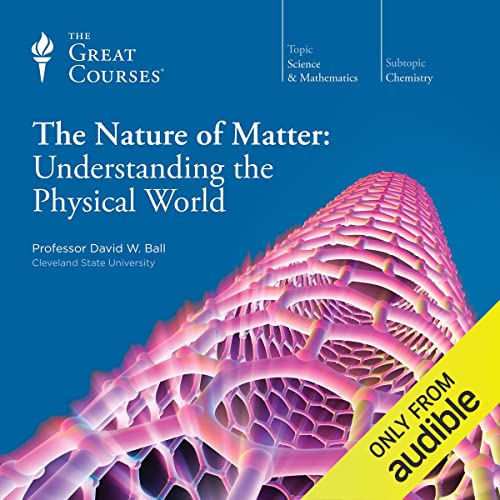
“The Nature of Matter: Understanding the Physical World” (The Great Book Lectures)

By: David Ball

Narrated by: Professor David W. Ball

Professor David W. Ball (Professor of Chemistry and Chair of Chemistry Dept. at Cleveland State University, received Masters and Doctoral Degrees from Rice University,

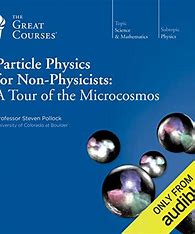
Professor Bell offers a definition and description of matter in the universe. He carries on much of what is explained by Pollock in “Particle Physics”. Bell explains how physics particles form matter with the addition of energy, Bell reifies and expands Pollock’s history of physics. Though there is significant overlap in their presentations, Bell offers a more detailed understanding of matter with its component particles and the role of energy in what humans hear, feel, smell, and see.

Two facts about matter expanded by Bell are about energy’ component’s and structure’s interactions among and within atoms. Though Pollock alluded to the structure of matter and fully explains energy’s importance at the atomic level, Bell expands explanation of electrons and the way they provide energy within and between atoms.

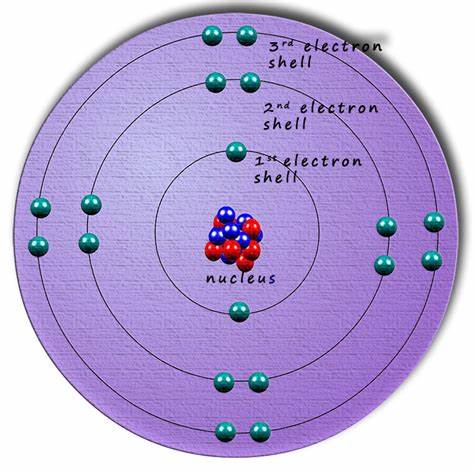
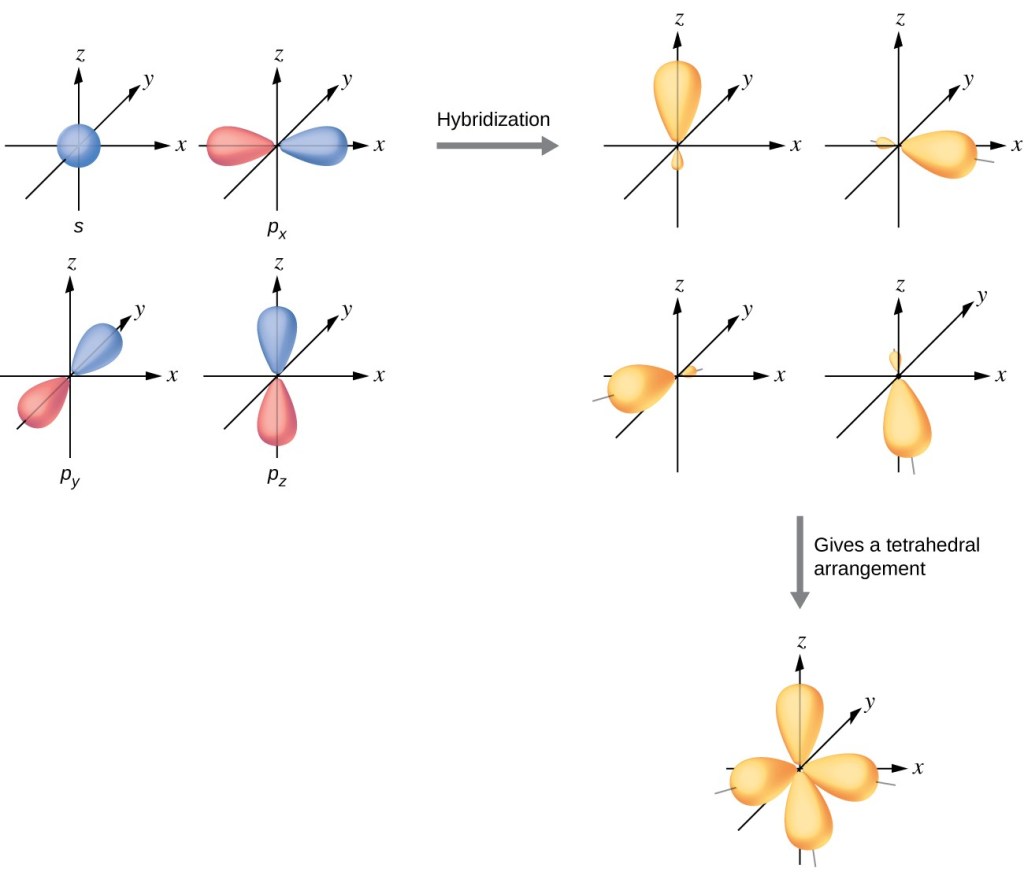
The structure of revolving electrons generate energy in different orbits around the nucleus of an atom. Initially, those orbits were thought to be like planets revolving around the sun but were found to be located within shells around the nucleus in three different orbits. These shells come in three categories. One is spherically symmetric (called the S orbital), the second is dumbbell-like with two lobes along specific axis’s (called P orbitals), and the third (which are also called P orbitals) follow a preferred direction that is not spherical. These shells are important because their reactivity and bonding play a critical role in the formation of matter.

Ball explains electron arrangement around the nucleus of an atom determine chemical properties and behavior of molecular interactions. Electrons are the wave feature of Quantum Mechanics that confound an ordered world of cause and effect postulated by Albert Einstein. What is made a little clearer by Ball is that color is an integral part of energy at the atomic level. Electron energy has discrete and precise energy levels that are arranged around the nucleus of an atom.

Without light particles (protons), energy would not exist. Ball notes electron energy is fundamentally affected by light.

Light or photons are the source of discrete energy levels called quanta that do different things–1) generate absorption, 2) cause transition between shell levels, 3) generate fluorescence, and/or 4) penetrate an atom’s dense nucleus to change mass to energy.

Ball explains why carbon is the most important element in the periodic table. Carbon’s importance is signified by its absence or presence in matter. Matter is either organic or inorganic with carbon being the measure of its classification. The astounding realization is that as a percentage of the earth’s elements, carbon is only 0.032% of our environment. (In contrast, the 3 largest fundamental elements on earth are oxygen at 46.6%, silicon is 27.7%, and Aluminum is 8.1%.) It is a reminder that earth’s living things (organic matter) are dependent on carbon, a miniscule percentage of our environment.

Without carbon, there would be no life (as we know it) on earth.

Ball’s chapter on water is an enlightening exploration of its reputation as a universal solvent with various uses and characteristics when boiled or frozen. Water’s dissolving and heat-storing capability are thoughtfully explained. Pollution is touched upon with explanations about what is being done and needs to be improved to preserve the world’s environment.

Ball explores prosthesis and material questions and solutions for the creation of body parts.

From dental fillings to tooth implants, to artificial hips, knees, hearts, arteries and breast implants, Ball explains how biochemistry and materials are critical to their manufacture and utility. He suggests the future will include brain implant enhancements and increases in human longevity.

In “Resistance is Futile”, Ball explains the value of superconductivity.

The current reality of world’ electrification is that 30% of its beneficial power is lost in transmission. Material qualities of our wired world inhibit electrical power conductivity. That 30% loss can be reduced by hugely lowering the temperature of transmission material, with the idea to invent a superconductive material that does not require super-cooled temperatures. Success in finding that material remains a work in progress. No one has found a superconductivity material that does not require super-cooled temperatures. However, Ball notes discovery would be an immense energy saver for the world.

In contrast to “Resistance is Futile” Ball notes “Resistance is Useful”.

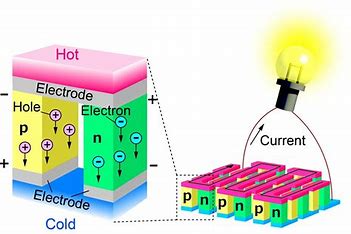
Ball explains how resistance creates heat in a semi-conductor that can be translated in a wired circuit to trigger a directed instrumental behavior or action. With the design of circuit boards with semi-conductors (specifically transistors), one could initiate or complete a series of tasks. From automating machines to creating powerful laptop computers, semi-conductor manufacture grew into an immense industry. As the complexity of tasks increased, the size of semi-conductors decreased. Gordon Moore proposed Moore’s law that suggested transistor’ size (a form of semi-conductor) in integrated circuits would become smaller and double every two years. Moore’s Law is not precisely true, but miniaturization, performance, and integration remain semi-conductor manufacturing’ goals.

The last lectures address composites and their component assembly in everything from concrete to fiberglass to tires.

These composites are formed from different materials based on their elemental properties that provide valuable materials to society. They are formed by atomic level interactions between elemental properties. Composite materials are noted as a boon and bane of society. The boon is their utility for new products for work and play. Their bane is disposal and their effect on the environment.

WHAT IS REAL

The significance of Becker’s book is in his explanation of Bell’s theory that disagrees with Einstein’s theory of locality.

Blog: awalkingdelight

Books of Interest
 Website: chetyarbrough.blog

“What is Real” The Unfinished Quest for the Meaning of Quantum Physics

By: Adam Becker

Narrated by: Greg Tremblay

Adam Becker (Author, American astrophysicist, philosopher with BA’s from Cornell, and a PhD in the philosophy of physics from University of Michigan.)

Adam Becker explains a mystery that surrounds the concept of quantum mechanics. The theory of quantum mechanics continues to confound Einstein’s disagreements about quantum physics. No one, including Albert Einstein’s and Niels Bohr’s discussions, has fully agreed on the fundamentals of quantum mechanics. There are theories about quantum mechanics but proof about “What is Real” remains a mystery.

Becker explains in broad terms the Copenhagen interpretation of quantum mechanics. The Copenhagen interpretation came from the work of Niels Bohr, Werner Heisenberg, and Max Born. Study of the sub-atomic world is based on the Copenhagen mathematical theory created in 1925-1927. The theory argues quantum mechanics is inherently probabilistic, not deterministic. (The term probabilistic is only reference to a collapse or disappearance of an expected proton when sent through a split screen. It is not suggesting that quantum physics results are not reliable tools. Quantum physics has been found to be a reliable, accurate, and dependable tool for the desired effects when applied in the tech world.)

Interestingly, Becker suggests Werner Heisenberg tried to cover up his support and belief in Nazism. Becker suggests Heisenberg’s ineptitude as a manager of the research and experimentation process is the cause of Germany’s failure, not any sympathy for holocaust victims.

Einstein argues the only reason quantum mechanics appears probabilistic is because of an undiscovered fundamental law about the sub-atomic world. Einstein believes all physics theory must obey the law of locality which postulates physics laws must be based directly on related and surrounding causes.

Becker notes John Stewart Bell experimentally proves Einstein is wrong and that quantum effects violate the principle of locality.

Bell’s proof is mathematical and based on experiment. His calculations and experiment show two light particles can have spin characteristics that correlate with each other at a distance, non-locally. This quantum entanglement is dubbed “spooky action at a distance” by Einstein. Einstein, Boris Podolsky and Nathan Rosen argue entanglement (“spooky action at a distance”) is not proof of non-locality. Einstein believes there is an undiscovered cause for the appearance of non-locality’s entanglement. The argument against locality is called the EPR paradox after its theorists’ last names. Bell proves through experiment that “spooky action at a distance” is real and that the Copenhagen interpretation of quantum mechanics is wrong.

John Stewart Bell (1928-1990)

Bell’s theorem verifies that “spooky action at a distance” is no paradox by proving that quantum mechanics reflect a non-local phenomenon.

Hugh Everett, a physicist who studied under John Wheeler, published a paper with the idea that non-locality is evidence of another reality, another world with the same people experiencing a different course of life. The collapse or disappearance of a quantum particle is evidence of another reality, another world. For example, an incident of a near drowning would be survival in another reality that simultaneously exists in a different world.

Hugh Everett (1930-1982, died at age 51)

Hugh Everett proposed a many worlds theory of quantum mechanics based on Bell’s theorem of non-locality.

Everett was a student of physics professor John Wheeler who had worked with Niels Bohr.

John Wheeler (1911-2008)

Wheeler became an early supporter of Everett’s many worlds theory.

Wheeler popularized the terms “black hole”, quantum foam”, “neutron moderator”, and “it from bit”. He participated in the Manhattan Project during WWII and worked at the Hanford Site where he helped Dupont build a nuclear reactor in Richland, Washington. Wheeler became skeptical of the many worlds’ hypothesis in later years because of what he called its “metaphysical baggage”.

The significance of Becker’s book is in his explanation of Bell’s theory that disagrees with Einstein’s theory of locality. Einstein presumes missing variables will explain “spooky action at a distance”. Becker notes most physicists still believe in the Copenhagen theory of quantum mechanics despite Bell’s theory and proof that quantum mechanics allow for non-local affects. All the answers for “What is Real” proposed by Becker seem to contradict themselves or lack common sense. However, they still may be true or valid. They are just unproven or unobservable by repeated experiment.