
Books of Interest
Website: chetyarbrough.blog
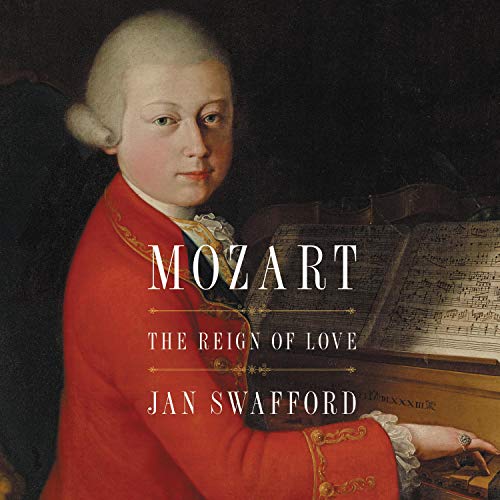
Mozart (The Reign of Love)
By: Jan Swafford
Edited By: Tim Cambell
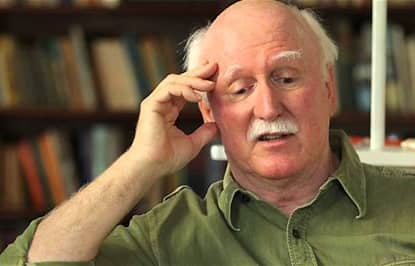
Jan Swafford (Author, American composer, lecturer and writer.)
Jan Swafford has written a magnificent biography that diminishes and reinforces the comedic/tragic/brilliant characterization of Mozart in the film Amadeus. By any measure, Mozart is shown by Swafford to be a funny and brilliant musician while widely considered by musicologists as one of the greatest composers of all time.
Tom Hulse as Mozart in the movie “Amadeus”.

Vaguely remembering the film, the comedy enacted by Tom Hulce was hilarious, but Swafford shows how truly remarkable Mozart was as a violin and piano musician who began at the age of seven to tour Europe with his eleven-year-old sister, and their father, in 1762. The film is entertaining but misses the immense talent of this family’ trio in his book “Mozart”.

Maria Anna Mozart (1751-1829) Sister of Wolfgang Mozart was a highly talented musician who played piano and toured with Wolfgang when he was 7 and she was 11.
Though Maria Anna Mozart may not have been a genius like her brother, Swafford explains she was a piano prodigy as a result of her father’s guidance as a music teacher. Leopold Mozart may have been a helicopter father who dominated his children’s lives but his contribution to their success is made clear by Swafford.
Leopold Mozart (1719-1787, father of Wolfgang and Maria Anna Mozart.)
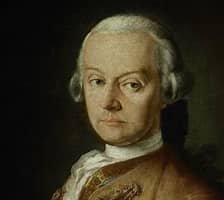
Though Leopold Mozart is criticized by some as an over controller of his son’s life, it seems unlikely that Wolfgang Mozart would have become such a great musician and composer without his father. Wolfgang came to revile his father’s control of the family’s income that is largely a result of his daughter’s and son’s talents. Swafford shows how instrumental Leopold was in creating Mozart’s legendary abilities. Leopold was a great teacher who adjusted his teaching methods to the innate interests of his son and daughter. His daughter’s precocity did not reach the level of her brother’s success, but one wonders how much of her fame and ability is related to societal misogyny?


This remarkable history of the Mozart family makes one wonder what makes the difference between geniuses like da Vinci, Newton, Einstein, Dickinson and others and those of us who are ordinary. One presumes it is a combination of genetic disposition, education, and luck. All of these circumstances are presumed and revealed by Swafford in Wolfgang Amadeus Mozart’s life.

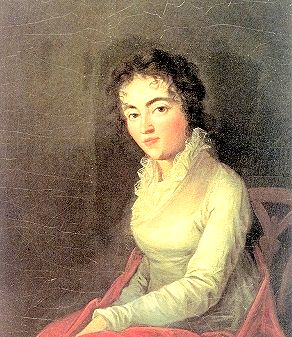
Swafford notes two women in Wolfgang’s life that were important. They were sisters. In 1777, Wolfgang sent a letter to his father about Aloysia Weber (on the left) and the possibility of her traveling with him to Paris. Aloysia is alleged to have rejected his advances, but Wolfgang’s father wrote a letter that vociferously objected to his son’s dalliance with the Weber’ daughters. Leopold implies Aloysia was a gold-digger and would ruin Wolfgang’s career. One may interpret the letter as more of a concern with Leopold’s son’s ability to raise money for the family, i.e. not the scandal of her travelling with Wolfgang. In any case, Wolfgang marries Constanze Weber (on the right), the younger sister, in 1782. It has been characterized as a marriage filled with love and mutual support.

Swafford explains why Wolfgang leaves Salzburg for Vienna, Austria in 1781.
Mozart felt his music was undervalued and constrained by the archbishop he worked for in Salzburg. To the disappointment of his father, Wolfgang moves to Vienna to pursue his career. His father’s disappointment was both financial and social. Because Leopold had been a guiding force in Wolfang’s life and career, not to mention the wealth he brought the Mozart family, his move to Vienna became a break from his father’s influence. They continued to correspond, but the familial and financial bond were broken with growing hostility felt by Leopold toward his son.
Wolfgang Amadeus Mozart (1756-1791 died at the age of 35.)

Wolfgang lives until 1791. His exact cause of death is unknown, but he had endured many illnesses in his 35 years of life. There is speculation that it was a recurrence of rheumatic fever or complications of strep throat. Some suggest it may even have been poisoning. The reality of that time is that the average life expectancy in the 18th century was 25 to 40 years of age. Some certainly lived to 50 or 60 but they lived most of their lives within a wealthy or privileged group. Wolfgang had some wealth in his last years of life, but not without a great deal of hard work as a master musician, composer and son of a near-do-well father.
One of the most revelatory and entertaining parts of Swafford’s history is the bawdy, funny, and clever rhymes that Wolfgang’s letters reveal about his personality. Two examples: “Oh my dear little cousin, I send you a thousand kisses, And if you don’t like them, Send them back with your wishes.” or “To every good friend I send my greet feet; addio nitwit. Love true true true until the grave, if I live that long and do behave.”
As noted in an earlier audio book review of Professor Robert Greenberg’s lectures on classical music the innovations of great composers were greatly enhanced by audio supplements.
This review does not do justice to Swafford’s excellent history of Mozart. Swafford’s audio book would be hugely improved for lay listeners with audio examples of Mozart’s noted contributions to classical music.
 REVIEWS AND VIEWS OF LIFE