
Books of Interest
Website: chetyarbrough.blog
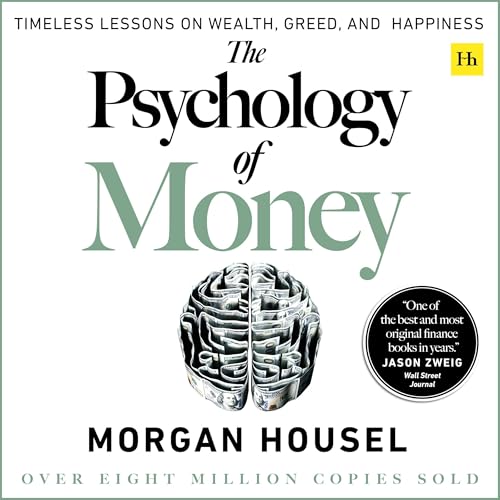
The Psychology of Money (Timeless Lessons on Wealth, Greed, and Happiness)
Author: Morgan Housel
Narrated By: Chris Hill

Morgan Housel (Author, two-time winner of the Best in Business Award from the Society of American Business Editors and Writers.)
“The Psychology of Money” is a plain-spoken examination of the value of wealth, how it is attained, retained or lost, and why its’ real value is independence. A superior perception of reality would certainly be ideal, but Housel implies no such thing exists, and that the presumption is too theoretical to be useful. Every human being becomes a product of their life experience. Unquestionably, all human beings have genetic inheritance, but Housel suggests personal life experience molds that genetic inheritance. All true, but it helps if your parents are upper middleclass and have a mindset for saving rather than spending their income.
Housel argues high intelligence is no guarantee of success in achieving wealth.

To achieve wealth, Housel argues one needs to be a consistent saver, a long-term thinker, an index fund investor in the stock market, and one who resists impulsive decisions to sell investments or use savings during financial instability. These guidelines are based on a wealth-seeker’s “margin of error” calculation of financial need during market weakness. One’s objective is to maintain one’s independence and freedom to live as they wish without risking that freedom by buying luxuries from short-term gains to only appear wealthier than others.

Cutting through the lessons that are listed by Housel’s suggestions is the ancient Greek recognition of the importance of “knowing thyself”.
Are you a crazy risk taker, do you think about the value of wealth, are you more interested in what others think of you than who you are to yourself, are you goal oriented or a “go along to get along” kind of person? These are clues to who you are and whether you should change to assure a life of freedom to live as you wish.

Janitor Ronald Read Leaves Behind $8,000,000 Fortune at his death
Housel gives the example of the janitor millionaire from Vermont who had no formal financial education. Ronald Read worked as a janitor and gas station attendant during his working life. He lived frugally while investing in blue-chip stocks that he held until his death. He amasses a fortune because of small savings and investments while never having high income but investing unneeded cash based on the way he chose to live. By being patient and disciplined over the course of his life, Read died in 2014 at the age of 92, donating $4.8 million to Brattleboro Memorial Hospital, $1.2 million to Brooks Memorial Library, and $2 million to his stepchildren, caregivers, and friends. Like Ben Franklin, Read lived a long life, accumulated great wealth while living the life he wanted. Just like Franklin, Read lived his life as he wanted and contributed his savings to eleemosynary institutions and people who were important to him during his lifetime.
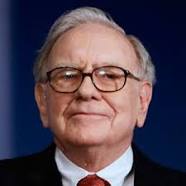
Warren Buffett (The Oracle of Omaha.)
Warren Buffett is another example offered by Housel to explain that time and compounded returns on investment are key to one’s independence and success for living as one chooses. Buffet’s genius is not in just choosing the right stocks, but in staying with investments over the long term. Housel notes 96% of Buffett’s immense wealth came after his 65th birthday.
The discipline outlined by Housel is difficult for a young person to accept because of the tendency of human nature to impress others with their success.

When young, image is important for reasons ranging from attracting desirable partners to impressing others with one’s success by driving expensive cars, wearing elegant clothes, and living in luxurious homes. Many people believe image is as important as substance and fail to realize its folly when they are too old to do much about it. Freedom to live as we choose is a mixed blessing. Being disciplined about money and investment when one is young is an important lesson but hard to follow, particularly in a free society.

Piketty argues that the income gap widens after World War II. He estimates 60% of 2010’s wealth is held by less than 1% of the population.
Housel comes from a family of savers who appear to have followed the path he recommends in his book. Though what he recommends makes sense, his starting point seems better than most middleclass or poor families in America. He chooses a very conservative investment strategy because of his life experience. He only invests in index funds and lives in a house without a mortgage. His story is not a typical American middleclass family story. What works for him is based on his personal life experience. What is wrong about Housel’s investment recommendations is that his life experience sets a table that is not the same table as those who have much less to eat. This is not to say Housel’s advice is wrong in recommending living within one’s means, investing for the long term, and letting wealth accumulate over time. It is good advice but where one starts in life makes a difference because your life experiences mold a large part of who you become and how you choose to save or spend your money.
 REVIEWS AND VIEWS OF LIFE