NIH DISMANTLING

In listening to “Replaceable You, one’s thoughts go to Robert Kennedy’s belief that vaccines are a threat rather than aid to societal health.

Books of Interest
 Website: chetyarbrough.blog

REPLACEABLE YOU (Adventures in Human Anatomy)

Author: Mary Roach

Narration by: Mary Roach

Mary Roach (Author, writer who specializes in humor about popular science, has several NYT’s bestsellers.)

Mary Roach writes an irreverent history about human body parts that have been found to be replaceable with varying degrees of success. The range of her observations run from the humorous to macabre to the sadly tragic.

Humor is subject to the mind of the beholder, but Roach offers a history of nose replacements, dentures, penial replacements, ostomy bag mishaps, hair transplants, and experiments with different materials used to replace body parts. She experiences what it is like to live in a tube designed to aid breathing for one living with paralytic polio. She recounts the famous astronomer, Tycho Brahe who lost his nose in a duel, and had it replaced with a glued metal protuberance that periodically fell off. He became known as the man with the golden nose, though it may have been made of brass.

Dentures became known as “wigs of the mouth” as they came into the 19th century.

Roach alludes to George Washington’s dentures and how uncomfortable and prone they were to be falling out at times of passion (like kissing), chewing sticky or hard foods, or vociferously arguing with subordinates. Made of ivory, animal or human teeth, they were secured with gold wire, bone bases, and/or rubber fittings. Based on excavation in Egyptian times, human and animal teeth and bone were found to be teeth held together with gold wire. Either suction or straps held the dentures in place. Contrary to the myth of wooden teeth for George Washington, historians believe ivory was used in his dentures. They were fastened together by metal springs and bolts and secured to his remaining natural teeth which dwindled to one tooth as he aged.

Roach explains the history of penial transplants that is funny to some while interesting and important to others.

Fingers are sometimes amputated as the structure for penile replacement. She comically suggests an articulated finger allows the transplant to be knuckled under to mitigate appearance of a perpetual erection. Roach goes to great lengths (ahem) to explain how important an implant is to men. A man’s thoughts may wander in a different direction than the author’s view of a successful operation. In any case, Roach’s history shows how accessible and thought-provoking penial implants have become.

An ostomy is a surgically created opening to allow waste to be expelled from the body.

An ostomy can be more precisely identified as a colostomy, an ileostomy, or a urostomy. The first is an opening to the large intestine while the second is an opening to the small intestine. The third, a urostomy is a urinary opening that allows healing of the other two when surgically completed. The urostomy may also be required because of bladder cancer or infection and other maladies related to the urinary track. To keep Roaches story a little less gruesome she tells stories of inadvertent noises and sloshing that occurs with ostomy bags. Like dentures falling out of one’s mouth, ostomy bag use can make unexpected noise or inopportune leaks. They are like “portable embarrassment machines” that can either lead to mutual laughter or embarrassing incidents. Roach contrasts the seriousness of medical necessity with the absurdity of life.

Early ventilator’s first use.

The most heartbreaking issue of Roach’s stories is of polio survivors who are unable to breath without help. Severe loss of muscle function in polio victims required placement in long negative atmosphere tubes in which a patient is confined to stimulate muscle movements for one to breath. Today, a portable positive-pressure ventilator largely replaces the human iron lung. Roach briefly uses one of the iron lungs shown above, but the discomfort made her ask to be removed from the confining contraption within minutes of enclosure.

In listening to “Replaceable You, one’s thoughts go to Robert Kennedy’s belief that vaccines are a threat rather than aid to societal health.

Mary Roach implies Kennedy and America’s current President are fools. To me and presumably to Roach, downsizing the National Institute of Health that researches and tests medical treatments for presently incurable diseases and physical disabilities is a national disgrace.
FEARLESS AND FREE

Josephine Baker passed away in 1975 from a cerebral hemorrhage. Baker shows herself to have been an entertainment phenom, a war hero, a civil rights activist, and a believer in the equality of all human beings.

Books of Interest
 Website: chetyarbrough.blog

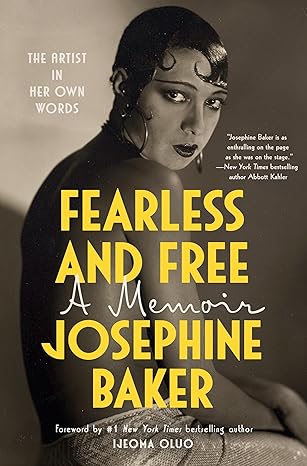
Fearless and Free: A Memoir

By: Josephine Baker

Translation by Anam Zafar with a Forword by Ljeoma Oluo

Narrated By: Anam Zafar, Sophie R. Lewis, Ljeoma Oluo, Jade Wheeler, Quentin Bruno.

Josephine Baker’s real name was Freda Josephine McDonald, born in St. Louis, Missouri in 1906. She died at the age of 68 in 1975.

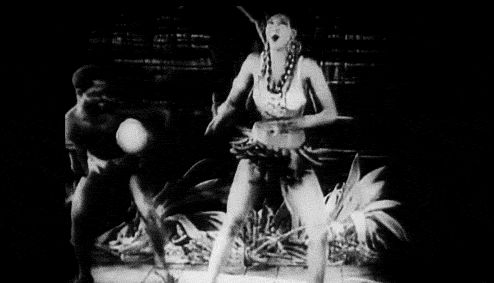
“Fearless and Free” is a vignette of an incredibly brave and beautiful American woman who became a world-renowned performer, humanitarian, and spy for France during WWII. At the age of 19, Baker sailed to France on her own. She was looking for freedom and opportunities that were unavailable in racially segregated America. She was hired as a dancer for La Revue Negre at the Théâtre des Champs-Élysées in Paris. She became famous in France for her provocative dance movements and growth as a singer and versatile entertainer.

Baker became famous as a result of wearing a skirt made of artificial bananas in a dance that had elements of jazz and African-inspired movements.

Baker’s memoir shows what “force of nature” means when referring to a human being. Willingness to travel alone to another country for any person at age 19, with no understanding of the language and no job prospects, is an act of incredible fearlessness. Baker’s memoir is a lesson to every person who feels trapped and wishes to become more than what their current circumstance in life offers.

Baker was a French secret agent and entertainer during WWII. She smuggled information written in invisible ink on her sheet music.

Baker is alleged to have had affairs with both men and women. She was married four times and is alleged to have had affairs with two famous women, i.e., Frida Kahlo, a Mexican artist, and Sidonie-Gabrille Colette, a French novelist.

Baker’s life shows how adaptive humans can be in changing environments. Baker spoke no French when she left America but became fluent in her adopted countries language. When Paris is occupied by the Nazis, Baker is recruited by the French secret service because of her fame and travel around the world despite the war. She secreted messages to anti-Nazi agents in her travels and received the Croix de Guerre, the Rosette of the Resistance, and one of France’s highest distinctions, the Chevalier of the Legion of Honour.

Amazingly, Baker earned a pilot’s license in 1935, one of the few women to have a pilot’s license at that time. She is said to have transported supplies for the Red Cross during WWII.

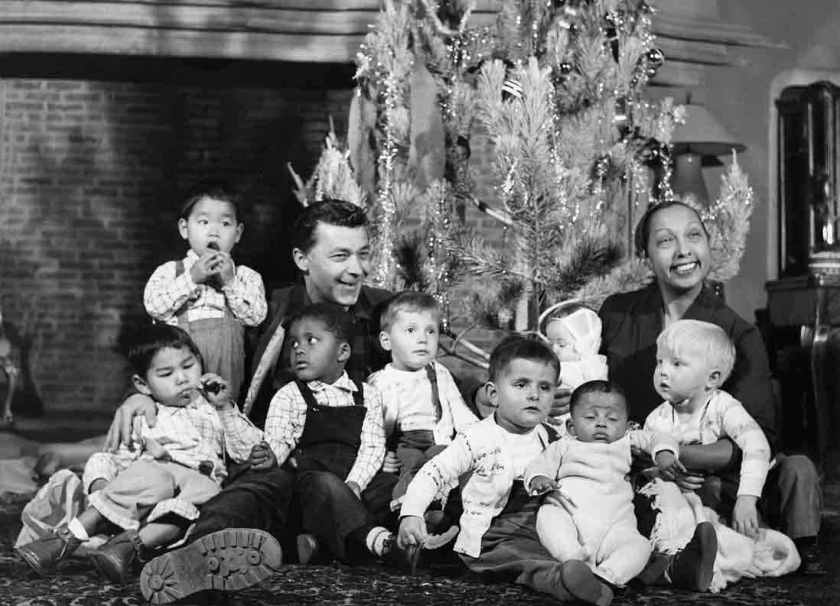
Baker adopted 12 children from different racial and cultural backgrounds calling them her “Rainbow Tribe” to show the unity of all peoples of the world. She advocated for civil rights and refused to perform in segregated events. She supported the American civil rights movement and was the only woman to speak at the 1963 “March on Washington” alongside Martin Luther King in 1963.

Akio – From Japan.

Jarry – From Finland.

Luis – From Colombia.

Jean-Claude – From Canada.

Moïse – From Israel.

Brahim – From Algeria.

Marianne – From France.

Noël – From Belgium.

Koffi – From Côte d’Ivoire.

Mara – From Venezuela.

Stellina – From Morocco.

Janot – From Korea.

Baker, with her 4th husband Jo Bouillion (a musician and conductor), adopted the twelve when they were in their 40s. Stellina was the youngest at 11 years of age when Baker died. Baker marries Bouillion at the end of WWII. They are a French contingent in Germany that entertains the troops in 1945. The destruction of German cities is noted by Baker as horrendous. She reinforces the feelings of most Americans after the reveal of the Holocaust’ slaughter and the economic damage of war.

Baker was an advocate for unity of all peoples of the world.

Baker revisited America after the war. The last chapter of her book shows how little had changed in regard to Black and ethnic discrimination in America. She visited Harlem to find Jewish landlords and property owners who victimized Black Americans who were as badly discriminated against as they were in the south. She and her white husband were ejected from New York hotels because of the color of her skin. She visited her family in the south to find nothing had changed. Her fame and success in France made her more French than American. It is a truly despicable picture she paints of how little progress in equal rights had been made in America when many Black, Jewish, and white Americans had died for the right to be free of repression.

Josephine Baker passed away in 1975 from a cerebral hemorrhage. Jo Bouillion died in 1984. Baker shows herself to have been an entertainment phenom, a war hero, a civil rights activist, and a believer in the equality of all human beings.