WELL BEING

Dr. Gawande’s fundamental point in “Being Mortal” is to provide the elderly or medically challenged the help to live based on a person’s dignity, purpose for living, and as much autonomy as their conditions allow.

Books of Interest
 Website: chetyarbrough.blog

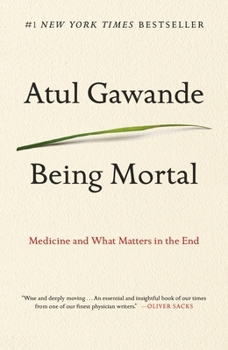
Being Mortal: Medicine and What Matters in the End

By: Atul Gawande 

Narrated By: Robert Petkoff

Atul Gawande (Author, physician-administrator-of-the-u.s.-agency-for-international-development-for-global-health.)

One who has been fortunate enough to have lived long will appreciate Doctor Atul Gawande’s explanation and experience with people of a certain age and the terminally ill of any age. He explains “…What Matters in the End” when one is nearing death is quality of life, not survival that matters.

Quality of life is defined by Gawande as dignity, purpose, and autonomy in one’s last days.

When one is nearing the end of their life, Dr. Gawande has found in his many surgical procedures and interviews that those who have time left to them can be helped by others who assist them as best they can to achieve dignity, purpose, and autonomy. As a physician, Gawande asks what a dying person’s fears are to know what might be done to help them work through those fears. Gawande explains the trade-offs from what care an older person or terminal patient may be given to achieve what is most important to them in their remaining life.

Whether healthy or unhealthy, rational people realize death is part of life.

What “Being Mortal” explains is that the aged or medically challenged wish for as much independence as can be provided by their care. Desired independence is the gold standard for the remaining days or years of one’s life. Whether old or young, healthy or ill, the thought of incontinence, mental confusion, medical or physical limitation makes one fear loss of independence. Each of these maladies can be remedied by family members or properly organized assisted living facilities. Of course, the rub is in the cost of that assistance.

When a family member can no longer be cared for by family members, the medically or age challenged are left with two choices. One is to be institutionalized. The other is to die.
What Gawande explains is that the first alternative can be better and the second is dependent upon family research, financial commitment, religious beliefs, and States’ laws. Gawande notes his choice in the case of his physician-father is a family commitment to offer care as needed with the goal of giving as much autonomy as his aged father can handle. That is a laudable commitment but not what many struggling American families have time or willingness to do.

America has institutionalized elder and medically challenged people’s care to reduce the burden on families.

Gawande recounts the history of institutionalized care in the United States. From family aid to hospitalization to assisted living to hospice to State sanctioned euthanasia, care has evolved for the elderly and medically challenged. What Dr. Gawande explains is that any of these ways of caring must offer dignity, purpose, and as much autonomy as possible to the dying and terminally ill.

Every family has its care limitations, either temporal or financial (sometimes both).

Gawande shows research and preparation is needed to help families adjust to the physical and mental care of a significant other who is too old or too sick to take care of themselves. If a family cannot provide the dignity, purpose, and an appropriate level of autonomy to an aged or ill loved one than the job becomes the work of finding an institutional facility that can. This is where the tire hits the road because there is a cost for that service. Gawande notes there are institutions that can offer the services that are needed but family research and investigation is required.

Once an acceptable care facility is found, the next task is finding how it can be financed.

Gawande does not address cost but infers there are care facilities that are affordable. Dr. Gawande’s fundamental point in “Being Mortal” is to provide the elderly or medically challenged the help to live based on a person’s dignity, purpose for living, and as much autonomy as their conditions allow.

DYING

One may ask oneself is hospice the only humane thing to do for a dying parent. If a parent is able to make a rational decision about continuation of life, would he/she choose to be treated in a hospice or choose to end life on their own terms?

Books of Interest
 Website: chetyarbrough.blog

Dying

By: Cory Taylor (A Memoir)

Narrated By: Larissa Gallagher

Cory Taylor (Australian author, died at age 61 on July 15, 2016, born in 1955.)

Dying: A Memoir author Cory Taylor passes away, aged 61 | The Australian

Cory Taylor confronts the complicated question of what to do when a person knows they are nearing the end of their life. Taylor is diagnosed with terminal brain cancer in 2005. Living with that diagnosis, Taylor recounts her life, religious beliefs, and a commemoration of her family relationships. She thinks of what her life means to herself and others. She waivers between living with her physical and mental deterioration or volitionally ending her life.

Taylor, though raised in a Christian household, identifies herself as agnostic.

In the 20th century, it is estimated that 200 to 240 million people identify themselves as atheists or agnostics. In 2013, that number increased to 450 to 500 million, about seven percent of the world population. Taylor chooses medically assisted death.

Having personally experienced a parent’s death and a parent’s physical and mental deterioration, a listener/reader will either condemn or condone a choice of assisted death.

Those with strong religious beliefs are likely to blame a person for killing themselves, while those who are agnostic or atheist are likely to have a different opinion. To some, life is hardship that is a human being’s obligation to either suffer or grow from, with conscious awareness of death’s inevitability. The fundamental question is–does one have the right to choose whether to live or die?

Seeing a parent’s life deteriorate despite the care of an attentive family member is heartbreaking.

Image result for hospice

An example is a son whose mother is dutifully cared for by her husband but recognizes the husband is too aged to handle the mother’s incapacities. What should a son or extended family do? There are hospice alternatives for the mother, but should she have a voice in deciding how she is to be treated? The husband realizes, a care facility is the only practical alternative for her needed care. The son or daughter is married and is consumed by their employment and making a living for their own career and family. The mother may or may not be able to express her opinion. The table is set for institutionalization.

The mother’s response may be to curl up in her new bed, refuse to eat and waste away in the eyes of a loving husband and a career consumed son or daughter.

One may ask oneself is hospice the only humane thing to do for a dying parent. If a parent is able to make a rational decision about continuation of life, would he/she choose to be treated in a hospice or choose to end life on their own terms?

DEATH WITH DIGNITY

Tisdale’s book is hard to listen to but worth one’s time and effort for understanding.

Books of Interest
 Website: chetyarbrough.blog

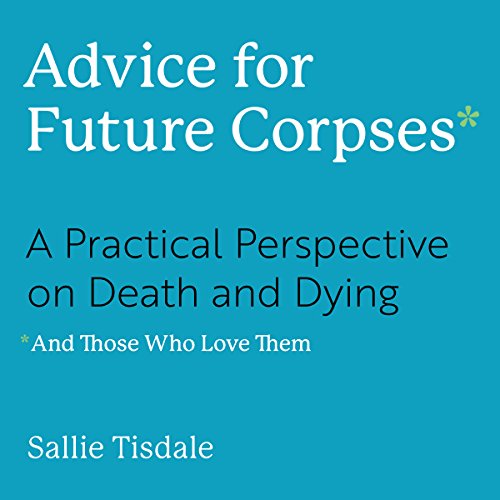
Advice for Future Corpses” And Those Who Love Them, A Practical Perspective on Death and Dying

By: Sallie Tisdale

Narrated By: Gabra Zackman

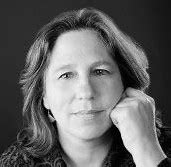
Sallie Tisdale (Author, essayist, who earned a nursing degree in 1983, born in 1957.)

The title of Sallie Tisdale’s book is off-putting but an apt description of her advice about “…Death and Dying”. Tisdale is a registered nurse who has written several books. Her experience makes her advice about death relevant and important. Those of a certain age or physical condition are shown how to prepare themselves for the inevitability of death.

The Japanese writer Haruki Murakami wrote “Death is not the opposite of life, but a part of it.”

Tisdale explains how a person can manage the inevitability of their death. To some, this seems a macabre thought, but nothing can be depended upon in life except its end. Why not manage that end with at least as much skill as one chooses to live? The reason people choose not to think about planning for death is because they are dealing with the everyday issues of living.

The irony is that Tisdale argues “planning for death” is an everyday issue.

Even if one knows they will eventually die, why care about it? Most lives are unplanned and seem out of our control anyway. How many plans for living are turned upside down by unforeseen events? Unforeseen events like Covid19, the rise of Hitler, WWII, the atomic bomb, and so on and so on. Yes, the occurrences of history change human plans. However, the difference is that death of the individual is a known inevitability. When one knows, their death is going to happen, why not have a plan?

Tisdale gives listeners the details of a plan for death.

Prepare Healthcare Directives

  • Decide to provide or not provide organ donation.
  • Explain burial or cremation wishes.
  • Maintain a financial inventory of accounts and assets.

Create a Will covering heirs and their inheritance. Review the plan based on life changes.

Having a will takes asset distribution out of the hands of a state court system. Health directives show your medical wishes and notes who has the right to make decisions for you in the event of incapacitation. A Health Care Directive stipulates whether extraordinary measures or comfort until death is to be administered. Written directives can explain how the body, after death, is to be cared for, i.e., is the body to be used for medical research, organ transplant, cremation, or burial. Time is of the essence when a person dies because living tissues and organs die soon after death of the person.

Beyond paperwork, Tisdale explains what is important to the dying when diagnosed as terminal.

To a family or caregiver, the hardest part is helping the dying cope with growing incapacity. When one is terminal, providing as much comfort as possible until death is of primary importance. The hardest part to the dying person is loss of control over one’s body. Listening to Tisdale’s real-life experience illustrate how American hospice and hospital care fails the terminally ill.

On the one hand, it is the fault of the dying for not having a clear plan for what is to be done in the event of a terminal diagnosis or illness, but Tisdale’s point is that neither hospice nor hospital’s services offer consistency in their care for the dying. Tisdale believes that once a person is diagnosed as terminal, the obligation of hospice’ and hospital’ care is to give comfort until death. However, institutions and doctors do not have the time nor inclination and American families do not have the money. Tisdale mentions Japanese elder care by noting the majority of those who are dying, die at home. The inference is that institutions are unlikely to provide the same care as the family of one who is dying.

Tisdale believes “Death with Dignity” laws passed in Oregon, Washinton, California, Colorado, Hawaii, Maine, New Jersey, Vermont, and Washinton, D.C. are on the right side of history.

They emphasize the importance of comfort for the terminally ill. A “Death with Dignity” law allows doctors to prescribe lethal drugs to end a terminally ill person’s life as long as the injected drug is not administered by the doctor or institution for which he/she works.

Tisdale’s book is hard to listen to but worth one’s time and effort for understanding.