A DELPHIC MAP

Audio-book Review
By Chet Yarbrough

(Blog:awalkingdelight)
Website: chetyarbrough.blog

The Gene: An Intimate History

Written by: Siddhartha Mukherjee

Narration by:  Dennis Boutsikaris

SIDDHARTHA MUKHERJEE (AUTHOR, INDIAN-BORN AMERICAN PHYSICIAN, SCIENTIST)

Siddhartha Mukherjee draws a Delphic map outlining the boundaries of genetic science and Homo sapiens’ future.  (Interviewed on PBS March 31, 2020 regarding Covid19.)

Predictions for Homo sapiens’ future are “Delphic” in the sense of being obscure.  Ancient predictions of the Oracle of Delphi are noted to have been subject to interpretation.  The predictive quality of a Delphic map of genes involves the morality and ethics of manipulating heritable characteristics of humankind.

HEALTHY OLD AGE

Picture this:  an average life span of 150 or more years, cure for all known diseases of mind and body, elimination of known genetic causes for debilitating mental and physical deformities.

ISLAND OF DR. MOREAU CREATURE

Now, picture this:  loss of the ability to procreate, accidental creation of a new disease because of an unintended consequence of a manipulated gene, extinction of the human race caused by artificial enhancement of the genetic code.

Mukherjee notes that the science of genetics is rapidly reaching the point of modifying, and potentially creating, human life that has no known physical or mental handicaps.  Mukherjee’s Delphic map is intimately drawn in vignettes about his family’s life, and particularly a brother’s loss of life from mental dysfunction; i.e. a brother that takes his own life as a result of schizophrenia.  Through Mukherjee’s family vignettes, and stories of children with inherited medical maladies, he poignantly clarifies the seriousness of the subject.

DESCENT OF MAN

Though genes are not the source of everything human life becomes, the science of the subject shows that human beings originated in Africa and grew to populate the world with humans from one original mother.

The science of genetics is changing medicine and society.    Apocryphally, the Oracle of Delphi is a priestess rather than a priest who foretells the future.  Once again, the future is scientifically acknowledged as dependent upon women.

women are the sun

Though human existence is dependent upon both nature and nurture, mitochondrial DNA comes from mothers while sex determination comes from fathers.

The significance of that discovery is that converting food to energy comes from mitochondrial DNA (mtDNA), which is only inherited from mothers.  Without a mitochondrial Eve, there would be no human race (an ironic thought in view of the unequal treatment of women in the world.)
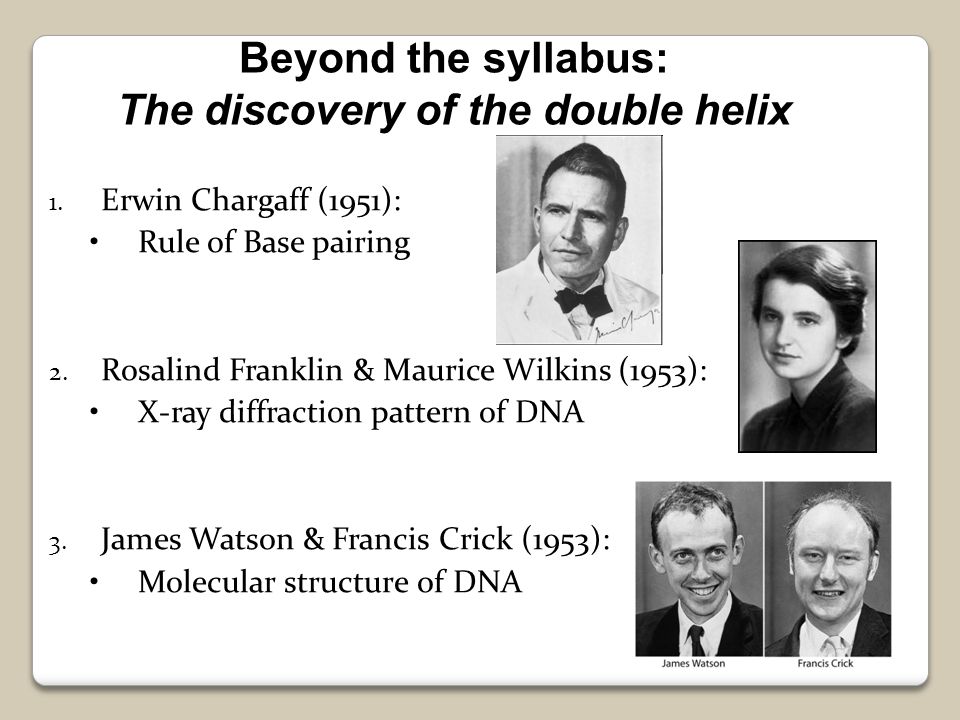
DISCOVERY OF THE DOUBLE HELIX

Mukherjee recounts discovery of DNA structure and how identifying the double helix in 1953 (by James Watson and Francis Crick) leads to mapping the human genome.

 With a map of the gene, it becomes possible to manufacture drugs that attack medical and psychological maladies at a genetic level.  Mukherjee shows how the history of Watson’s and Crick’s discovery defines western culture’s search for knowledge.

GOVERNMENT VS. PRIVATE RESEARCH

Mukherjee is not overtly critical of the two approaches but implies that corners are cut by the private sector in order to patent discoveries for new medicines that heal but also sometimes kill. (Something to be wary of in regard to Covid19.)

During President Clinton’s term of office, competition for gene sequencing leads to a private/ public race that exemplifies the difference between entrepreneurial and governmental pursuit of scientific discovery.  The objective of the private sector is to win the race by any means necessary.  The private sector’s primary objective is to create financial return on investment.  In contrast, government focuses on methodology of discovery and accuracy of results, with societal reward as a primary objective. 

This is somewhat analogous to what happened during WWII with the discovery and use of computers; i.e. one element of discovery is public and another is private.  The difference is that computer discoveries indirectly relate to death and destruction while genetic discoveries directly relate to death and destruction.  Each approach to scientific discovery, private enterprise and government research, have benefits and costs.  What is at stake in the case of human manipulation of genes is the destiny of the human race.

ORLANDO NIGHTCLUB SHOOTING

Mukherjee reflects on the terrible consequence of family members, friends, or professional counselors who insist people who are lesbian, gay, bi-sexual, transgender, or questioning, can be socially engineered to be heterosexual.  The insistence leads to psychological dysfunction and worse, the arbitrary murder of innocents; like the Orlando, Florida massacre in 2016.

Mukherjee acknowledges genes are only part of what makes humans human.  A most striking reveal is about LGBTQ and the genetic component of what makes humans one sexual preference or another; i.e. winners of the battle between inheritable XX (female) and XY (male) chromosomes show significant correlation with sexual preference. 

TWINS

TWINS: Though genetics are a major determinant in what humans are-environment plays a role.  The role is complicated because one person’s response to outside stimulation can be entirely different from another’s even though they may be near genetic duplicates.

Mukherjee sites studies of twins raised in different parts of the country, with different families, having uncannily similar life preferences; presumable because they have the same genetic inheritance.

“The Gene” is an important book.  Its importance lies in the dangers inherent in sciences’ ability to tamper with a natural selection process discovered by Charles Darwin in the 19th century. 

Modern humans have evolved over 200,000 years through a process of adaptive genetic changes defined by Richard Dawkins as immortal genes.  The caution one must recognize is that when humans make decisions for other humans, the consequence is inevitably different from what is expected. 

Humans may become extinct because of our environmental mistakes wrought by natural selection and nurture.  However, one is equally wary of becoming extinct because of what society decides about gene modification by humans; for humans.
OLIVER SACKS

Audio-book Review
By Chet Yarbrough

(Blog:awalkingdelight)
Website: chetyarbrough.blog

The Man Who Mistook His Wife for a Hat: and Other Clinical TalesThe Man Who Mistook His Wife for a Hat

Written by: Oliver Sacks

Narration by:  Jonathan Davis, Oliver Sacks

OLIVER SACKS (1933-2015, AUTHOR, BRITISH NEUROLOGIST)

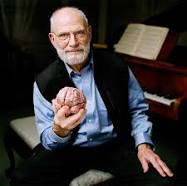
Neurological dysfunction is Oliver Sacks field of study and training.  The irony is that a tumor attacks his brain to end his life.  Of course, he was 82.  But somehow, a tumor attacking Sacks’ brain seems an unfair marker for his passing.  Sacks opens the eyes of many to the wholeness of being human when a neurological dysfunction changes their lives.  Sacks is the famous neurologist who wrote one book that becomes a movie and several that become best sellers.

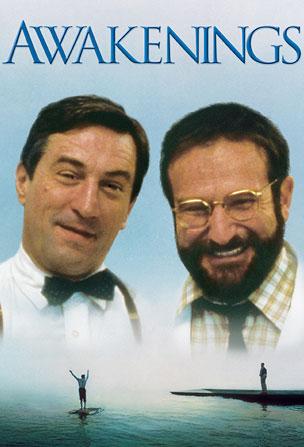
AWAKENINGS - STARING ROBERT DeNIRO AND ROBIN WILLIAMS
AWAKENINGS – STARING ROBERT DeNIRO AND ROBIN WILLIAMS

Sacks is famous to some based on the movie “Awakenings” that recounts an experiment with L-dopa to treat catatonia; a symptom believed to be triggered by Parkinson’s.  Patients may spend years in a state of catatonia; i.e. a form of withdrawal from the world exhibited by a range of behaviors from mutism to verbal repetition.  Sacks wrote the book, “Awakenings” to tell of his experience in the summer of 1969 in a Bronx, New York hospital.  The success and failure of the L-dopa experiment became a life-long commitment by Sacks to appreciate the fullness of life for those afflicted by neurological disorders.

With the use of L-dopa, Sacks reawakens the minds and rational skills of patients that had been catatonic for years.  In their reawakening, Sacks found that catatonic patients have lives frozen in time. Their mind/body interactions became suspended in the eyes of society.  They were always human but they lost their humanness in neurological disorder.

PSYCHOLOGICAL IMPAIRMENT
Sacks first story is about an accomplished musician and teacher who appears increasingly forgetful.  He appears to forget people’s names.  He cannot identify objects that are given to him to examine.  He figuratively mistakes his wife for a hat. 

“The Man Who Mistook His Wife for a Hat” is filled with stories of people with brain malfunctions that change theirs’s and other’s lives.  The underlying truth of each story is that symptoms of neurological disorder mask the wholeness of being human.  Sacks reveals that many people confuse what is seen with the completeness of what is an afflicted but whole human being.  Sacks first story is about an accomplished musician and teacher who appears increasingly forgetful.  He appears to forget people’s names.  He cannot identify objects that are given to him to examine.  He figuratively mistakes his wife for a hat.  Aside from these bizarre symptoms, Sacks notes the patient is highly intelligent and is known as a great teacher of music.

GLOVE
He can identify all the parts of a face but is unable to associate the face with a name.  When given a glove he examines it in parts.  It has five pouches.  It is made of a soft material.  The pouches can hold things.  But, it is only discovered as a glove when given clues about its use. 

In examining “The Man Who Mistook His Wife for a Hat”, Sacks finds that the teacher’s mind works like a computer in that he sees the details of things without seeing the whole thing.  He forgets names until he hears their voice because he cannot recognize faces.  He can identify all the parts of a face but is unable to associate the face with a name.  When given a glove he examines it in parts.  It has five pouches.  It is made of a soft material.  The pouches can hold things.  But, it is only discovered as a glove when given clues about its use.  Sacks’ first story becomes a metaphor for the wholeness of human beings that have neurological disorders.

MUSIC
The music teacher relies on sound and other cognitive senses to fully interpret and appropriately act in the world.  Sacks explains to the teacher’s wife that her husband’s neurological disorder is a part of who he is. 

The music teacher relies on sound and other cognitive senses to fully interpret and appropriately act in the world.  Sacks explains to the teacher’s wife that her husband’s neurological disorder is a part of who he is.

Sacks suggests the disorder may be ameliorated with drugs but an unintended consequence may be to destroy her husband’s extraordinary music and teaching ability.  In the years of her husband’s life, he has unconsciously hidden a neurological dysfunction by using music as a method for routinizing his life.  His wife notes that he always sings when he dresses himself with clothes carefully laid-out by his wife.  He uses the rhythm of the song to properly dress himself.

Sacks writes of several more patients that circle the same theme.  He notes that memory is a critical part of being human.  When memory is lost humanness remains, but personal understanding of oneself is changed.  Memory informs and affects action.  When memory disappears, time is disjointed and experience is lost.  On the one hand, lost memory makes one young again; on the other, friends are older than they should be and many things we know from experience are gone.

MEMORY
When memory is lost humanness remains, but personal understanding of oneself is changed.  Memory informs and affects action.

Sacks is saying never give up on patients with neurological disorders.  They are whole human beings.  The neurologist’s job, as with all who practice medicine, is “first, do no harm”.  “The Man Who Took His Wife for a Hat” illustrates how seriously Sacks took his calling.

SCIENTIFIC DISCOVERY

Audio-book Review
By Chet Yarbrough

(Blog:awalkingdelight)
Website: chetyarbrough.com
 

The Hunt for Vulcan:…And How Albert Einstein Destroyed a Planet, Discovered Relativity, and Deciphered the UniverseThe Hunt for Vulcan

Written by: Thomas Levenson

Narration by:  Kevin Pariseau

THOMAS LEVENSON (US SCIENCE WRITER AND DOUMENTARY FILM-MAKER--DIRECTOR OF THE GRADUATE PROGRAM IN SCIENCE WRITING AT MIT)
THOMAS LEVENSON (US SCIENCE WRITER AND DOUMENTARY FILM-MAKER–DIRECTOR OF THE GRADUATE PROGRAM IN SCIENCE WRITING AT MIT)

Thomas Levenson offers a vignette of history about the methodology and adventure of scientific discovery.  Scientific discoveries seem rarely hit upon in a linear fashion.  Discovery comes from study of natural phenomena that frequently reveal the unexpected.  Few can deny the brilliant and insightful discovery of the laws of motion and gravity by Isaac Newton.  Among great science discoverers, none seem to achieve the utilitarian application of science more than Newton.  At least for those who view earth as the primary laboratory of science.

ALBERT EINSTEIN (1879-1955)

Then came Albert Einstein.  Newton’s laws of gravity and motion work beautifully for practical application on earth.  However, Newton’s laws of motion and gravity are error prone when applied to the universe.  Einstein expands Newton’s laws of gravity and motion by discovering the relativity of time, mass, and energy.  With theories of specific and general relativity, the universe becomes the laboratory of science.

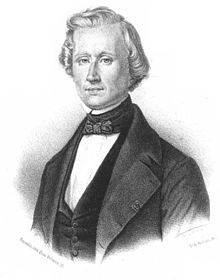
URBAIN LE VERRIER (1811-1877, FRENCH MATHEMATICIAN AND DISCOVERER OF NEPTUNE)

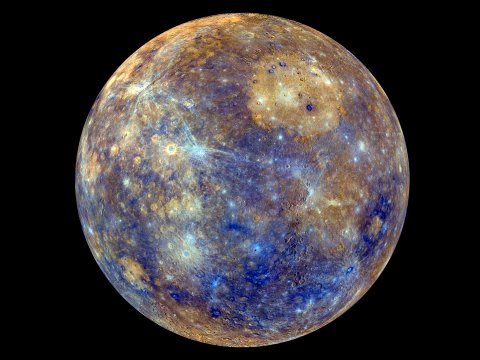
A French mathematician named Urbain Le Verrier, using Newton’s laws of motion and gravitation, calculates an odd variation in Mercury’s orbit of the sun in the 1840s.  Because of an infinitesimal statistical variation, Le Verrier concludes there is an unseen object effecting the orbit of Mercury as it travels around the sun.  Le Verrier is right when he notes there is a variation but wrong about its cause.  The variation Le Verrier finds is based on Newton’s laws as applied to the universe.

Through a similar analysis, Le Verrier had famously predicted the planet Neptune would be found based on a statistical anomaly in the orbit of Uranus.  Neptune is visually discovered in September 1846 by Heinrich d’Arrest, one month after Le Verrier’s published prediction.  Le Verrier instantly gained fame as the discover of planets by using Newton’s laws of gravity and motion.  When Le Verrier notes a slight variation in Mercury’s orbit, professional and amateur astronomers begin looking for another unknown planet.  The name of that mysterious unknown planet is Vulcan.

THE MYSTERIOUS PLANET LABELED VULCAN
THE IMAGINED PLANET CALLED VULCAN

The myth of this planet is applauded by the press and public after an alleged sighting by an amateur astronomer in rural France.  Though this is not the only astronomer that confirms the sighting, it is popularly accepted because of Le Verrier’s support of the amateur, and his renown for having predicted the discovery of Neptune.  Until Einstein’s discovery of specific relativity, Vulcan is presumed to exist.  When Einstein discovers the curve of the universe, the Vulcan planet is figuratively destroyed.

Searching for undiscovered planets and celestial objects is a perennial obsession of professional and amateur astronomers (note the presumed dwarf planet discovery recently announced by Canada-France-Hawaii’s celestial search of the Kuiper belt).  What Thomas Levenson reveals in his history of Vulcan is how science advances with analysis, missteps, revisions, and new discoveries.

SIR ISAAC NEWTON (1642-1727)

The methodology of science becomes refined by the mathematics of Newton’s laws of motion and gravitation and further refined by Einstein’s laws of relativity.  It is Newton’s laws that lead to Le Verrier’s mathematical recognition of Neptune.  It is also Newton’s laws that lead to Le Verrier’s mistake about the planet Vulcan.

The misstep of finding a false planet is confirmed by Einstein’s discovery of a fault in Newton’s laws.  Le Verrier’s statistical analysis leads to one observation-ally confirmed planet and one falsely sighted planet but Newton’s limited theories of motion and gravity lead to science’s revision and a new avenue of discovery for natural phenomena.

One presumes there is a new Newton or a new Einstein in the world’s future because it is the nature of science to continually renew itself with a more comprehensive understanding of the universes we live in.  SCIENTIFIC DISCOVERYThere is no foreseeable end to science except in the extinction of humanity.  One hopes human science and evolution keeps pace with earth’s environmental change.
CONSCIOUSNESS

Audio-book Review
By Chet Yarbrough

(Blog:awalkingdelight)
Website: chetyarbrough.blog

Consciousness and the BrainCONSCIOUSNESS AND THE BRAIN

Written by: Stanislas Dehaene

Narrated by: David Drummond

STANISLAS DEHAENE (AUTHOR, DIERECTOR OF INSERM FOR COGNITIVE NEUROIMAGING, PROFESSOR AT COLLEGE de FRANCE)

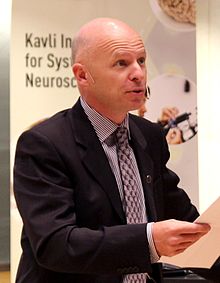
Stanislas Dehaene argues that consciousness is a measurable state of mind.  He speculates that a measurable artifact will be found to quantify consciousness.  Dehaene believes consciousness is within the grasp of science and technology.  He suggests mapping of brain consciousness may produce standardized principles of artificial intelligence.  Dehaene explains that brain mapping is far from complete but its potential for defining consciousness is experimentally testable.

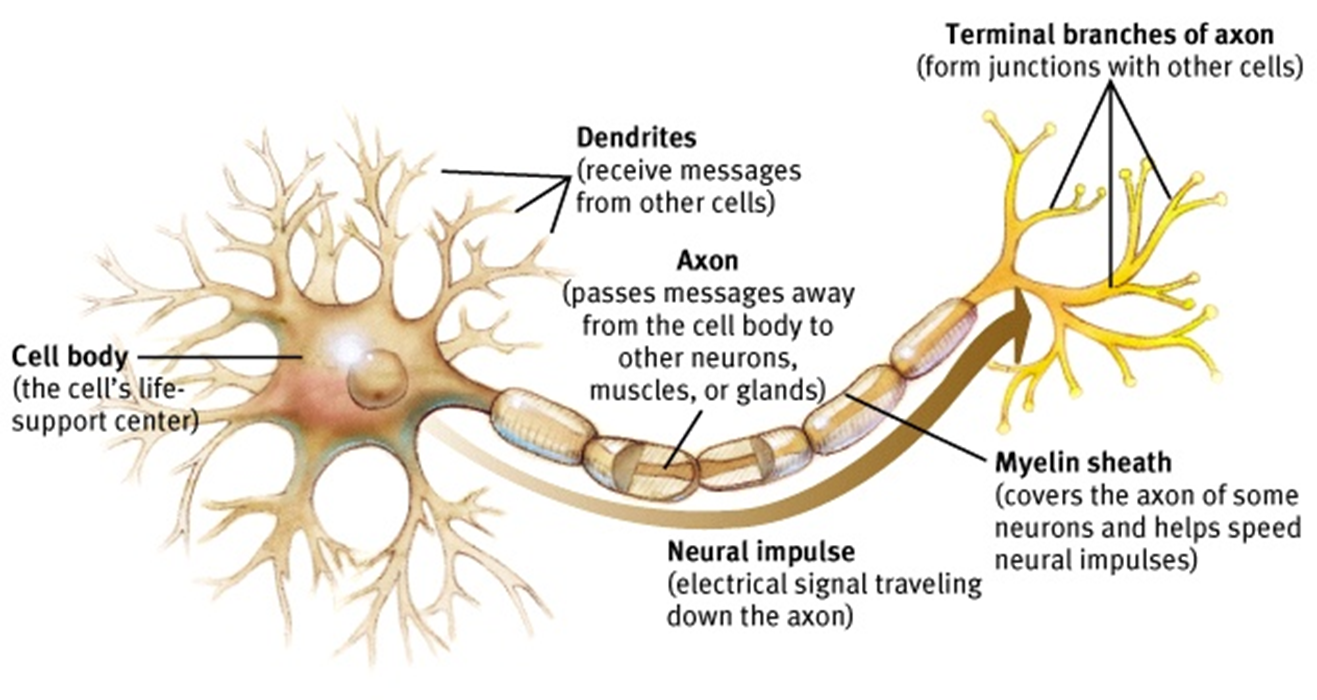
Dehaene explains current science experiments show that elements of consciousness can be identified and measured.  Specific electro/chemical signals from different parts of the brain are being mapped.  With the use of electroencephalographs, documented patient experience, and the use of brain probes, repeatable electro/chemical signals are identifiable.  Physical and mental performances have been repeated in controlled experiments by using identified electro/chemical signals.  Specific electro/chemical bursts between dendrites and axons in the human brain have been shown to create thoughts and actions.

MAPPING THE BRAIN
MAPPING THE BRAIN

What Dehaene explains is that brain function is highly complex.  Physical and mental activity involve different parts of the brain.  Some thoughts are subconscious or pre-conscious and obscured; others are conscious and re-callable.  An element of consciousness is periodicity; i.e. how long a stimulus is maintained.  Anything less than 1/3rd of a second is noted but is obscured from the conscious mind.  However, subconscious activity does have a measurable effect on cognitive function.  The complexity of memory involves many parts of the brain that are interconnected by electro/chemical signals between neural dendrites and axons.

DENDRITES AND AXONS
The complexity of memory involves many parts of the brain that are interconnected by electro/chemical signals between neural dendrites and axons.

DANIEL KAHNEMAN
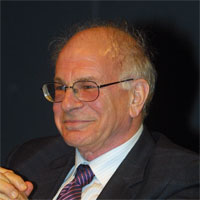
DANIEL KAHNEMAN tells story of a fireman that senses a collapse of a building because of a subconscious experience of many similar catastrophic events.  The fireman orders his team out of a building without clearly understanding why.

Some subconscious functions are evident in what might be classified as instinct.  For example, the story of a fireman that senses a collapse of a building because of a subconscious experience of many similar catastrophic events.  The fireman orders his team out of a building without clearly understanding why.

Dehaene believes quantum computing opens a door to artificial intelligence that can replicate consciousness.  He implies the myriad signals that come from different parts of the brain will eventually be mapped.  Dehaene infers brain mapping offers a framework for consciousness that can be created in a computer program.

brave new worldIn a world based on probabilities rather than Newtonian cause and effect, artificial intelligence offers a “Brave New World”.  Is that a good or bad thing?  Will A.I. be a Huxley redux or revision?
DIETING AND THE BRAIN

Audio-book Review
By Chet Yarbrough

(Blog:awalkingdelight)
Website: chetyarbrough.blog

Spark: The Revolutionary New Science of Exercise and the BrainSpark

Written by: John J. Ratey, MD

Narrated by: Walter Dixon

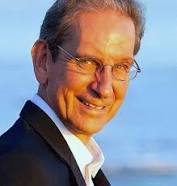
JOHN RATEY (AUTHOR, MD)

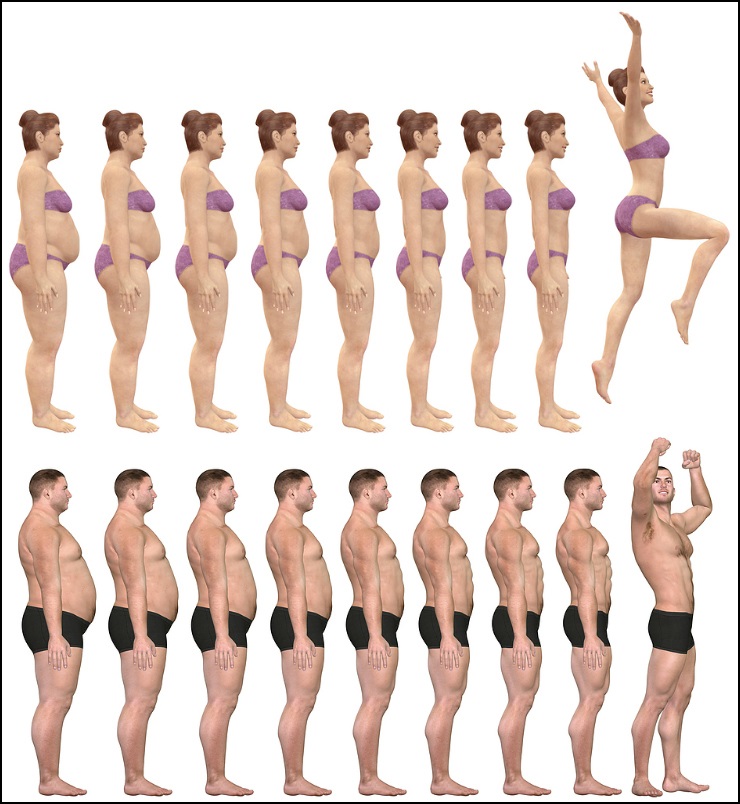
Crash dieting and the brain compete for control of one’s established weight.  Doctor John Ratey acknowledges that your first crash diet will undoubtedly help lose weight.  However, when weight is regained, the same diet will not be equally successful.  The brain automatically triggers weight conservation with a second crash diet because it signals body starvation.  The third, fourth; etc. crash diet will be increasingly unsuccessful.  Ratey’s point is that weight loss success requires cooperation from the brain.  Ratey suggests he key to that cooperation is exercise.

WEIGHT GAIN AND LOSS
Ratey is not suggesting we become athletes but that some exercise regimen, whether walking, riding a bike, or climbing stairs will offer numerous benefits for weight maintenance, mental function, and psychological health.

Ratey is not suggesting we become athletes but that some exercise regimen, whether walking, riding a bike, or climbing stairs will offer numerous benefits for weight maintenance, mental function, and psychological health.  Ratey does not discount the importance of a healthy diet but food binges, foggy thinking, and states of depression or anxiety can be scientifically ameliorated by exercise.  Ratey goes so far as to suggest exercise is medicine for health.

ASHLEY GRAHAM (FAMOUS PLUS SIZE MODEL)

An inference from Ratey’s research is that obsession over body image interferes with human health.  As history shows, the svelte image of modern models is a reversal of what was considered beauty in earlier centuries.  The substance of health is a combination of proper diet and exercise.  In most cases, Ratey implies body weight and health will stabilize with that combination.  Ratey acknowledges genetics and medical maladies may interfere with that conclusion.

Part of one’s frustration with Ratey’s conclusion is dependence on what is called a proper diet.  It seems with each new study; some approved foods slip to the bottom of the good food pyramid, while some formerly disapproved foods move up the pyramid; i.e. cholate for example.

FOOD PYRAMID REPLACEMENT

EXERCISEThe overriding value of Ratey’s book is the conclusion that exercise is a key to mood, memory, and learning.  Numerous control experiments support Ratey’s argument.
Exercise seems more for the brain than the body.  Every day should be an exercise day.  Exercise does not have to be a fixed regimen but walking, rather than driving, to the store when it is only three blocks away is a beginning.  Replacing TV time with household chores is another form of exercise.  Keep moving.  Ratey suggests “Even 10 minutes of activity changes your brain.”

TIME IS A MYSTERY

Audio-book Review
By Chet Yarbrough

(Blog:awalkingdelight)
Website: chetyarbrough.blog

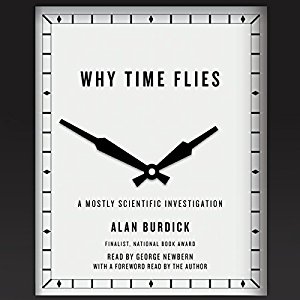
Why Time Flies

Written by: Alan Burdick

Narrated by: George NewbernWHY TIME FLIES

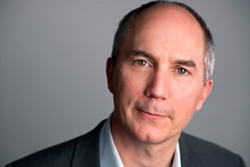
ALAN BURDICK (AUTHOR, EDITOR FOR THE NEW YORKER)

Time is a mystery.  Alan Burdick speculates on a definition of time in “Why Time Flies”.  In some respects, Burdick’s story is enlightening; in others, time escapes his and an audience’s understanding.

Time appears to be a construct of mind and consciousness, both of which are equally mysterious.  No one really knows what mind and consciousness are but recent experiments suggest they are a state of being that offers versions of reality; i.e. not objective truth but subjective understanding.  Experiments show that the mind deconstructs what we see and reassembles it to have meaning in an individual’s consciousness.

MIND DECONSTRUCTION AND RECONSTRUCTION OF EVENTS

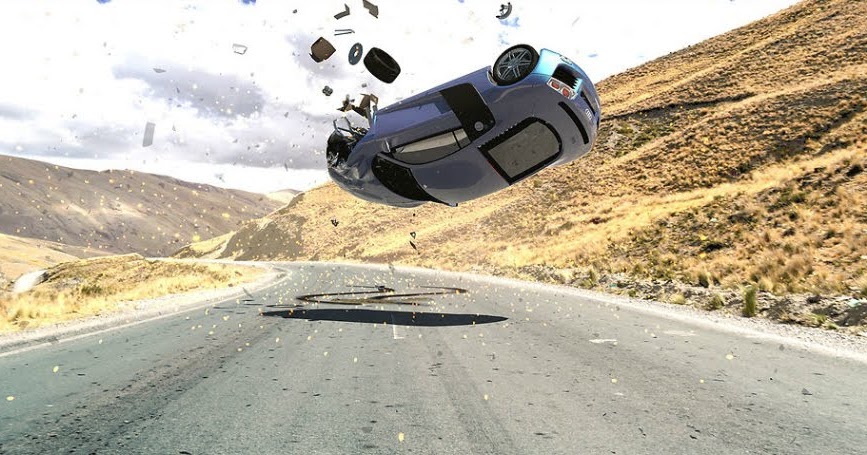
TIME SEEMS TO SLOW DOWN WHEN IN A CAR CRASH
TIME SEEMS TO SLOW DOWN IN A CAR CRASH

Burdick shows, through recounted experiments, that time does not slow down when we experience traumatic events like a car crash or a bungee jump.  What our mind does is reconstruct an accident or bungee jump through a consciousness that makes it seem time slows down.  Our consciousness remembers or manufactures events as though they occurred in slow motion; i.e. we remember seeing our car flipping over, the top being crushed, and our effort to use a seat belt to steady our movements.  All of this happens within a minute but we remember it in detail as though a slow-motion camera records the accident.

TIME FLOWS IN ONE DIRECTION (You cannot unbreak an egg.)
TIME FLOWS IN ONE DIRECTION (You cannot un-break an egg.)

Burdick notes that time only flows in one direction.  As common experience tells us, we cannot un-break an egg.  Life begins young and grows older.  Through manipulation of images, we can reverse time but we know it is an illusion.

Various experiments show that time can be slowed down as speculated by Einstein, and later proved by others.  The slowing of time is due to the speed of objects in relation to the unchanging and constant speed of light.   Because a human in space is traveling at a faster speed ( in relation to the unchanging speed of light), he/she ages less than a person on earth.  But even in Einstein’s theory, time is never shown to go backward.  That is why time travel to the past is considered impossible.

Burdick notes that time is always now.  It has no past.  It has no future.  Time is “in the moment”.  Burdick’s recognition is not helpful in understanding time.  Time is never clearly identifiable because it is either becoming a history or a future.  How does one define a moment?  It seems to be something between history and future but what is time’s physical marker?  Maybe its consciousness but no one knows what consciousness is and every person’s consciousness is personal and subjective; not universal.

At best, Burdick’s story only deepens the mystery of time.

The Heart of Luck and Circumstance

Audio-book Review
By Chet Yarbrough


Website: chetyarbrough.blog

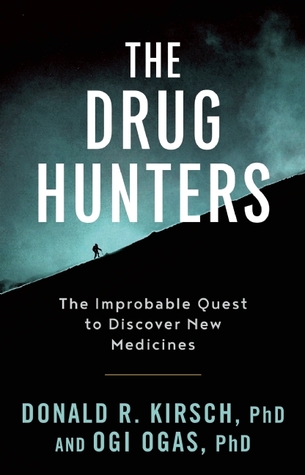
The Drug Hunters

Written by: Donald R. Kirsch, Phd, Ogi Ogas, Phd

Narrated by: James Foster

the drug hunters


OGI OGAS (AUTHOR, COMPUTATIONAL NEUROSCIENTIST)

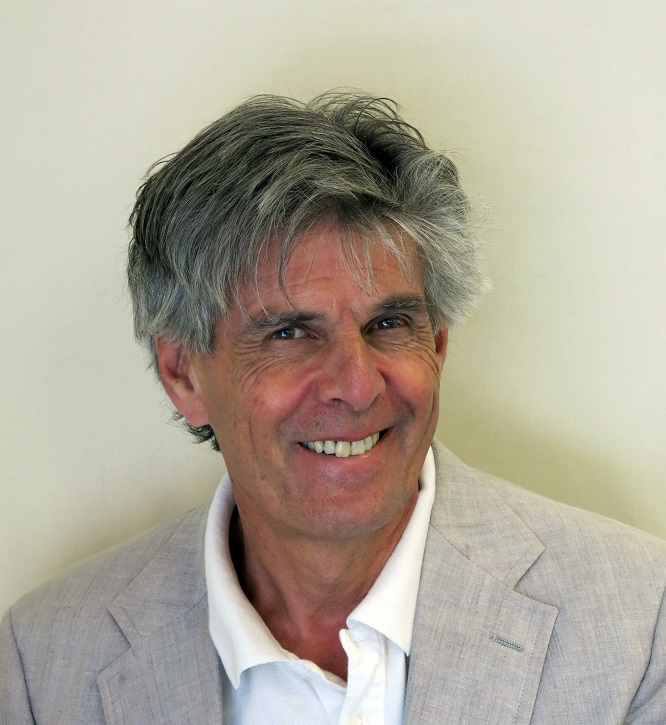
DONALD R. KIRSCH (AUTHOR, CHIEF SCIENCE OFFICER AT WYETH, CYANAMID,SQUIBB, AND CAMBRIA PHARMACEUTICALS)
DONALD KIRSCH (AUTHOR, CHIEF SCIENCE OFFICER AT WYETH, CYANAMID, SQUIBB, & CAMBRIA PHRAMACEUTICALS.)

SCIENCE OF PHARMACOLOGY
As a science, pharmacology survives in the heart of luck and circumstance.

Donald Kirsch and Ogi Ogas recount the origin and history of drug discovery in THE DRUG HUNTERS.  Kirsch and Ogas explain how drugs evolved from shamanistic ritual and magic to plant extraction and modern synthetic drug creation.  They argue that the complexity of myth, elemental plant extraction, and animal metabolism make the search for effective drugs a casino exercise.

LUCK AND FATE
Like gamblers, drug hunters lie to themselves about continuing research on busted bets with bigger financial and emotional investments.  Sometimes they win but usually they lose–no breakthrough is made.

Kirsch and Ogas reveal how scientists, entrepreneurs, and corporations make big bets; garnering wins and losses wrapped in luck and circumstance.  Like gamblers, drug hunters lie to themselves about continuing research on busted bets with bigger financial and emotional investments.  Sometimes they win but usually they lose–no breakthrough is made.  The drug does not work as expected.

The reasons for failure range from false expectation of drug hunters to impure abstraction (or creation) of ingredients.  They add to the list of potential failures with mistaken methods of administration (topical, pill-form, or injection), chemical bonding miscalculations, and human versus animal metabolism. The paths to error outnumber the highways to success.

In Trump’s treatment for Covid 19, the story of “The Drug Hunters” infers he is on a highway where errors outnumber successes.  Trump’s cocktail of drugs were vetted by a team of doctors who concluded “potential benefit from treatment outweighed the relative risks”. Trump and Covid19 Treatment

Americans hope for Trump’s recovery but not necessarily his re-election.

MONEYSo why do scientists, entrepreneurs, and corporations gamble on research?  Because a win can make billions of dollars.  Kirsrch and Ogas imply corporations are reducing their research departments and changing their mode of drug discovery by purchasing companies that have found new and effective drugs.

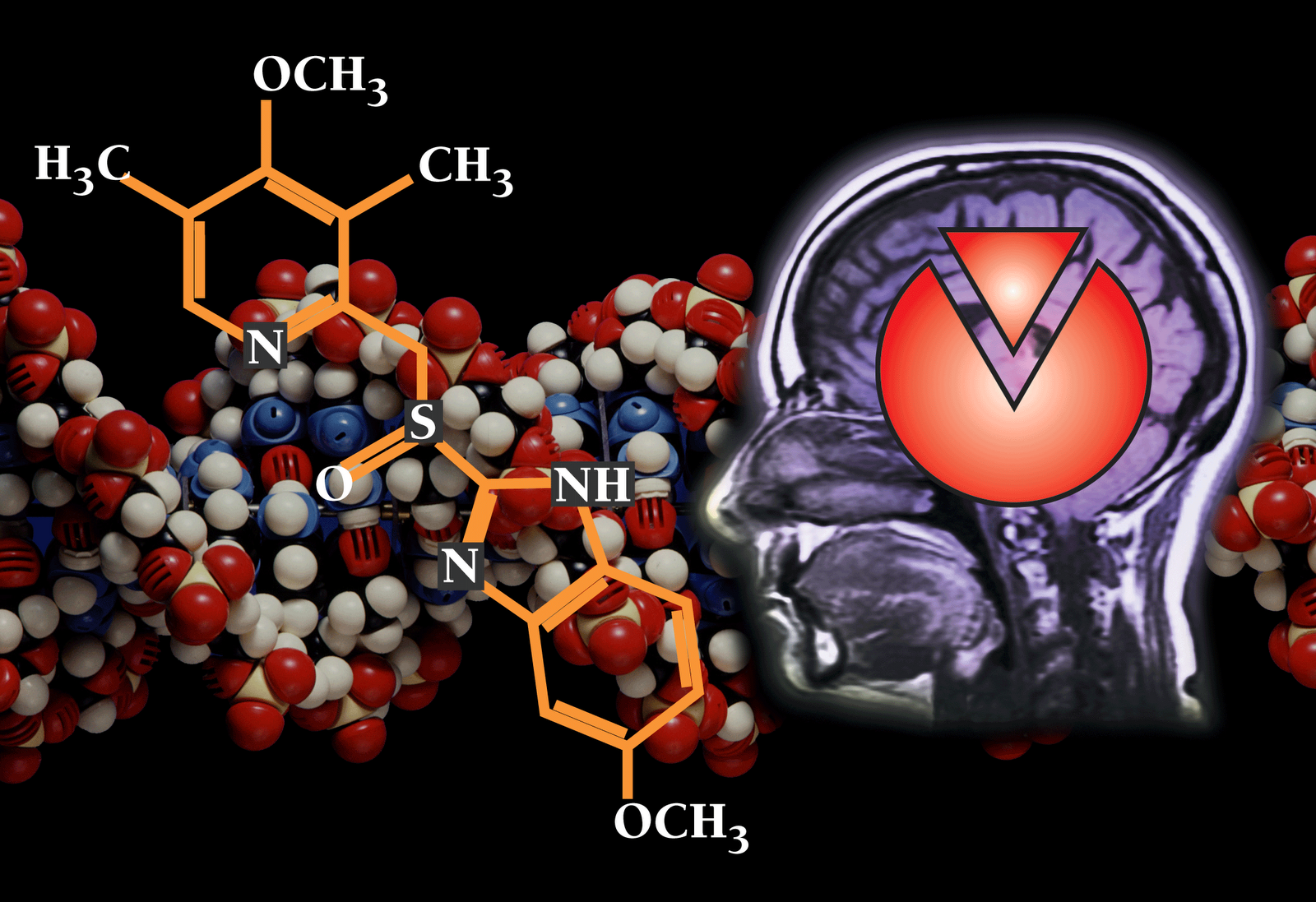
BIG PHARMA SYMBOLS
A troubling implication is that new drug discoveries will not come from corporations.

A troubling implication is that new drug discoveries will not come from corporations.  That leaves new drug discovery to driven independent scientists, entrepreneurs, and government agencies (funded by tax revenue).

A ten billion dollar investment by NIH is in Moderna’s effort to find a Covid19 vaccine.  Moderna is trying to patent their Covid19 drug with exclusive ownership. The public should be compensated for tax dollars that subsidize private industry research.

Kirsch and Ogas offer fascinating stories of how therapeutic drugs were discovered.  From aspirin to penicillin to birth control; to psychiatric treatment and cancer remediation, they explain how difficult, expensive, and serendipitous the search for effective drugs have been.