
Books of Interest
Website: chetyarbrough.blog
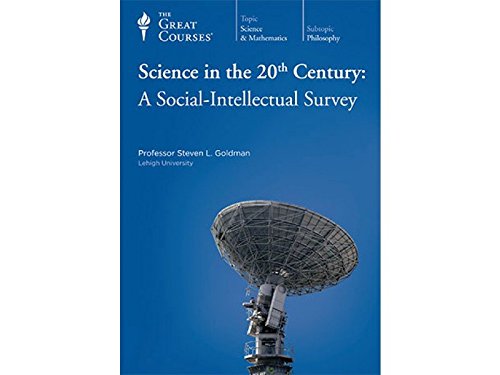
Science in the 20th Century (A Social-Intellectual Survey)
By: The Great Courses
Narrated By: Steven L. Goldman

Professor Goldman received a B.S. Degree in Physics from Polytechnic University of New York and received a Master of Arts and PhD in Philosophy from Boston University.
Professor Goldman offers lectures on transformative scientific discoveries of the 20th century. He begins with great discoveries in physics by Newton, Einstein, Curie, Bohr, Planck, Heisenberg, Dirac and others who broaden a listener’s understanding of the universe, Earth, life, and humanity. He melds science into philosophy which gives a generalist an appreciation of genius and its limitations. From the limitations of microscopes, thermometers, spectroscopes, barometers, and galvanometers, Goldman draws lines between science’s experimentally reproducible facts and philosophy’s speculation.

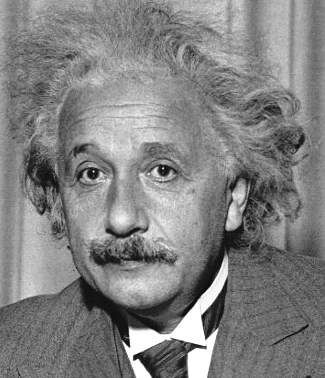
Newton and Einstein had different understandings of the universe. Newton understood gravity as a force between two masses, subject to earth’s gravitation. Einstein redefined Newton’s gravity as a power exerted throughout the universe and between planets rather than one planet we call earth. Einstein proves the power of gravity is based on forces beyond earth though Newton’s interpretation is predictive of most physics’ phenomena on earth, it fails to predict the effects of time, space, and energy in the universe. Einstein’s discoveries lead to a theory of General Relativity where mass and energy are equal to each other and interchangeable. Newton viewed space and time as absolute while Einstein viewed them as relative. Newton’s physics were simpler to understand while Einstein’s required advanced mathematics that took into consideration the warping of space and time. To Newton, the speed of gravity was a constant while to Einstein, the only constant was the speed of light. To Newton two occurrences could occur simultaneously but Einstein recognized simultaneity is impossible. Any distance between the two occurrences will always be observed at the speed of light which means they cannot have happened at the same time because they cannot be in the same place. The speed of light controls the observation of action. Two occurrences cannot occupy the same space therefor they cannot happen simultaneously.
Professor Goldman explains the many utilitarian uses of great scientific discoveries from so many scientists that names become too numerous to be recalled.

However, without their discoveries, humanity would not have entered the age of Artificial Intelligence and the reality of information as an energy source in the world; not to mention the many scientific discoveries that have improved the lives of 8.2 billion people. (Another side of that story is the number of people killed by WMD, undiscovered cures for disease, and earth’s pollution by humanities use of known and yet to be known discoveries.)
Without fossil fuels, renewable energy, and nuclear power, humanity would still be living in caves, subject to nature’s choice. The importance of information is why we read books, listen to lectures, rely on remembrance of things past, and choose the course of our lives. As Shakespeare noted in The Tempest, “What’s past is prologue”.

Scientific discovery revealed the theory of evolution, the germ theory of disease, the laws of motion and universal gravitation, the theory of relativity, the discovery of DNA, drugs to cure disease, and quantum mechanics that imply future unpredictability. This is the daunting message of Goldman’s lectures.

 REVIEWS AND VIEWS OF LIFE