
Books of Interest
Website: chetyarbrough.blog
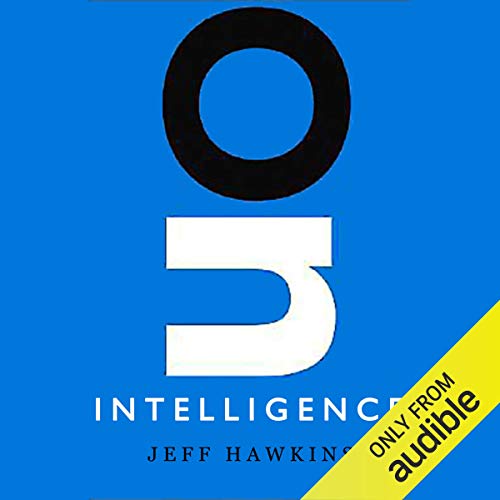
On Intelligence
By: Jeff Hawkins, Sandra Blakeslee
Narrated By: Jeff Hawkins, Stefan Rudnicki
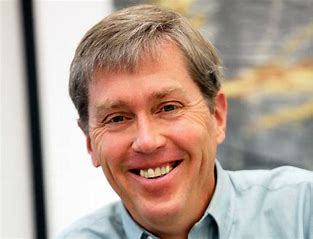

Jeff Hawkins co-founder of Palm Computing and co-creator of PalmPilot, Treo, and Handspring.

Hawkins and Blakeslee have produced a fascinating book that flatly disagrees with the belief that computers can or will ever think.
Hawkins develops a compelling argument that A.I.’ computers will never be thinking organisms. Artificial Intelligence may mislead humanity but only as a tool of thinking human beings. This is not to say A.I. is not a threat to society but it is “human use” of A.I. that is the threat.
Hawkins explains A. I. in computers is a laborious process of one and zero switches that must be flipped for information to be revealed or action to happen.

In contrast to the mechanics of computers and A.I., human minds use pattern memory for action. Hawkins explains human memory comes from six layers of neuronal activity. Pattern memory provides responses that come from living and experiencing life while A.I. has a multitude of switches to flip for recall of information or a single physical action. In contrast, the human brain instantaneously records images of experience in six layers of neuronal brain tissue. A.I. has to meticulously and precisely flip individual switches to record information for which it must be programmed. A.I. does not think. It only processes information that it is programmed to recall and act upon. If it is not programmed for a specific action, it does not think, let alone act. A.I. acts only in the way it is programmed by the minds of human beings.
So, what keeps A.I. from being programmed to think in patterns like human beings? Hawkins explains human patterning is a natural process that cannot be duplicated in A.I. because of the multi-layered nature of a brain’s neuronal process. When a human action is taken based on patterning, it requires no programming, only the experience of living. For A.I., patterning responses are not possible because programming is too rigid based on ones and zeros, not imprecise pictures of reality.

What makes Jeff Hawkins so interesting is his broad experience as a computer scientist and neuroscientist. That experience gives credibility to the belief that A.I. is only a tool of humanity. Like any tool, whether it is an atom bomb or a programmed killing machine, human patterning is the determinate of world peace or destruction.
A brilliant example given by Hawkins of the difference between computers and the human brain is like having six business cards in one’s hand. Each card represents a complex amount of information about the person who is part of a business. With six cards, like six layers of neuronal receptors, a singular card represents a multitude of information about six entirely different things. No “one and zero” switches are needed in a brain because each neuronal layer automatically forms a model that represents what each card represents. Adding to that complexity, are an average of 100billion neurons in the human body conducting basic motor functions, complex thoughts, and emotions.

There are an estimated 100 trillion synaptic connections in the human body.
The largest computer in the world may have a quintillion yes and no answers programmed into its memory but that pales in relation to a brains ability to model existence and then think and act in response to the unknown.
This reminds one of the brilliant explanation of Sherlock Holmes’ mind palace by Sir Arther Conan Doyle. Holmes prodigious memory is based on recall of images recorded in rooms of his mind palace.

Hawkins explains computers do not “think” because human thought is based on modeling their experience of life in the world. A six layered system of image modeling is beyond foreseeable capabilities of computers. This is not to suggest A.I. is not a danger to the world but that it remains in the hands and minds of human beings.
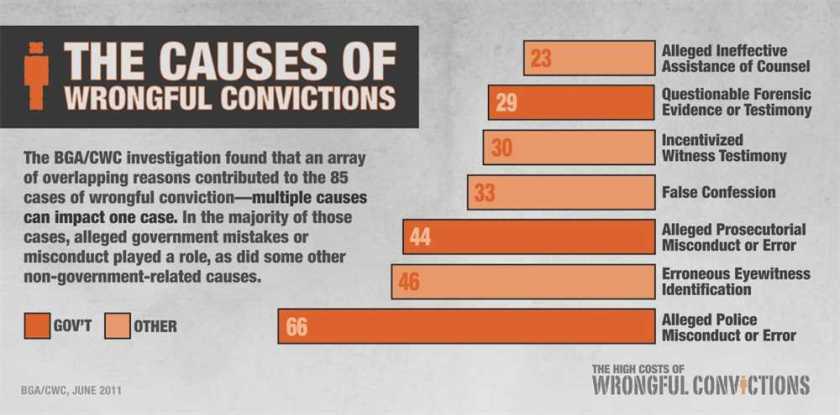
What remains troubling about Hawkin’s view of how the brain works is the human brains tendency to add what is not there in their models of the world.
The many examples of eye-witness accounts of crime that have convicted innocent people is a weakness because people use models of experience to remember events. Human minds’ patterning of reality can manufacture inaccurate models of truth because we want our personal understanding to make sense which is not necessarily truth.
The complexity of the six layers of neuronal receptors is explained by Hawkins to send signals to different parts of the human body when experience’ models are formed.
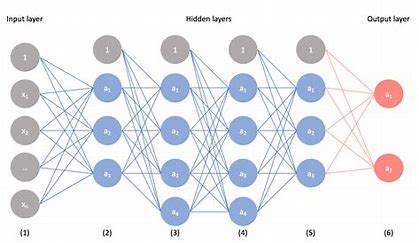
That is why in some cases we have a fight or flight response to what we see, hear, or feel. It also explains why there are differences in recall for some whose neuronal layers operate better than others. It is like the difference between a Sherlock Holmes and a Dr. Watson in Doyle’s fiction. It is also the difference between the limited knowledge of this reviewer and Hawkins’ scientific insight. What one hopes science comes up with is a way to equalize the function of our neuronal layers to make us smarter, and hopefully, wiser.
One may conclude from Hawkin’s research that human beings remain the smartest if not the wisest creatures on earth. The concern is whether our intelligence will be used for social and environmental improvement or self-destruction.

 REVIEWS AND VIEWS OF LIFE