

Books of Interest
Website: chetyarbrough.blog
Dark Tide (Growing Up with Ted Bundy)
By: Edna Cowell Martin, Megan Atkinson
Narrated By: Morgan Hallett
“Dark Tide” is a journey into the “Heart of Darkness”. Like Joseph Conrad’s story, Edna Cowell Martin, with the help of Megan Atkinson, tries to make sense of human madness, societal hollowness, alienation, and lies. Edna Cowell Martin is the cousin of the notorious Ted Bundy who admits to and is convicted of the murder, rape, and mutilation of 30 or more women in the 1970s. Ms. Martin is in her 70s when she finally chooses to tell the story of her cousin, Ted Bundy, who was like a brother in her family.
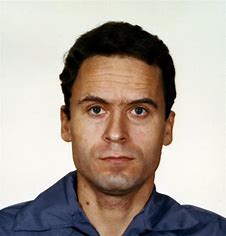
Ted Bundy (1946-1989, American serial killer.)
Bundy was an illegitimate child raised by a mother and stepfather. His mother refuses to reveal who his father was which is of little consequence except to Ted Bundy and the impact it might have had on who he became. Bundy is shown to be a bright student who graduated from the University of Washington, went to Yale to study Chinese, and became close to the Cowell family. The Cowells were an artistic family with a father who was a classical pianist who traveled the world and became a music teacher at “The College of Puget Sound” and professor emeritus and Chairman of Music at the University of Arkansas.
The author, Edna Cowell Martin, interviewed by Piers Morgan.

Despite Ms. Martin’s wide travel experience because of her father’s profession, she appears to have lived a middle-class life in the state of Washington. Many years after Ted Bundy’s execution, Martin finally writes and publishes “Dark Tide” about this American serial killer, kidnapper, and rapist. She explains the close relationship that the Cowell family had with Ted Bundy. Whether it offers any insight to the mind of such a terrible person remains a mystery.

Ted Bundy at trial for murder.
Bundy appears as a relatively handsome, intelligent young man with a girlfriend and potential for becoming a successful American lawyer, businessperson, or professional. He becomes close friends with the Cowell family. When he is arrested as a murder suspect, none of the Cowells believe he is guilty. They support his release and send letters to explain why he could not be guilty of the crimes for which he is accused. Bundy is released on bail and returns as a friend to the Cowell family.
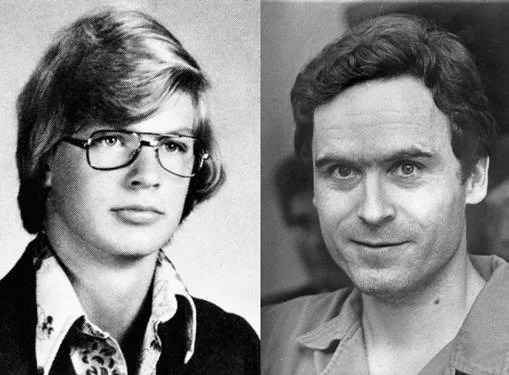
Bundy as a youth and adult.
Edna Cowell and her friends meet with Bundy after his release and gather at a local restaurant.
Bundy appears to be happy and is glad to see everyone. However, his face is recognized by strangers in the restaurant, and they ask him if he is the “Ted Bundy” in the news. Bundy’s response is unexpected. He appears delighted by the recognition and creates a scene in which he extols his notoriety. This is the first time Edna becomes suspicious of Bundy’s innocence. She does not believe he is guilty but that his glorification of association with a murderer makes her uncomfortable. Why would anyone want to be associated with such a horrible crime? Is any kind of fame okay to Bundy? This is not the person she thought she knew.
Edna keeps turning this incident over in her mind. She begins to wonder if Bundy might actually be guilty, rather than just wanting to be the center of attention.
The terrifying aspect of Edna Cowell Martin’s memoir is what does one person really know about another person? Think of all the people you know and what has happened since you first met them that changed your mind about who they are, what they believe, or what they have become, i.e. at least in your mind.

What is somewhat off-putting is that Edna Cowell Martin argues the State should not have the right to take one’s life even if they are guilty of murdering an innocent person.
Bundy killed and raped an unknown number of women. Is there justification for the State to execute someone for a heinous act that is confessed to by a perpetrator? Is it less humane to incarcerate someone for life who has confessed to a heinous crime? Are human beings, regardless of their crime, capable of being rehabilitated? Every human being is guilty of some transgression in life. Is there a line that can be drawn that separates those who should be executed, incarcerated, or rehabilitated by the State? “Dark Tide” raises all these questions in one’s mind.

 REVIEWS AND VIEWS OF LIFE