

Books of Interest
Website: chetyarbrough.blog
How to Hide an Empire (A History of the Greater United States)
By: Daniel Immerwahr
Narrated By: Luis Moreno

Daniel Immerwahr (Author, American historian, professor and associate department chair of history at Northwestern University.)
Daniel Immerwahr offers an interesting perspective on American History in “How to Hide an Empire”. Today’s Americans do not think of America as an empire because of its anti-colonial criticism of other countries. In the 21st century, Puerto Rico, the Northern Mariana Islands, U.S. Virgin Islands, Guam, and American Samoa are arguably part of America because of their cultural/social relationship. The U.S. actually owned the Philippines when America purchased it from Spain in 1898. The Philippines did not gain independence until July 4, 1946. At that time, America’s population was approximately 141 million. The Philippines and American territories in 1946 were nearly 20 million or approximately 14% of America’s total population. The official language for government, education, and business in the Philippines and America’s territories became English. (Puerto Rico’s domestic language remains Spanish, while Guam and American Samoa still teach their native’ languages.) Immerwahr’s inference is America is an empire in many ways, if not in name.
One might take Immerwahr’s history as a criticism. He implies the ownership of island territories has been a history of occupation, inuring more to the benefit of American needs and wants than local populations.
Immerwahr argues the financial wealth of the Philippines was used to build local roads and cities to benefit American commerce with little consideration for the personal needs of the indigenous. Undoubtedly, there is some truth in that opinion, but one realizes jobs were created for local people that offered some benefit to indigenous families. Americans managed road improvements and city developments that certainly aided Philippines’ economic growth after independence.
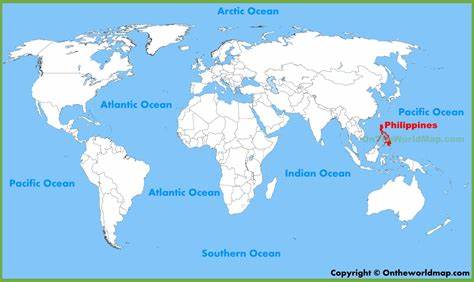
Location of the Philippines in relation to the U.S.
Philippine’ city and road development is a tribute to American architect and planner Daniel Burnham. The road improvements managed by William Forbes and Francis Harrison stimulated economic growth and connected remote communities. One is inclined to believe that indigenous peoples are as much benefited as damaged by America’s “empire” categorization in the use of Philippine resources to build new roads and cities. These improvements were a great accomplishment and monument to American architects and road builders, but the end benefit inured to the Philippines as much, if not more, than what is characterized as an American Empire.
Ringworm infection. The infection causes a pallor in facial appearance and fatigue in those who contract it.
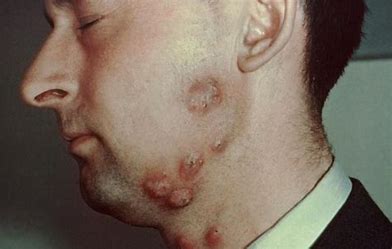
Immerwahr goes on to explain how public health initiatives were begun during its empire building in the Philippines. One of the notable American doctors that began treating ringworm among the indigenous was Victor Heiser, the Director of Health from 1905 to 1915 in the Philippines. Ringworm had been identified as a fungal infection in the 1840s. It came from ringworms that penetrated the feet of children not wearing shoes who stepped in contaminated soil from human feces. The infection caused a pallor in facial appearance and fatigue in those who contracted it. American doctors trained Filipino medical professionals on how to identify, prevent, and treat the infection.

Japanese internment camp.
World War II brought out some of the worst and best in Americans.
In Alaska, Aleut village inhabitants were relocated for the alleged purpose of protection. They were housed in unclean, nearly uninhabitable, facilities in the interior of Alaska. Some of the Aleut’s abandoned houses were occupied by the military and many Aleutians were not allowed to return for years after the end of the war. And of course, as most know, the rounding up and incarceration of Japanese in camps in the continental U.S. is well documented. These are actions of a country acting like an omnipresent, omniscient empire. The bombing at Pearl Harbor reinforces a view of America as an empire. Nearly 3o% of the Hawaii’s population was of Japanese heritage. Many Americans, not to mention President Franklin Roosevelt, acted badly in respect to American born Japanese in Hawaii and the continental United States. Like an emperor, Roosevelt ordered the incarceration of American born Japanese citizens.
Just as there were native American heroes, there were Japanese American heroes in WWII. Private First Class Sadao Munemori was shot in the belly, left leg, and lost an arm while attacking and destroying 3 machine gun nests in Italy.

When Japan took control of the Philippines in 1941, some Japanese residents joined the Japanese army. However, the Filipino people began an intense guerrilla war that eventually led to the return of General MacArthur to liberate the islands in 1944. Immerwahr reminds reader/listeners of the valor of American Japanese’ soldiers who risked their lives during the war. He tells the story of Private First Class Sadao Munemori who was shot in the belly, left leg, and lost an arm while attacking and destroying 3 machine gun nests in Italy. He survived and was awarded the Medal of Honor.
Despite Immerwahr’s detailed argument of America as a hidden empire, he does not suggest or imply America supports colonization.
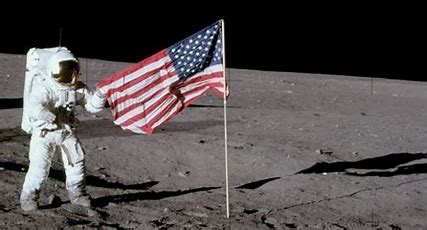
The most convincing evidence of Immerwahr’s belief is in America’s trip to the moon and the government’s statement that the moon belongs to no one, despite the mission’s planted American flag.
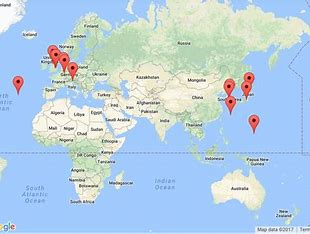
In the end, Immerwahr explains how American military bases on islands around the world reinforces effective colonization of foreign cultures by America. Widespread adoption of the English language and the presence of military bases on islands from Liverpool, England to the Northern Mariana Islands and beyond suggests America functions as an empire but not as an intended colonizer.

 REVIEWS AND VIEWS OF LIFE