
Books of Interest
Website: chetyarbrough.blog
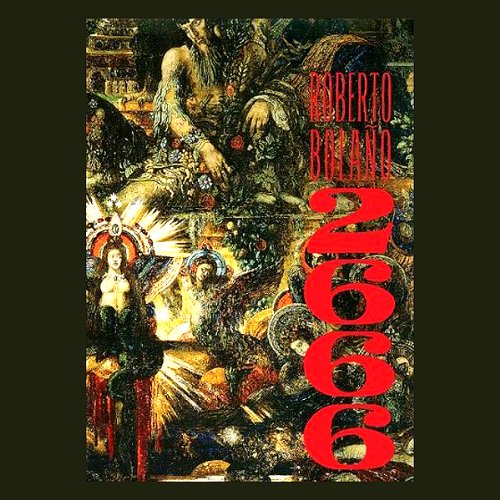
“2666”
By: Roberto Bolaño
Narrated By: John Lee, Armando Duran, G. Valmont Thomas, Scott Brick, Grover Gardner

Roberto Bolaño (Author, 1953-2003, died at the age of 50, Chilean novelist, short-story writer, poet and essayist.)
“2666” is a journey around the world. One begins the journey as though one is sinking into inescapable quicksand. Roberto Bolaño dazzles one’s imagination. Its granular mix of western society captures one’s imagination. The book’s narrators trap “2666” listeners in a story of modern times.
Bolaño infers sex is an equal opportunity exploiter.

He suggests communism and socialism are distortions of Marxism and shows capitalism as a form of enslavement. Women’s societal inequality extends to physical abuse in many societies and, at an extreme, to murder. Bolaño’s many characters illustrate the way in which he believes these are societal truths.

The first part of Bolaño’s story tells of three highly educated people who travel for business and pleasure based on their professions and desires.
They are academics steeped in literature who lecture on poetry, philosophy, and great writers. They meet in different areas of Europe as a trinity of lovers, two men and one woman that form an emotional and sexual threesome. The woman appears the more dominant of the three with the two men abandoned for a time because of a younger lover in the woman’s life. The two men continue to travel together and apart but pursue a licentious life with women, some of which are paid for their sexual favors. The author seems to explain sexual desire is characteristic of all human beings, both male and female. Human desire can be exploitive, companionable, and/or a way to make a living.

Bolaño’s travels extend to Mexico and the United States after his literary journey through Europe.
He shows every form of government, whether communist, socialist, or capitalist fails to treat its citizens equally. He infers Marxist theory may hold an ideal of equality but suggests communism, socialism, and capitalism only distort the ideal of a classless society. Materialism, the struggle for recognition, and the value of labor are chimeras, i.e., wished for ends that are illusory in every known form of government.
Bolaño’s trek to Mexico reveals its poverty and the hard life of a country of the rich and many poor.

He focuses on a notorious record of women being murdered in Mexico by an unknown killer and rapist who may be one man or two. The grim view of Mexico dwells on the investigation of these horrific crimes. In the process, the listener is told about prison life in Mexico, a probable killer of the women and another that may still be on the loose. The murders of women continue. An FBI agent from America is involved in the investigation. This is a hard section of the book because of its repeated explanation of crimes against women, but it offers a view of Mexico’s poverty and the unfair, unequal treatment of women and others in the world.

The last chapters of Bolaño’s work are a flash back to WWII and Germany’s attack of Russia after Stalin’s mistaken alliance.
There are flashes of brilliance in this flashback, but the length of the novel begins to wear thin. “2666” is a well written book by an author who has read and understood more about society than many who have lived long lives in America, a land of opportunity with many of the faults noted in Europe and North America.

 REVIEWS AND VIEWS OF LIFE