
Books of Interest
Website: chetyarbrough.blog
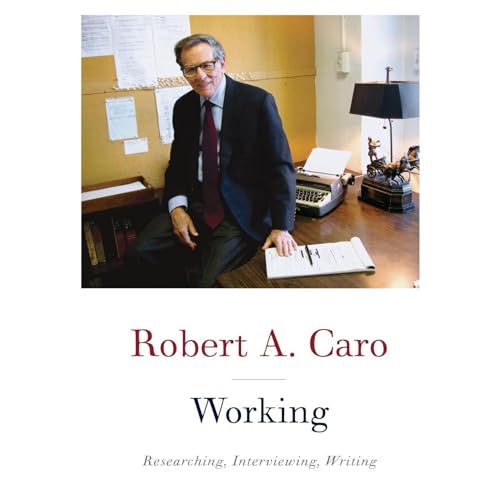
“Working”
By: Robert A. Caro
Narrated By: Robert A. Caro
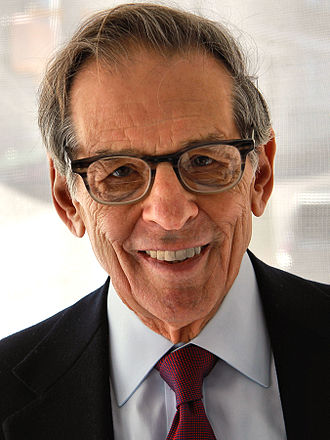
Robert Allan Caro (Author, journalist, winner of 2 Pulitzer Prizes in Biography and many other coveted literature awards.)
Every non-fiction writer can appreciate this erudite and entertaining audiobook, personally written and read by Robert Caro. Caro explains what “Working” means to a non-fiction writer. Caro artfully explains why and how researching, interviewing, and writing a biography is a revelatory experience.


In “Working”, Caro focuses on his two Pulitzer Prize winning books, “The Power Broker: Robert Moses and the Fall of New York” and “Master of the Senate”, one of his four books about Lyndon Johnson. Both biographies are about political power in America.
Robert Moses (1888-1981) was an American urban planner and public official in the New York metropolitan area during the early to mid-20th century.

Moses (among many titles) was the New York City Parks Commissioner and Chairman of the Triborough Bridge Tunnel Authority. His political power and influence are detailed in Caro’s book, “The Power Broker”. Though Moses was never elected to political office, he arguably shaped the infrastructure of New York City as much, if not more, than any elected person in New York. “Working” explains how a reporter from a small Long Island’ newspaper manages to write “The Power Broker” and become one of America’s most famous biographers.

After graduating from Princeton with a B.S. degree, Caro is hired by the Long Island, New York’ newspaper, “Newsday”.
Caro explains he had been a writer for many years as a young boy and college student before getting a scut-work job at “Newsday”. He tells of a breakthrough report he writes that gets attention from the editor of the paper. He is given advice by the editor who recognizes the quality of his writing. The advice is that when writing a piece for the public, be sure of your facts by “turning every page”. Caro takes that advice and explains how it became a mantra, a repeated aid, in his writing.
Caro explains how he and his wife work to “turn every page” in researching the Moses and Johnson biographies.

Even though one may have read Caro’s two Pulitzer Prize winning’ books, “Working” offers a nearly perfect introduction to his biographies of Moses and Johnson that are, to the extent humanly possible, researched by “turning every page”. Caro is hard on himself for taking years to research and write his biographic books. It is a financial hardship for his family, particularly before his first success with “The Power Broker”. They sell their house in Long Island to support his book research. After that first success, the financial insecurity is offset by grants and the support of literary agents. “Turning every page” is a laborious process but it assures and reinforces the facts revealed in his biographies.
Caro explains how he and his wife meticulously researched public documents to confirm facts that corroborate the victimization of some New Yorkers by monied interests that gave Moses the political power to destroy low-income neighborhoods for new thoroughfares through the New York City area.

With the construction of over 600 miles of road many residents, renters and homeowners, were evicted from their homes. Most were left to fend for themselves.
Caro and his wife were willing to disrupt their lives and neighborhood relationships to pursue his obsession with verification of facts. Caro explains that he needed to move to Texas to understand what it was like for Lyndon Johnson to be raised in the Texas Hill Country. He could not just visit because local Texans would not talk to him with the candor he sought to understand where Lyndon Johnson came from. Many revelations are in his book about Johnson that could not have been corroborated without interviews with people who knew the Johnson family.

Caro and his wife move to Austin, Texas to be near the Texas Hill Country to research and understand the society in which Lyndon Johnson is raised.
Many insights are a result of the move. Experiencing the loneliness of the Texas Hill country because of its sparse population helped Caro understand Johnson’s need to be bigger than life. Interviewing Johnson’s brother reveals the tensions that existed between Lyndon and his father. Johnson’s father was heir to the original Johnson ranch that was lost because of the soils’ unproductivity. It had too much caliche, a clay content that would not support a cash crop. When Johnson’s father repurchased the ranch after its loss by the family, he failed to understand the land could not provide enough income to pay its mortgage. The ranch is lost to the bank again. The relationship between Lyndon and his father deteriorated as Lyndon grew older because of Lyndon’s disappointment with his father’s ineptitude and domineering personality. Ironically, Caro notes it is a personality that Lyndon is heir to and for which he is criticized. On the other hand, Caro explains it is also a personality characteristic that makes Lyndon one of the greatest masters of the Senate. No Senate leader since Johnson has as successfully led the Senate in passing government legislation.
Samuel Ealy Johnson Jr. (Lyndon Johnsons’ father. 1877-1937.)
Lyndon’s brother implies Lyndon’s conflicts with his father became part of his drive to be more successful than his father.

Caro infers Johnson and Moses were forces of nature. Both were political power users that understood how to use it to get their way. Obviously political power can be used for ill or good. One can argue New York City open spaces and parks were a great benefit to the city. On the other hand, many people were displaced to provide those open spaces. The Civil Rights Act passed during the Johnson administration benefited millions of minorities in America. On the other hand, an estimated 2,000,000 Vietnamese were killed, 58,000 American soldiers died, and another 288,000 Americans were wounded and/or disabled. How many Vietnamese, and Cambodians were wounded or disabled and how many are still being hurt by leftover landmines?
Caro offers a great service to the public in his writing about political power in American Democracy. Democracy is not a perfect political system, and Caro reveals where that imperfection lies by “turning every page”. Caro’s facts do not prove truth, but they do reveal the means and consequence of political power and influence in American Democracy.

 REVIEWS AND VIEWS OF LIFE