
Books of Interest
Website: chetyarbrough.blog
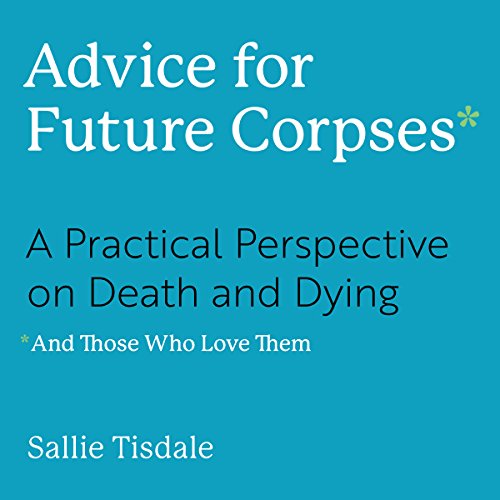
“Advice for Future Corpses” And Those Who Love Them, A Practical Perspective on Death and Dying
By: Sallie Tisdale
Narrated By: Gabra Zackman

Sallie Tisdale (Author, essayist, who earned a nursing degree in 1983, born in 1957.)
The title of Sallie Tisdale’s book is off-putting but an apt description of her advice about “…Death and Dying”. Tisdale is a registered nurse who has written several books. Her experience makes her advice about death relevant and important. Those of a certain age or physical condition are shown how to prepare themselves for the inevitability of death.

The Japanese writer Haruki Murakami wrote “Death is not the opposite of life, but a part of it.”
Tisdale explains how a person can manage the inevitability of their death. To some, this seems a macabre thought, but nothing can be depended upon in life except its end. Why not manage that end with at least as much skill as one chooses to live? The reason people choose not to think about planning for death is because they are dealing with the everyday issues of living.

The irony is that Tisdale argues “planning for death” is an everyday issue.
Even if one knows they will eventually die, why care about it? Most lives are unplanned and seem out of our control anyway. How many plans for living are turned upside down by unforeseen events? Unforeseen events like Covid19, the rise of Hitler, WWII, the atomic bomb, and so on and so on. Yes, the occurrences of history change human plans. However, the difference is that death of the individual is a known inevitability. When one knows, their death is going to happen, why not have a plan?
Tisdale gives listeners the details of a plan for death.
Prepare Healthcare Directives

- Decide to provide or not provide organ donation.
- Explain burial or cremation wishes.
- Maintain a financial inventory of accounts and assets.

Create a Will covering heirs and their inheritance. Review the plan based on life changes.
Having a will takes asset distribution out of the hands of a state court system. Health directives show your medical wishes and notes who has the right to make decisions for you in the event of incapacitation. A Health Care Directive stipulates whether extraordinary measures or comfort until death is to be administered. Written directives can explain how the body, after death, is to be cared for, i.e., is the body to be used for medical research, organ transplant, cremation, or burial. Time is of the essence when a person dies because living tissues and organs die soon after death of the person.
Beyond paperwork, Tisdale explains what is important to the dying when diagnosed as terminal.

To a family or caregiver, the hardest part is helping the dying cope with growing incapacity. When one is terminal, providing as much comfort as possible until death is of primary importance. The hardest part to the dying person is loss of control over one’s body. Listening to Tisdale’s real-life experience illustrate how American hospice and hospital care fails the terminally ill.
On the one hand, it is the fault of the dying for not having a clear plan for what is to be done in the event of a terminal diagnosis or illness, but Tisdale’s point is that neither hospice nor hospital’s services offer consistency in their care for the dying. Tisdale believes that once a person is diagnosed as terminal, the obligation of hospice’ and hospital’ care is to give comfort until death. However, institutions and doctors do not have the time nor inclination and American families do not have the money. Tisdale mentions Japanese elder care by noting the majority of those who are dying, die at home. The inference is that institutions are unlikely to provide the same care as the family of one who is dying.

Tisdale believes “Death with Dignity” laws passed in Oregon, Washinton, California, Colorado, Hawaii, Maine, New Jersey, Vermont, and Washinton, D.C. are on the right side of history.
They emphasize the importance of comfort for the terminally ill. A “Death with Dignity” law allows doctors to prescribe lethal drugs to end a terminally ill person’s life as long as the injected drug is not administered by the doctor or institution for which he/she works.
Tisdale’s book is hard to listen to but worth one’s time and effort for understanding.

 REVIEWS AND VIEWS OF LIFE