

Books of Interest
Website: chetyarbrough.blog
“The Foundations of Western Civilization”
By: Great Books Series
Lecturer: Professor Thomas F.X. Noble

Thomas F. X. Noble (Professor at Notre Dame, Ph.D. from Michigan State University, President of the American Society of Church History, received the Charles Sheedy Prize for Excellence in Teaching in 2011.)
Noble offers a distinctive view of the foundation of Western Civilization in 48-lectures sponsored by the Great Books Series. There is little doubt about the importance of religion in the world. Noble explains how the Bible is a seminal work underpinning one of the two largest religions of the world, Christianity. Noble explains the Bible, just as the Quran in the east, provides a contract between a singular God and humanity. However, the dialectic of religion is that it binds people together as well as rips them apart. On the one hand, religious belief brings people together with belief in something greater than themselves. On the other, Christian and Islamic believers have maimed and murdered millions.

The spread of Christianity begins in the 1st century while Muslimism spread in the 7th. The ministry of Jesus Christ spread Christianity in 30-33 AD. Some would argue the New Testament Gospels of Matthew, Mark, Luke, and John are extensions of the Hebrew Bible. The Jewish Torah and Hebrew Bible emphasize the oneness of God, which is consistent with Christian belief, but the difference is that Jesus was not considered a Messiah by Jews. Jesus was, at most, only a messenger of God to Jews, like Muhammed is considered to Muslims.

Noble notes the spread of Christianity began in the Middle East, centuries before Muhammad’s spread of Muslimism in Mesopotamia.
Noble suggests Christianity’s spread is associated with the advent of Zoroastrianism in Mesopotamia. The prophet Zoroaster believed in a monotheistic faith before the ministry of Jesus in Judea and before the record of Judaism in the Torah of 1400 BC, the later Holy Bible, New Testament, and Quran. The common factor in Judaism, Christianity, and Muslimism is belief in one Supreme Being. Of course, there are numerous differences in these religions after their “One God” similarity. The point is, they all originated in the Middle East according to Noble’s history.
The point Noble is making is that religion is an integral part of the foundation of civilization. Religion brought people together. At the same time, religion became a foundation for difference among people of similar and different cultures. Noble explains those differences helped and hindered the shape of western civilizations.


Religion is not the singular shaper of western civilization. Noble goes on to explain the early stages of democracy that began in Greece. Ironically, democracy was looked down upon by Greeks and much of their criticism holds true in modern times.
Greeks feared the tyranny of the majority and were concerned about the lack of expertise in governance and decision-making on the part of the general population. They saw the risk of demagogues. America and the western world have experienced all of these democratic risks. One could argue America is experiencing those risks in 2024.

As these risks play out in ancient Greece, they were mitigated by pragmatic Athenian leaders like Cleisthenes who respected special interests of his time in office. He introduced a lottery system that gave voice and some influence on policy to representatives of these special interests. The people being governed were recognized in public forums that allowed free expression. On the other hand, Cleisthenes instituted the principle of societal ostracism for aberrant behavior of people who advocated against what was perceived as the common good. Future leaders expanded political rights of Greek residents and created a council of special interests to have a direct role and influence in public policy. Public ostracism of Greek citizens for up to ten years was formalized to maintain government’ stability.
Rather than direct democracy, Rome established a representative system of democratic governance.

Noble moves on to the Roman Empire that adopted many of the principles that advanced Greek civil governance. However, rather than direct democracy, Rome established a representative system of democratic governance. Rome made wealth a more important criteria for serving as a representative of government. However, Rome did not use their citizen representatives to make law but only to give vent to their opinions about leadership’s decisions. Rome extended their empire by military conquest but when battles were won, they appointed governors of new territories that granted citizenship to the conquered. Military control is maintained by Rome for centuries, but a voice is given to the citizens of conquered territories. In a combination of military power, alliances with native rulers, and positive incentives, Rome assimilated foreign cultures into a vast empire.
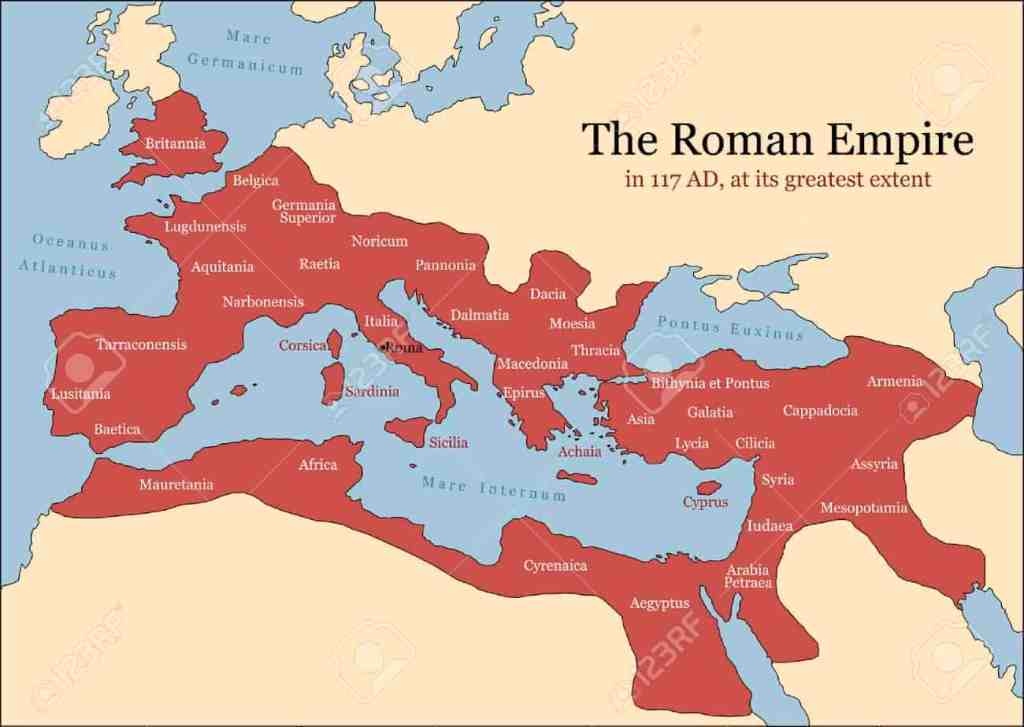

The power and influence of Rome diminished in the 3rd century. Rome’s diminishing power comes from multiple directions. Noble explains the rise of disparate tribal groups challenged Roman authority. The growing influence of religion and diminished gravitas of its citizens accelerated Romes’s loss of power and influence.

However, it is clear the lessons of Greece’s and Rome’s democratic history are guides to the future of “…Western Civilization”.
China recognizes the importance of investment in their military and its economic investment in other countries (e.g., Road and Belt program) to advance its influence and role in the world.

The difference is that China relies on centralized government control while America relies on the principle of “power to the people”. Dictatorships are inherently limited by military prowess and singular, autocratic leadership. In contrast, the ideals of democracy are humanly limitless. Today’s unknown seems to be religion. In theory, America’s founding fathers recognized religions’ powerful influence by legislating separation of church and state. Religion remains a great force in the world, let alone American society.

Noble circles back to a more detailed history of religion. As the Roman Empire begins to collapse, dynasties were formed through the 3rd century AD.
As these dynasties collapsed, Christianity spreads across former Roman controlled lands. The Byzantine Empire formed in 395 CE; Christianity grew through the 15th century to become the largest religion in the world. The Frankish dynasty established itself between 750 and 887 CE, with Charlemagne as its most renown leader. In 774 CE., Charlemagne created a papal state in central Italy. A Frankish dynasty was formed by the Carolingian family (756-887 CE) that managed to stabilize and spread Christian religion throughout Western Europe. The Carolingian family constructed churches and schools to teach Christianity. They created a Carolingian army to protect and expand belief in a Christian God. Noble’s lectures show religious belief in a Supreme Being roils the world. From reading/listening to other histories, governments founded on religious belief are destined to fail.
The remaining lectures summarize the history of the Rennaissance, the Reformation, and the split of the Christian church. Noble’s lectures reflect his erudition, multi-lingual expertise, and understanding of the people of those historical events. The underpinning notion is that religion and its permutations will continue to impact the future of the world, let alone “…Western Civilization”.

 REVIEWS AND VIEWS OF LIFE