
Audio-book Review
By Chet Yarbrough
Blog: awalkingdelight)
Website: chetyarbrough.blog
Essential Physics (A Scientist’s Guide to Life’s Biggest Questions)
By: Sabine Hossenfelder
Narrated by: Gina Daniels

Sabine Hossenfelder (Author, German theoretical physicist, science communicator.)
Sabine Hossenfelder creates unease in listeners who struggle with understanding a world determined by the science of physics. Her first chapter is about the mystery of time. Time is an illusion created by one’s mind. Your time is not my time because our perspectives are influenced by how fast we are moving. If we are in the same room, or one of us is on a train and the other is at the station, the difference is so infinitesimally small, times’ relativity is not comprehended. However, in spacetime with the effect of gravity on radio signals and rocket guidance, time’s relativity becomes navigationally critical.
Hossenfelder notes Einstein explains time is relative and not a constant force of nature because time and space are linked in a way that infers “now” has no meaning.
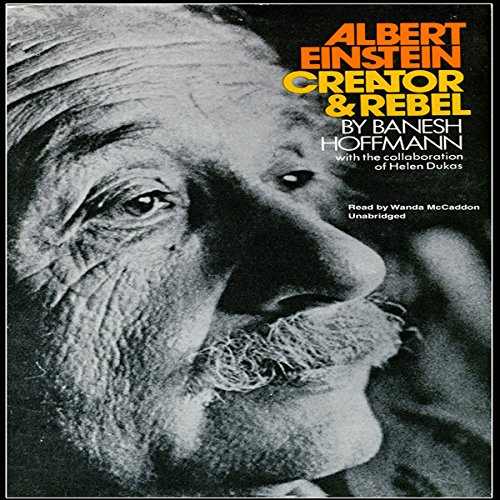
One can understand the words just written but remain confused about what is called spacetime and its meaning for the past, present, and future. Hossenfelder notes the importance of this physics truth in explaining how travel in space at high velocities cannot be planned for arrivals at specific locations without understanding time’s relativity. Here is where Hossenfelder excels as a science writer. One may not understand the physics of time, but its practical application in space flight and science experiment proves its truth.
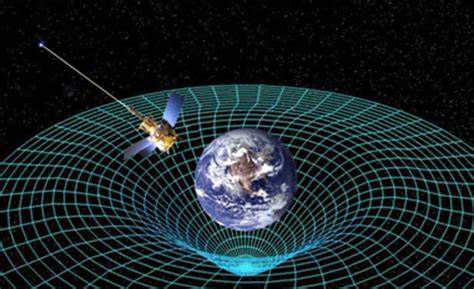
One may not understand the physics of time, but its practical application in space flight and science experiment proves its truth.
Hossenfelder, when asking questions of scientists, often asks if they believe in God. Hossenfelder notes most of the scientists she interviews are agnostic but wants to better understand where a scientist’s point of view differs from her own. The inference one draws from Hossenfelder’s question is that God may or may not exist. Her agnosticism implies today’s science neither proves nor disproves His/Her or Its existence.
Hossenfelder’s point is there is no way for science to test or measure the existence of God.

There are a number of interesting thoughts expressed in “Essential Physics”. Hossenfelder believes free will is limited, if not nonexistent, because of the laws of physics. The puzzle of that belief is that present understanding of quantum mechanics is that physics outcomes are probabilistic, not pre-determined actions and their consequences. One may believe there is an undiscovered law of physics that explains “everything about everything” as argued by Einstein. If that undiscovered law of physics is found, then life may arguably be a matter of causes and consequences. On the other hand, what about the person who chooses to do something contrary to what their conscious mind tells them to do? This is a circular argument. The circular argument is that a contrary decision may be a part of a person’s nature which infers their decision remains pre-determined. It is difficult to accept the belief that our lives are predetermined even if Einstein is right and there is an undiscovered physics law that makes quantum physics predictable.
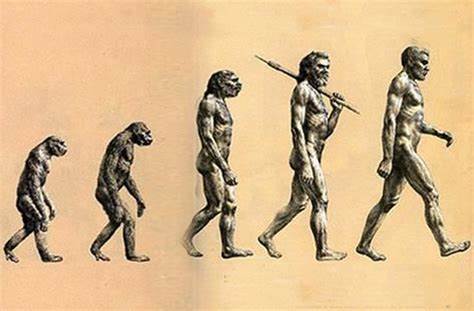
The details of evolution show random modifications of species have determined the makeup of life on Earth.
Hossenfelder discounts belief in a universe made for humans by a superior being. As she notes, evolution suggests otherwise. “The Origin of Species” postulated by Darwin has been supported by science since its publication in 1859.
The science community has tested chemical interactions of the early chemical elements of earth to show prokaryotes and eukaryotes of cellular life can be created from chance chemical and heat interactions.
Hossenfelder raises the question of whether the cosmos has consciousness. She speculates on the origin of the universe as a creation of a superior being or the evolution of a universe from something like the “Big Bang”. Her opinion leans toward the “Big Bang” and evolutionary physics by noting scientific experiments that demonstrate how nature, rather than God, created the Universe.

In writing about consciousness, the author notes the similarity between interstellar atmospheric strings that resemble neuronal connections of the human brain.
“Essential Physics” may help some get closer to understanding the current state of science’s explanation of life, but one may choose to be skeptical because sciences’ pursuit of understanding life remains a work-in-progress. Physics study to date offers no answer to the meaning or destination of life. The truth remains in an “uncanny valley”, a psychological concept of human unease, most recently compounded by genetics discoveries, computer animations, and A.I. influence on life.

 REVIEWS AND VIEWS OF LIFE
6 thoughts on “UNCANNY VALLEY”