

Audio-book Review
By Chet Yarbrough
Blog: awalkingdelight)
Website: chetyarbrough.blog
Scaling People (Tactics for Management and Company Building
By: Claire Hughes Johnson
Narrated by: Claire Hughes Johnson

Claire Hughes Johnson (Author, former chief operating officer of Stripe, lecturer on management of companies, former technology and operations manager.)
In “Scaling People”, Claire Hughes Johnson offers an insightful and actionable skill-set for both creators and managers of eleemosynary, government, and business organizations. She explains how large and small organizations can become more effective in executing their plans for development.
Johnson suggests every successful organization must have a clear statement of mission. “Mission” statements are the beginning of an entrepreneur’s creation of a company, a non-profits’ purpose, or a government’s departmental objective.

Every effective manager within an organization begins with a clear understanding of mission. Small and large organizations become successful when managers understand their organizations’ mission. The only difference is an entrepreneur’s mission is to prosper and grow a business, a minister’s mission is to ameliorate sin and grow a congregation, a charities mission is to grow and do good for others, and a government agency is to provide public service and grow as needed for those who cannot help themselves.

Johnson explains a manager’s success begins with self-understanding.
Johnson notes the ancient saying inscribed on the Oracle of Delphi in ancient Greece, “know thyself”. Knowing oneself is being aware of one’s nature and limitations. Johnson infers every good manager is a leader because, by definition, managers and leaders lead people.
Johnson works in the high growth industry of technology but her book applies to all organizations whether staid and maintenance driven or growth oriented.

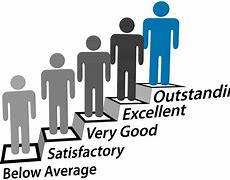
When addressing growth companies, Johnson explains high performers fall into two categories. She classifies the first as “pushers” and the second as “pullers”.
Both are valuable employees but Johnson notes pushers want more money and power while pullers are subject to burn-out. Though their reasons are different, both may leave the organization. The potential cure Johnson suggests is a biannual review, designed in different ways, to motivate them to stay. The pushers should be counseled on what they can do within the company that trains them to take on more responsibility in return for more pay and power. Johnson’s counsel to pullers is to acknowledge their contribution and offer a new challenge that benefits the company and their skill without taxing their life/work balance. Johnson notes this does not always work but it directly confronts, and tries to serve the needs of employees and the organization.

A large part of Johnson’s book is how to make organization’ managers effective leaders of their respective management teams. Johnson explains teams are organized to achieve goals to meet an organization’s mission as a sin quo non of success. Johnson’s book about organizational management is based on her challenging experience as a manager for Google and as the Chief Operating Officer for a successful tech company called Stripe.

Johnson addresses work horses of organizations that at times are low performance employees. Johnson argues their biannual reviews require recognition of measured performance deficiencies with constructive conversation about how they can improve. Johnson suggests it is important to recognize their longevity as employees and their cultural value as longer-term employees. However, if performance does not improve by the next review, a performance plan is written that offers what may be a final opportunity for a low performance employee. If that fails, the employee may be discharged. (Second chances are in the best interest of organizations because of the investment they make in hiring and training employees, let alone continued employment for the worker.)
“Scaling people…”, is about measuring yourself as a manager and others that are a part of a companies’ team. The first step is scaling yourself and your own strengths and weaknesses. That is Johnson’s insight to her own organizational effectiveness. Good managers and leaders build on their strengths. That is why Johnson explains how important it is to know yourself. To Johnson “knowing yourself” is the source of an effective manager’s productivity. By knowing yourself, one can overcome personal weaknesses with people who have complementary skills. The key to success is in team building that achieves an organization’s defined mission.
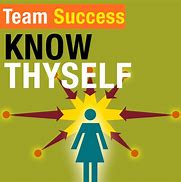
The hard part of Johnson’s insight is in having self understanding. It is made harder by a willingness to reveal it to others. In that willingness, team cohesion is formed. Team members experience self-understanding’s value by fulfilling an organization’s mission.
Only with self-realization, does one focus on mission with the energy and will needed for organizational success. Achieving an organization’s defined mission requires team work.
A manager/leader needs to focus on strengths and weaknesses of teams in the same way he/she understands their own strengths and weaknesses.

Johnson notes self-understanding is only a beginning. “Scaling people…” requires measurement of performance against goal. Teams have to be monitored, measured, and adjusted to more effectively achieve the organization’s defined mission. Johnson offers a number of tools that can be used to monitor, measure, and adjust a team’s effectiveness.
“Scaling people…” is a great addition to the literature of organizational management. “Scaling people…” is an excellent tool for forward thinking organizations interested in growing and improving their performance.

 REVIEWS AND VIEWS OF LIFE