

Audio-book Review
By Chet Yarbrough
Blog: awalkingdelight)
Website: chetyarbrough.blog
Green on Blue
By: Eliot Ackerman
Narrated by: Peter Marek

Eliot Ackerman (Author, former Marine Corps Special Operations Team Leader who served in Afghanistan.)
“Green on Blue” is about America’s military experience in Afghanistan. Like America’s experience in Vietnam and Iraq, knowing one’s enemy is shown to be difficult, at the least, and impossible at the most. Whether the American military is “Green on Blue” or not, it alludes to the fog of war and complications of knowing the color of your enemy.
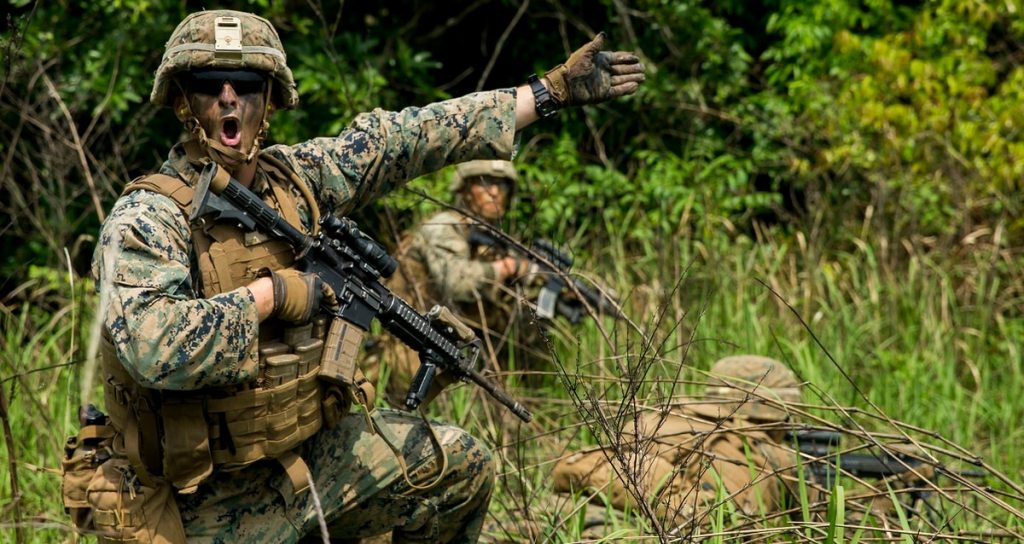

Ackerman’s novel is a fiction but bells truth and understanding of America’ intervention in Afghanistan.
Just as Ackerman explains the complexity, folly, and error of America’s good intention, he clearly criticizes American leadership’s decision to invade Afghanistan. America’s intent is to dismantle al-Qaeda leadership and possibly capture bin-Laden. It seems the mistake is not about crushing al-Qaeda but in not understanding the culture in which al-Qaeda received support from Afghanistan’s Taliban.
Ackerman creates a story of an older brother that is fatally injured by a bomb blast and is taken to a hospital for treatment.
This is a frontline hospital in Afghanistan like that in Ackerman’s story.

The younger sibling, who had been cared for, and protected by his older brother, pleads with the hospital to save him. To be saved, because the injuries are severe, requires expensive long-term care which his younger brother cannot pay. A Pashtun visitor at the hospital offers to pay for the older brother’s treatment in return for the younger brother’s recruitment into his “army”. The younger brother appeals to a person who appears to be Pashtun, the same culture of the two brothers.

This Pashtun is actually a leader of an Afghanistan military group.
The Pashtun military leader assures the younger brother of his financial support for the older brother to receive the required treatment. The younger brother agrees. The younger brother’s name is Azize. As Ackerman’s story continues, one finds leaders in Afghanistan use America’s intervention only to reinforce their self-interest. Of course, self-interest is a universal human characteristic, but in war, its dimension becomes life and death.

As one continues listening to Ackerman’s book, one doubts the older brother is alive or that any support is provided by the recruitment leader. The recruiter simply uses the hospital as a tool to acquire and retain recruits from relatives grieving for lost or injured family members. The end of Ackerman’s story tells the tale.

This is a harsh story that reminds America of how risky and unwise it is to believe America knows best for what another culture has grown to believe.
Soldiers like Ackerman remind us of how hard it is to help other countries be the best they can be. It requires more than bravery. It requires understanding of another’s culture and a willingness to let go of one’s own preconceived notions.

 REVIEWS AND VIEWS OF LIFE