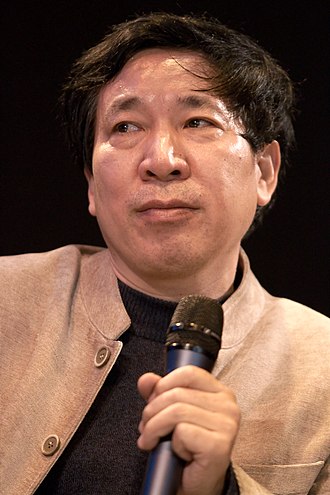
Yan Lianke (Chinese author of novels and short stories based in Beijing. Received the Franz Kafka Prize in 2014. Winner of the Man Booker International Prize twice.)
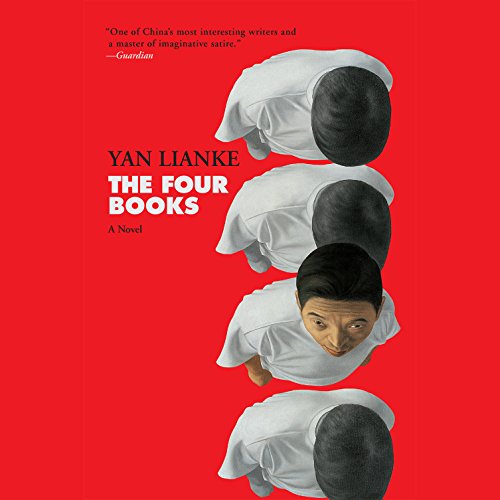
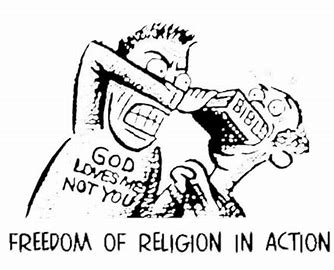
“The Four Books” is a satire exposing the fallibility of belief in a Christian God. Yan Lianke is a Chinese author living in Beijing whose books and short stories are banned by the government.
Lianke’s book satirizes most religions and government leaders.
The main character in Lianke’s story is called “Author” who is charged with responsibility for two of “The Four Books”. Two books are titled “criminal records” and “secret reports” written by “Author” for a camp commandant to know who and what everyone is thinking and doing in a prison camp. The other two books are less clearly identified but there is the “Scholar’s” book and presumably, the Christian Bible. The main characters in Lianke’s book are the “Boy”, the “Scholar”, the “Musician”, and the “Author”.
The character named “Author” reports thoughts and actions of fellow re-education prisoners in return for special privileges.
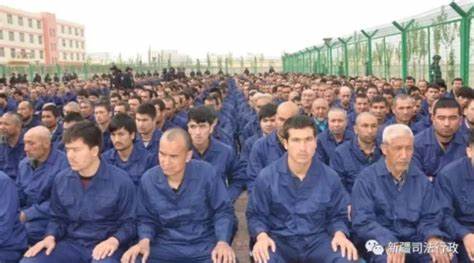
The “Boy” is the camp commandant. The “Scholar”, “Musician”, and “Author” are college educated prisoners, along with other city intellectuals, who are sent to re-education camps in the country. Their jobs are to farm the land and manufacture steel from black sand deposits in the country. The idea is to re-educate scholars on the importance of serving the economic advancement of their country with labor, rather than thought.
The setting of Lianke’s story is the Chinese famine during the “Great Leap Forward” which occurred between 1958 and 1962.
Neither the “Great Leap Forward” nor Mao are mentioned in Lianke’s book. Undoubtedly it is because of personal risk that such mention might have for Lianke. However, “The Four Books” universal appeal goes beyond Mao’s mistakes in China.
Most, if not all, religions and governments fail to provide an economic and social environment in which prosperity and peace can be equitably maintained.
Lianke chooses one period in China’s history as an example of religions’ and governments’ failure to peacefully guide or manage society. Undoubtedly, Lianke chooses China’s story because that is the culture he most intimately understands.
Lianke shows how religion and government ineptly handle human nature.
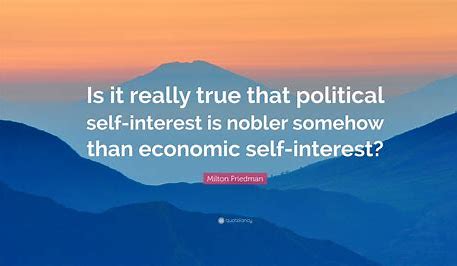
Whether one is rich, poor, formally educated, or uneducated–the masculine, feminine, neuter, and common person is motivated by self-interest. Religions and governments have tried to deal with human nature by preaching belief in something greater than the individual. Religions have threatened, cajoled, and forgiven society in a vain attempt to control human self-interest. Governments have done the same with similar mixed and failed results.
“The Four Books” uses the history of the “Great Leap Forward” because human nature is at its worst in times of great upheaval.
What Lianke reveals is the reality of human nature when neither religion nor government forthrightly deals with human nature under stress. The philosophy of leadership in “The Four Books” is to mandate economic development at whatever cost society is compelled or willing to bear. The choice of China’s leadership is to turn all formally educated urban citizens into rural workers by moving them from whatever jobs they may have had to jobs needed by leadership to rapidly advance China’s economic growth. Little consideration is given to the self-interest of individuals by government leaders’ preaching “the good of the country”.
What Lianke’s story shows is that government uses the same tools as organized religion to advance institutional rather than the self-interests of its people.
Religion preaches heaven, like government preaches economic growth. Religion and government do not deal with realities of today but with a future to be realized. Human beings are viewed as means to an end rather than ends in themselves.
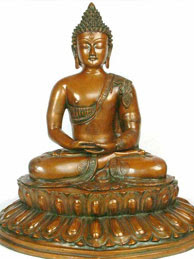
There is no supreme God or deity in Buddhist’ teaching.
Is it possible to serve society with a belief system that equitably treats individual self-interest? Lianke implies Christian religion, other religions, and government cannot offer a solution. However, Lianke implies Buddhism may be a solution. A Buddhist, in contrast to other religions or governments, seeks enlightenment in this world through an individual’s search for inner peace and wisdom. Lianke’s answer to individual self-interest is Buddhist belief in achievement of inner peace and wisdom.
The weakness in Lianke’s argument is that self-interest is an individual human characteristic. Self-interest is unlikely to be erased by Buddhism, Taoism, any religion, or government. Buddhist and Taoist beliefs do not ameliorate aberrant self-interests (most common in human beings) that deviate from those wishing and trying to seek peace and wisdom through Buddhism or Taoism.
It may be that there are two types of self-interest, one hostile and the other enlightened. Of course, the weakness of the second is the same as the first. Can human nature, any religion, or government elicit enlightenment?
Self-interest can generate great economic wealth but when unregulated it diminishes peace and often leads to unwise choices and ends. History shows neither government, deistic religion, or contemplation of the “Way” moderates nor contains individual self-interest. A governing system of checks and balances may be a step in moderating and containing self-interest, but it (at best) is a work in progress.
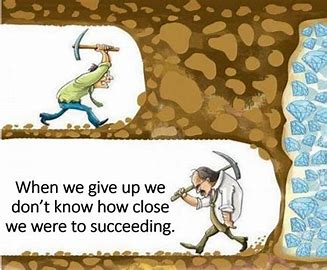
Lianke shows in a famine, self-interest offers two choices. Either one gives up or fights for survival. There is no middle ground.
Self-interest in a famine leads some to prostitute themselves, murder their equals, inferiors or superiors, and become cannibalistic or some combination thereof. No widely accepted religion or government seems to have found a solution to equitably treat individuals’ self-interest. Lianke believes Buddhism may be an answer, but one wonders how an individual’s search for peace and wisdom will feed the hungry.
Graduate Oregon State University and Northern Illinois University,
Former City Manager, Corporate Vice President, General Contractor, Non-Profit Project Manager, occasional free lance writer and photographer for the Las Vegas Review Journal.
View all posts by chet8757





 REVIEWS AND VIEWS OF LIFE
One thought on “The Anti-Christian”