

Books of Interest
Website: chetyarbrough.blog
Brain Myths Exploded (Lessons from Neuroscience)
Lecturer: Indre Viskontas
By: The Great Courses
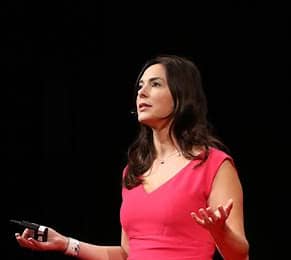
Indre Viskontas (Ph.D. in cognitive neuroscience from UCLA, performed at Cafe Royal Opera in San Francisco, studies neural basis of memory and creativity, Lecturer at USF.)
There is a great deal to unpack in Indre Viskontas lectures about the brain and intelligence. This review is an extension of a previous look at her “…Great Courses” lectures on “Brain Myths…”.

Viskontas argues sociability plays an important role in the development of intelligence. As a less social person one wonders what potential may be lost by introversion. Every human being is a mixture of extroversion and introversion. History suggests Benjamin Franklin, Margaret Thatcher, and John F. Kennedy were outgoing extroverts. In contrast, Abrahma Lincoln, Albert Einstein, and Rosa Parks were characterized as less outgoing and more introverted. All were insightful, intelligent leaders that had great impact on the history of the world. Sociability seems of little consequence for one’s intelligence or predictable role in history.

Viskontas explains how important sleep is for mental health.
The effect of sleep deprivation is a form of torture.
During sleep, Viskontas notes the brain is quite active, characterized by different brain wave patterns. Based on periods of sleep, our dreams are like house cleaners clearing the debris accumulated from days past. Some remember their dreams, others do not. That we all dream can be seen with REM, rapid eye movements, that can be seen as eyelid movements when one is sleeping. Viskontas suggests these dreams have hidden meanings that reflect emotions that the brain is actively processing while we sleep. Memories are reconstructed, often distorted, and can cause one to awaken because of their bizarre content. Our brains reconstruct stories in sleep, just as they do when we are awake in that they complete stories of our life whether the facts are true or false. The REM stories are a clearing house for adherent behaviors that may be good or bad.
Viscontas notes low activity in the temporoparietal junction (TPJ) and medial prefrontal cortex (MPFC) causes one to not remember their dreams.

Viskontas explains some do not remember their dreams because of lower activity in a part of the brain that is normally active when dreams are being recalled. She suggests those who wish to remember their dreams can keep a journal of what they do remember when they wake up. This journal can help one understand a little more about why they are dreaming and what their dream may mean by consulting a psychologist or psychiatrist.

A concern that Viskontas raises is that those who do not get enough sleep impair their memory and learning capabilities.
With a lack of sleep the prefrontal cortex functions poorly with poor judgment and impulsive behavior. Further, Viskontas notes the immune system is weakened by not getting enough sleep–with increased risk of anxiety, depression, and mood instability. When deprived of sleep, people become less social and are more driven by emotions than intellect. Viskontas recommends 7-9 hours sleep per night for optimal brain function. A continuous sleep cycle is important for deep sleep and REM that have distinct roles in information processing and a mind’s creativity for healthy living. Though Viskontas does not say anything about napping during the day, some research shows 20-to-30-minute naps can improve memory, alertness, and mood.

Viskontas explains intelligence is not a fixed characteristic but can be shaped by neuroplasticity, environment, genetic inheritance and social interaction.
Humans can rewire their brain through learning and experience. Intelligence rests within every person’s grasp but its improvement is based on genetic inheritance, experience, and effort. Science, with reproducible experiment, has proven intelligence exists throughout the Animal Kingdom.

“Quants” created collateralized mortgages in 2008.
Viskontas believes, on balance, technology is a boon, not bane, of human intelligence.
Information recall is food for brains that advances civilization. She argues information recall, with the use of the internet of things, broadens recall to complement human intelligence and improve creativity. Of course, that food can be poisoned just as the Quants who created collateralized mortgages that nearly collapsed the world economy.
 REVIEWS AND VIEWS OF LIFE