

Books of Interest
Website: chetyarbrough.blog
James (A Novel)
By: Percival Everett
Narrated By: Dominic Hoffman

Percival Everett (Author, Distinguished Professor of English at University of Southern California, winner of the Booker Prize in 2024 for “James”.)
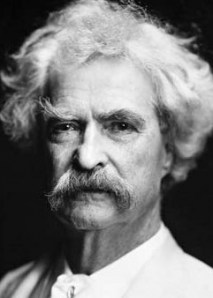
The Booker Prize is a prestigious British literary award for “…the best sustained work of fiction written in English”. The award was first created in 1969. Percival Everett’s “James” is an imaginative work well-deserved of the award. Everett recalls a version of Samuel Clemen’s (Mark Twain’s) character Huckleberry Finn and makes him a white-boy companion of a self-educated slave in the American South. The slave’s name is “James”, called Jim in Everett’s story.

Jim and his family are about to be separated with his sale to a New Orleans slave owner.
Jim finds out that he is to be sold by his owner. Jim chooses to leave the family he loves to avoid separation from his wife and daughter in Hannibal, Missouri. His hope is to reunite with his family by somehow earning enough money to buy his family from their slave owner, i.e. an unrealistic prospect considering the owner’s loss of a slave’s sale. Jim escapes on a raft to an island on the Mississippi river and comes across Huck, a young boy who also escapes to the island. Jim is acquainted with Huck from a friendship he has with Tom Sawyer who plays tricks on people in the neighborhood.
Huck is characterized as Mark Twain described him, i.e., the son of a white father who abuses him. In Jim’s escape to the island, he finds Huck’s father’s body. Huck’s father is dead. Huck is unaware of his father’s death and Jim chooses not to tell him. Huck and Jim decide to leave together on a raft. Jim leaves for obvious reasons. Huck presumably leaves with him because of his troubled relationship with a father who beats him and a mother who has been dead for years.

What is cleverly explained by Percival Everett is how Jim is a teacher to black children in his Hannibal neighborhood.
The essence of Jim’s teaching is to hide the intelligence of black people by teaching children how to hide their intelligence. Jim explains they should talk in the patois of black slang while keeping their own council, appearing respectful to their white enslavers. Everett is symbolically illustrating how slaves were the equals of their slave holders by showing they hid their innate intelligence. Everett’s hero understands the truth of slavery’s iniquity with the story of Jim’s escape and eventual triumph.
What makes Everett’s book an award winner is its pacing and descriptive events that draw reader/listeners into the history of American slavery and the advent of the Civil War.

Everett clearly shows the horror of being a slave. Men and women are beaten, raped, and murdered at the discretion of white people who believe the color-of-one’s-skin marks human beings as property, qualifies them for enslavement, and proves their inequality.
There are a number of incredible surprises at the end of Everett’s story. The Civil War has begun and the fight between North and South are made clear in Jim’s apocryphal return to Hannible with Huck. Huck’s relationship with Jim grows into something Twain never suggests.

The truth Everett reveals in “James” is that men and women of color are neither the same nor different than other people of the world. They are simply human beings.
Everett shows how powerful social interests can grow to treat powerless cultures as property and make them think and feel inferior.
 REVIEWS AND VIEWS OF LIFE