THE HARD WAY

Audio-book Review
By Chet Yarbrough

(Blog:awalkingdelight)
Website: chetyarbrough.blog

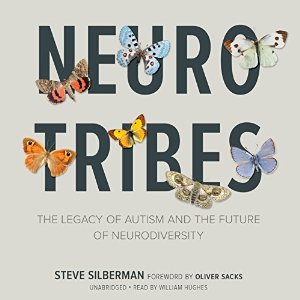
Neuro Tribes: The Legacy of Autism and the Future of NeurodiversityNeuro Tribes

Written by: Steve Silberman

Narration by:  William Hughes

STEVE SILBERMAN (AMERICAN AUTHOR, CONTRIBUTOR TO WIRED MAGAZINE)

“Neuro Tribes” reminds one of the gambling phrase “the easy way and the hard way”.    On a Las Vegas craps table, rolling two die with the same number and repeating it is the hard way.  From Steve Silberman’s story, parents successfully raising a child with autism is the hard way because the odds are stacked against them.  This may not be a great analogy but Silberman shows that parents have to work harder to understand and nurture a child who suffers from any one of the many variants of autism.

Silberman tends to name drop famous people who have never been diagnosed as autistic, but exhibit some of the characteristics of autism.  Silberman offers brief biographies of Henry Cavendish, Nikolo Tesla, Paul Dirac, and others.  Not every autistic person is a genius but Silberman’s point is that a person who may have social communication difficulties, obsessive/compulsive behaviors, or attention issues have in many cases become incredibly valuable to society.  To suggest autism implies anything less is a slippery slope toward abandonment, psychiatric incarceration, concentration camps, medical castration, and threatened individual or collective extermination.

NIKOLA TESLA (1856-1943, SERBIAN AMERICAN INVENTOR, ELECTRICAL & MECHANICAL ENGINEER, PHYSICIST, FUTURIST)
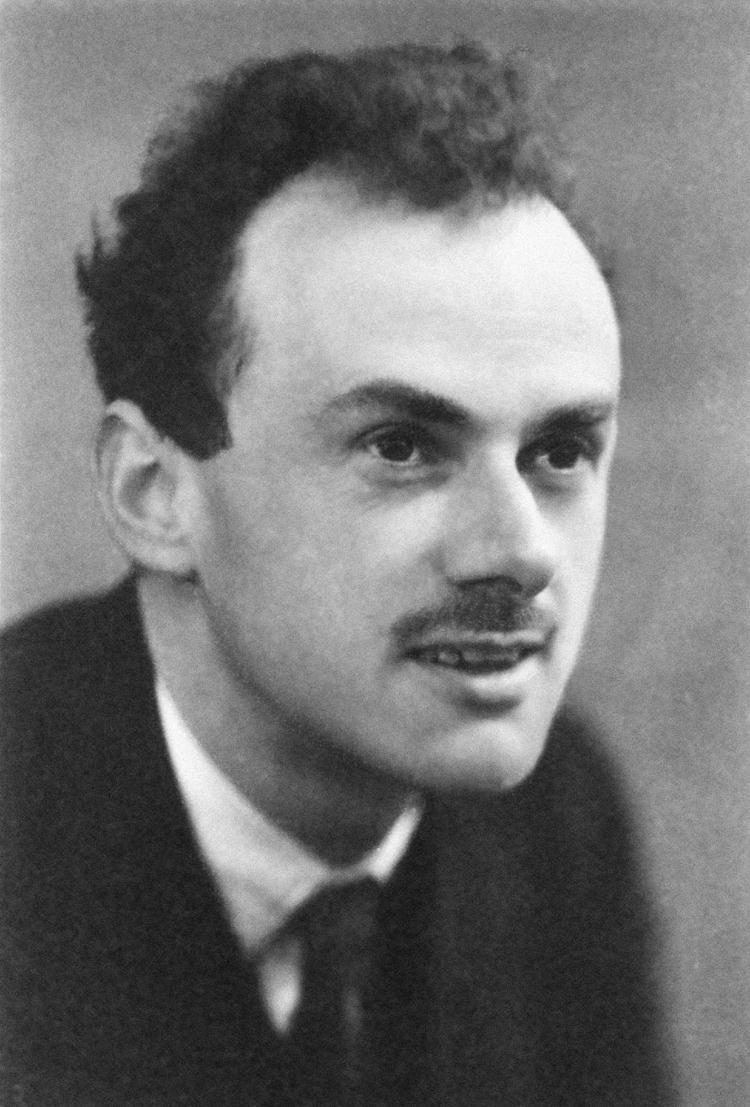
PAUL DIRAC AT THE TIME OF PULITZER PRIZE AWARD
PAUL DIRAC (1902-1984, NUCLEAR PHYSICIST, WINNER OF THE PULITZER PRIZE)
HENRY CAVENDISH (1731-1820, BRITISH NATURAL PHILOSOPHER, SCIENTIST, CHEMIST, AND PHYSICIST)

Silberman recounts the history of people who do not fit within social conventions. In some well-known instances these non-conformists are isolated, sterilized, and/or murdered.

They are classified as developmentally or intellectually inferior human beings to be eliminated by society for their aberrant physical abilities or mental faculties.  One may think this is a description of Hitler’s Germany but Silberman recounts the story of the U. S. Supreme Court’s ruling in Buck v. Bell.


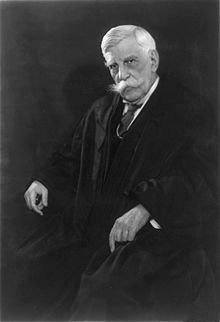
OLIVER WENDELL HOLMES (1841-1935, JUSTICE OF THE SUPREME COURT 1902-1932)

In 1927, no less than a giant of the U. S. Supreme Court, Justice Oliver Wendell Homes, Jr. writes the majority opinion that says compulsory sterilization of the intellectually disabled is not a violation of the Due Process clause of the 14th amendment.  Common sense, if not history, shows that intellectual ability, by any measure, is a small part of what a human being is or can be.  The very idea that there is a criterion that objectively measures intellectual capability is repugnant.  Mrs. Buck is involuntarily incarcerated and Mrs. Buck’s daughter is sterilized based on a 1924 Virginia law.  The United States reportedly sterilized 60,000 American men and women through the 1970s (See January 2016 Newsweek report).

BUCK FAMILY (MOTHER AND DAUGHTER STERILIZED BY THE STATE)
BUCK FAMILY (MOTHER AND DAUGHTER STERILIZED BY THE STATE-Mrs. Buck is involuntarily incarcerated and Mrs. Buck’s daughter is sterilized based on a 1924 Virginia law.  The United States reportedly sterilized 60,000 American men and women through the 1970s (See January 2016 Newsweek report).)
ADOLPH HITLER (1889-1945)
Silberman reminds reader/listeners of the child euthanasia program in Germany and how a German family’s support of Hitler leads to a request that their child be euthanized because of physical deformity.

Silberman offers a short history of the growth of Eugenics.  The idea is, like a patch of peas, human beings can be bred to eliminate any undesirable characteristics.  No civilizations’ hands seem clean.  Silberman reminds reader/listeners of the child euthanasia program in Germany and how a German family’s support of Hitler leads to a request that their child be euthanized because of physical deformity.  It is estimated that “…5,000 children were victims of this program” (see Wikipedia “Child euthanasia in Nazi Germany).

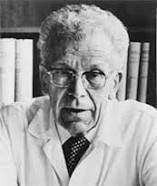
HANS ASPERGER (1906-1980, AUSTRIAN PEDIATRICIAN, MEDICAL THEORIST, AND MEDICAL PROFESSOR)

Silberman reports on the diagnostic discovery of autism by Hans Asperger in the 1940 s.  Asperger’s storied career includes association with the Nazi Party that is both reprehensible and insightful.  In defining autism, Asperger suggests children with the malady are of little social value.  This categorization of human beings feeds Hitler’s extermination of handicapped and mentally challenged children and adults.  Despite this horrendous consequence, Asperger’s careful examination of autistic behavior provides insight to its symptoms and potential treatments.

Silberman notes Asperger’s prescient understanding of autistic children’s needs.  Autistic children need to be listened to and their behaviors analyzed to provide treatment that ameliorates social dysfunction.  Though Silberman does not mention the Montessori school of education, Asperger suggests that autistic children should be educated in ways that reinforce their natural interests.  Asperger, according to Silberman, had an uncanny knack of understanding what his patients were interested in and followed that lead to integrate them into society.

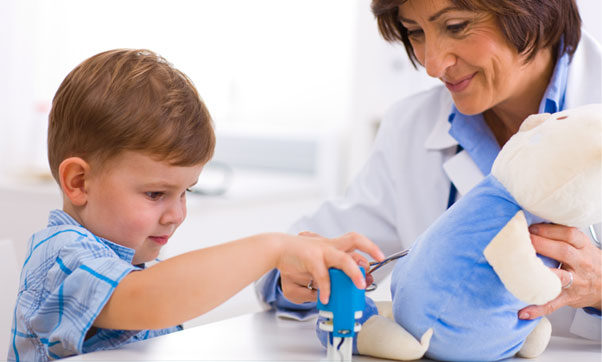
AUTISM TREATMENT
Though Silberman does not mention the Montessori school of education, Asperger suggests that autistic children should be educated in ways that reinforce their natural interests.  Asperger, according to Silberman, had an uncanny knack of understanding what his patients were interested in and followed that lead to integrate them into society.

A part of Silberman’s story is about unscrupulous medical professionals that offer cures for autism that have nothing to do with science and everything to do with financial exploitation of parents that are overwhelmed by their child’s autism.  These “doctors” provide bogus treatments like blood chelation to remove impurities that are alleged to cause autism.  Silberman suggests there is no cure for autism.  There is only the promise of amelioration with the hard work and understanding of parents and caregivers who appreciate the value of human life.

For parents, the hard way involves toleration of symptoms of autism while reinforcing those behaviors that comport with the innate abilities of their children.  In the process of careful listening and observation, parents can reinforce socially acceptable behavior and diminish anti-social activity.

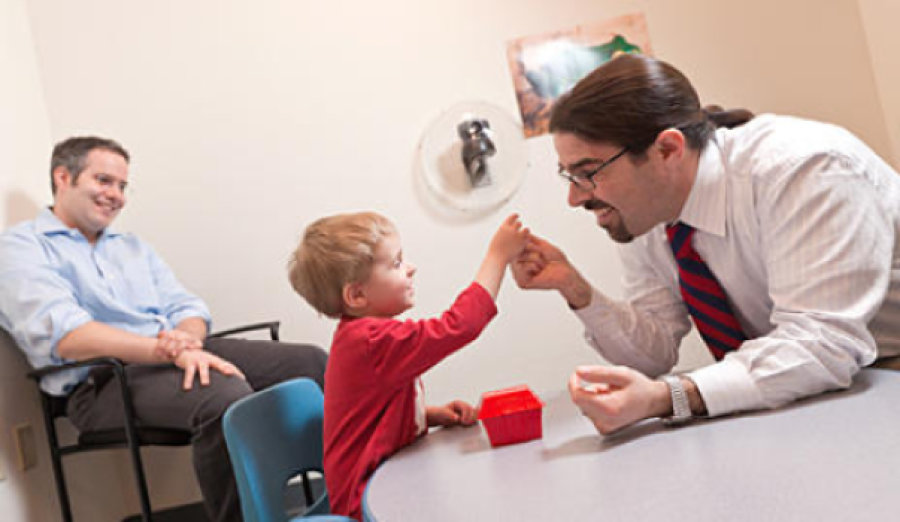
AUTISM--EARLY TREATMENT PROVIDES ENCOURAGING BRAIN CHANGES
AUTISM–EARLY TREATMENT PROVIDES ENCOURAGING BRAIN CHANGES  Silberman notes that in the process of careful listening and observation, parents can reinforce socially acceptable behavior and diminish anti-social activity.

Silberman implies autistic human beings exist in every society.  Symptoms of hyperactivity, singular focus on particular subjects, poor communication skills, antisocial behavior, lack of interest in mutual achievements or interests, and a lack of empathy are symptoms that exist in many human beings.  One concludes from Silberman’s book that parents with an autistic child have a harder roll of the dice.  Their rewards can be monumentally greater but the odds are against parental success.  Not every autistic child will be a Cavendish, Tesla, or Dirac but one can choose to believer every child is a gift to be treasured for whatever they become.

OLIVER SACKS

Audio-book Review
By Chet Yarbrough

(Blog:awalkingdelight)
Website: chetyarbrough.blog

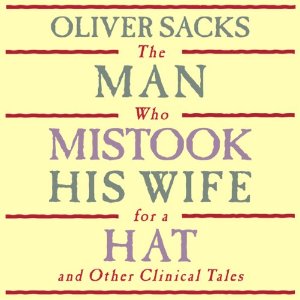
The Man Who Mistook His Wife for a Hat: and Other Clinical TalesThe Man Who Mistook His Wife for a Hat

Written by: Oliver Sacks

Narration by:  Jonathan Davis, Oliver Sacks

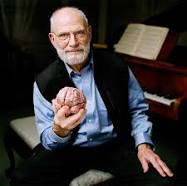
OLIVER SACKS (1933-2015, AUTHOR, BRITISH NEUROLOGIST)

Neurological dysfunction is Oliver Sacks field of study and training.  The irony is that a tumor attacks his brain to end his life.  Of course, he was 82.  But somehow, a tumor attacking Sacks’ brain seems an unfair marker for his passing.  Sacks opens the eyes of many to the wholeness of being human when a neurological dysfunction changes their lives.  Sacks is the famous neurologist who wrote one book that becomes a movie and several that become best sellers.

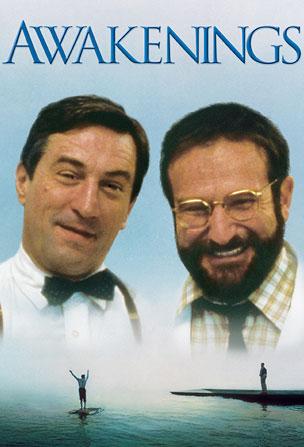
AWAKENINGS - STARING ROBERT DeNIRO AND ROBIN WILLIAMS
AWAKENINGS – STARING ROBERT DeNIRO AND ROBIN WILLIAMS

Sacks is famous to some based on the movie “Awakenings” that recounts an experiment with L-dopa to treat catatonia; a symptom believed to be triggered by Parkinson’s.  Patients may spend years in a state of catatonia; i.e. a form of withdrawal from the world exhibited by a range of behaviors from mutism to verbal repetition.  Sacks wrote the book, “Awakenings” to tell of his experience in the summer of 1969 in a Bronx, New York hospital.  The success and failure of the L-dopa experiment became a life-long commitment by Sacks to appreciate the fullness of life for those afflicted by neurological disorders.

With the use of L-dopa, Sacks reawakens the minds and rational skills of patients that had been catatonic for years.  In their reawakening, Sacks found that catatonic patients have lives frozen in time. Their mind/body interactions became suspended in the eyes of society.  They were always human but they lost their humanness in neurological disorder.

PSYCHOLOGICAL IMPAIRMENT
Sacks first story is about an accomplished musician and teacher who appears increasingly forgetful.  He appears to forget people’s names.  He cannot identify objects that are given to him to examine.  He figuratively mistakes his wife for a hat. 

“The Man Who Mistook His Wife for a Hat” is filled with stories of people with brain malfunctions that change theirs’s and other’s lives.  The underlying truth of each story is that symptoms of neurological disorder mask the wholeness of being human.  Sacks reveals that many people confuse what is seen with the completeness of what is an afflicted but whole human being.  Sacks first story is about an accomplished musician and teacher who appears increasingly forgetful.  He appears to forget people’s names.  He cannot identify objects that are given to him to examine.  He figuratively mistakes his wife for a hat.  Aside from these bizarre symptoms, Sacks notes the patient is highly intelligent and is known as a great teacher of music.

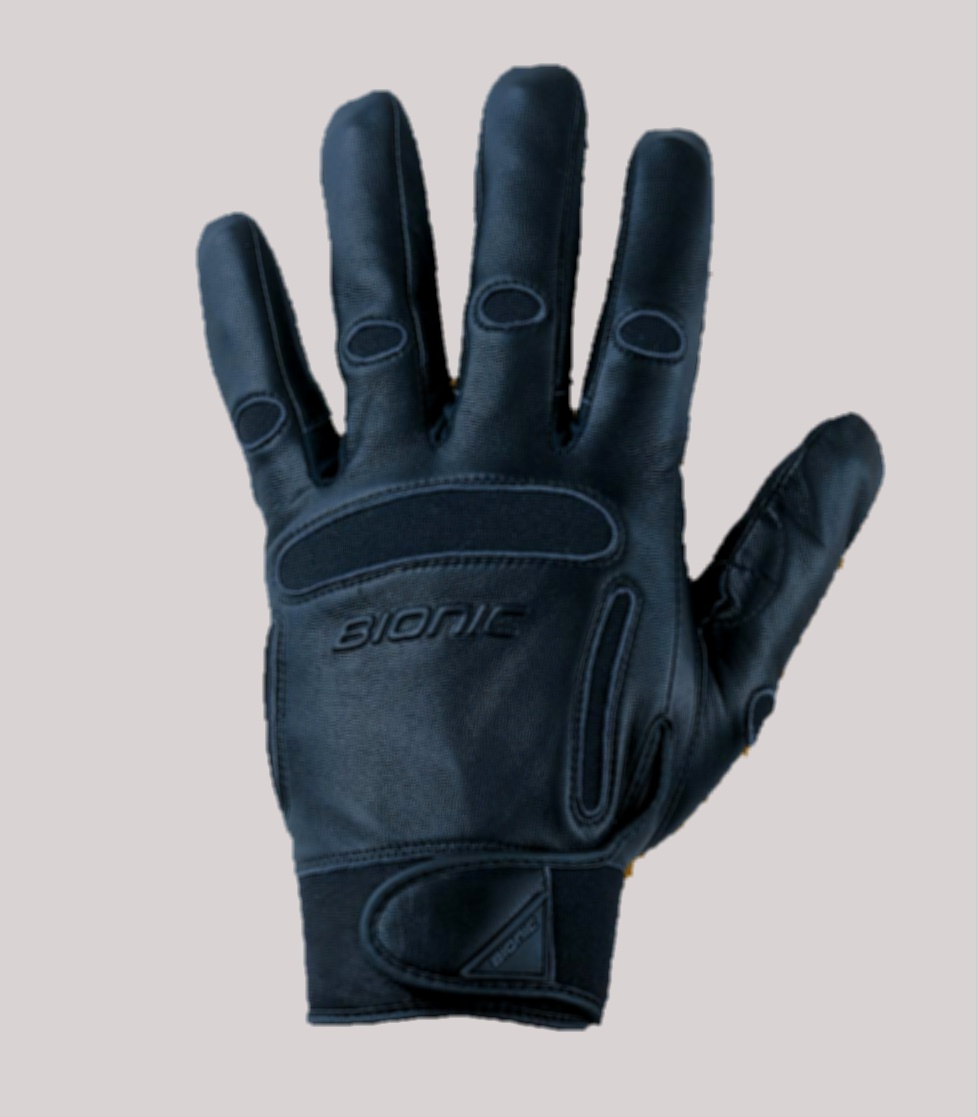
GLOVE
He can identify all the parts of a face but is unable to associate the face with a name.  When given a glove he examines it in parts.  It has five pouches.  It is made of a soft material.  The pouches can hold things.  But, it is only discovered as a glove when given clues about its use. 

In examining “The Man Who Mistook His Wife for a Hat”, Sacks finds that the teacher’s mind works like a computer in that he sees the details of things without seeing the whole thing.  He forgets names until he hears their voice because he cannot recognize faces.  He can identify all the parts of a face but is unable to associate the face with a name.  When given a glove he examines it in parts.  It has five pouches.  It is made of a soft material.  The pouches can hold things.  But, it is only discovered as a glove when given clues about its use.  Sacks’ first story becomes a metaphor for the wholeness of human beings that have neurological disorders.

MUSIC
The music teacher relies on sound and other cognitive senses to fully interpret and appropriately act in the world.  Sacks explains to the teacher’s wife that her husband’s neurological disorder is a part of who he is. 

The music teacher relies on sound and other cognitive senses to fully interpret and appropriately act in the world.  Sacks explains to the teacher’s wife that her husband’s neurological disorder is a part of who he is.

Sacks suggests the disorder may be ameliorated with drugs but an unintended consequence may be to destroy her husband’s extraordinary music and teaching ability.  In the years of her husband’s life, he has unconsciously hidden a neurological dysfunction by using music as a method for routinizing his life.  His wife notes that he always sings when he dresses himself with clothes carefully laid-out by his wife.  He uses the rhythm of the song to properly dress himself.

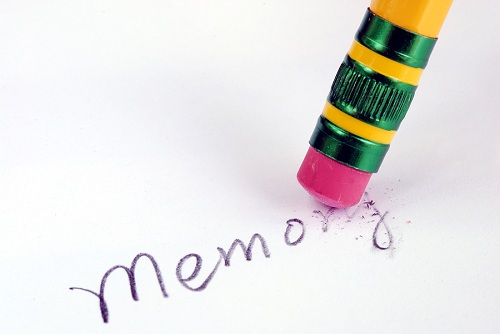
Sacks writes of several more patients that circle the same theme.  He notes that memory is a critical part of being human.  When memory is lost humanness remains, but personal understanding of oneself is changed.  Memory informs and affects action.  When memory disappears, time is disjointed and experience is lost.  On the one hand, lost memory makes one young again; on the other, friends are older than they should be and many things we know from experience are gone.

MEMORY
When memory is lost humanness remains, but personal understanding of oneself is changed.  Memory informs and affects action.

Sacks is saying never give up on patients with neurological disorders.  They are whole human beings.  The neurologist’s job, as with all who practice medicine, is “first, do no harm”.  “The Man Who Took His Wife for a Hat” illustrates how seriously Sacks took his calling.

DIETING AND THE BRAIN

Audio-book Review
By Chet Yarbrough

(Blog:awalkingdelight)
Website: chetyarbrough.blog

Spark: The Revolutionary New Science of Exercise and the BrainSpark

Written by: John J. Ratey, MD

Narrated by: Walter Dixon

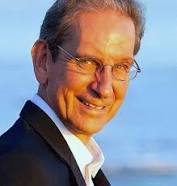
JOHN RATEY (AUTHOR, MD)

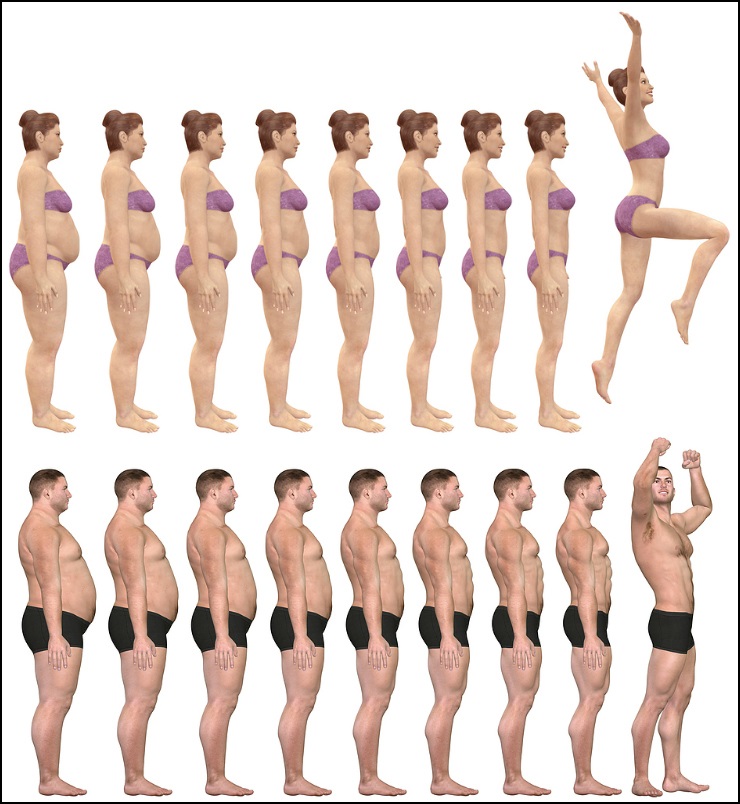
Crash dieting and the brain compete for control of one’s established weight.  Doctor John Ratey acknowledges that your first crash diet will undoubtedly help lose weight.  However, when weight is regained, the same diet will not be equally successful.  The brain automatically triggers weight conservation with a second crash diet because it signals body starvation.  The third, fourth; etc. crash diet will be increasingly unsuccessful.  Ratey’s point is that weight loss success requires cooperation from the brain.  Ratey suggests he key to that cooperation is exercise.

WEIGHT GAIN AND LOSS
Ratey is not suggesting we become athletes but that some exercise regimen, whether walking, riding a bike, or climbing stairs will offer numerous benefits for weight maintenance, mental function, and psychological health.

Ratey is not suggesting we become athletes but that some exercise regimen, whether walking, riding a bike, or climbing stairs will offer numerous benefits for weight maintenance, mental function, and psychological health.  Ratey does not discount the importance of a healthy diet but food binges, foggy thinking, and states of depression or anxiety can be scientifically ameliorated by exercise.  Ratey goes so far as to suggest exercise is medicine for health.

ASHLEY GRAHAM (FAMOUS PLUS SIZE MODEL)

An inference from Ratey’s research is that obsession over body image interferes with human health.  As history shows, the svelte image of modern models is a reversal of what was considered beauty in earlier centuries.  The substance of health is a combination of proper diet and exercise.  In most cases, Ratey implies body weight and health will stabilize with that combination.  Ratey acknowledges genetics and medical maladies may interfere with that conclusion.

Part of one’s frustration with Ratey’s conclusion is dependence on what is called a proper diet.  It seems with each new study; some approved foods slip to the bottom of the good food pyramid, while some formerly disapproved foods move up the pyramid; i.e. cholate for example.

FOOD PYRAMID REPLACEMENT

EXERCISEThe overriding value of Ratey’s book is the conclusion that exercise is a key to mood, memory, and learning.  Numerous control experiments support Ratey’s argument.

Exercise seems more for the brain than the body.  Every day should be an exercise day.  Exercise does not have to be a fixed regimen but walking, rather than driving, to the store when it is only three blocks away is a beginning.  Replacing TV time with household chores is another form of exercise.  Keep moving.  Ratey suggests “Even 10 minutes of activity changes your brain.”