

Books of Interest
Website: chetyarbrough.blog
Ghosts of the Tsunami: Death and Life in Japan’s Disaster Zone
By: Richard Lloyd Parry
Narrated By: Simon Vance

Richard Lloyd Parry (Author, British foreign correspondent, Asia Editor of “The Times of London”.)
In 2011 the 9.0 Tōhoku earthquake and its subsequent tsunami killed over 18,000 people with injuries to an estimated 6,000 more. Over 123,000 homes were destroyed. The estimated cost of the disaster is the equivalent of $220 billion American dollars. Richard Parry explains Japan’s Prime Minister lost his job because of the disaster and influenced the loss of a second Prime Minister’s position. The highest disaster cost in America was Hurricane Katrina at an estimated $125 billion in 2005. No natural disaster in America has caused as many deaths as Japan’s earthquake and tsunami.
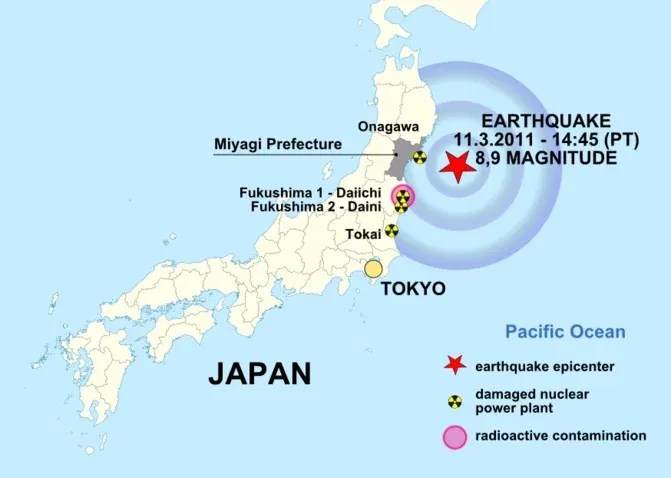
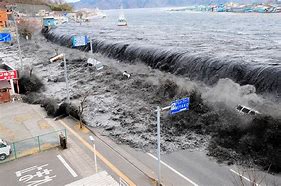

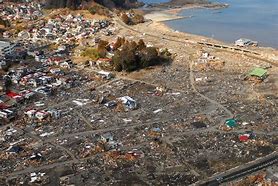


Richard Parry offers a primer on what a person should expect when a natural disaster disrupts their lives. Every continent is subject to either natural or manmade cataclysmic events. In terms of the cost of human life and reconstruction, only war exceeds the loss of life that occurred in Japan’s 2011 earthquake and tsunami. Like recent wars in Ukraine and Gaza, the most heartbreaking consequence is the death and crippling of children. Parry explains what happened in a Miyagi Prefecture grade school that exemplifies the social and personal consequence of a natural event that rivals the bombing of Hiroshima and Nagasaki.

Though there are no wandering ant or alligator people from a nuclear bomb blast, there are thousands of Japanese who undoubtedly still suffer from the loss of their children, family, and friends from the 2011 tsunami. It is most clearly evident in Parry’s detailed story of the Okawa elementary school. Many survivors are shown to blame school administrators, and the government for their failure to protect their children. The truth is that every disaster is responded to by imperfect human beings. Blaming someone for the death of innocents is a natural human response to things beyond one’s control. It is simple to look back on a disastrous event and find the mistakes made by those who are the adults in charge. There is a human catharsis in being able to blame someone for the death of a loved one.
Humans will always make mistakes in dealing with disasters because they are human.

The decision by school administrators to not abandon the school for higher ground seems taken out of context. There is snow on the ground, it is cold outside, and the school’s location is approximately 2.5 miles from the sea. To the administrators, it appears protection of the building seemed more important than moving to higher ground, in the cold and snow, a mistake that caused the death of 74 children.

Perry interviews many who survive the disaster. Their stories are heartbreaking. Some parents have never found their children.
An estimated 132 bodies remain unidentified with at least 2 children’s remains are unfound.
The vision of survivors sifting through mud and debris to find layers of children’s bodies stays in one’s mind as they listen to Perry’s book.
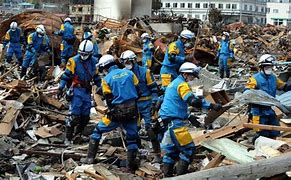
The families of 23 children who died at the school were awarded compensation of $12.8 million equivalent U.S. dollars with a judgement saying the school failed to evacuate students to higher ground when the tsunami became knowingly imminent. The decision was based on a loud-speaker government warning for the school to be evacuated. Perry notes there were evacuation plans at the school, but they were inappropriate for a tsunami that requires high ground. The adult teachers were given enough time after the loud speaker noticeto evacuate the children to a nearby hill. They could have survived.

The court’s decision is based on the truck-delivered speaker’ warning that is ignored by the school’s adult supervisors.
Some argue the significance of that ruling in Japan is the mandated creation of disaster-preparedness’ plans for school evacuations in a crisis. This school had a written plan, but it did not properly prepare for the consequence of a tsunami. The final warning is the basis for the three-judge panel’s decision, but the truth is any plan still depends on the judgement of adult school’ supervisors.
The elephant in this room is damage to the Fukushima Daiichi nuclear plant that is considered among the worst nuclear disasters in history, i.e. right alongside Chernobyl.

 REVIEWS AND VIEWS OF LIFE
2 thoughts on “CATACLYSMIC EVENTS”