
Books of Interest
Website: chetyarbrough.blog
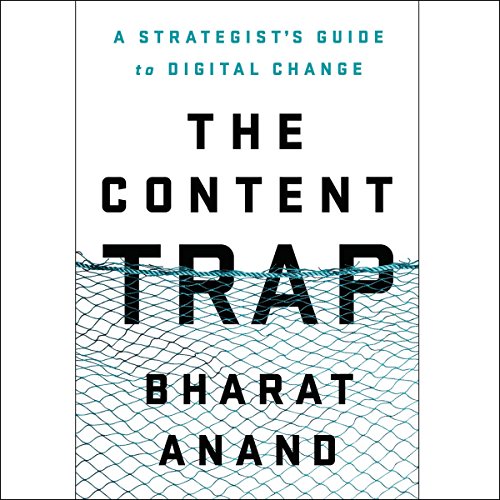
“The Content Trap” A Strategist’s Guide to Digital Change
By: Bharat Anand
Narrated By: Jason Culp
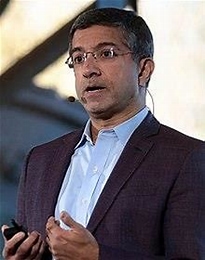
Bharat Anand (Author, American economist, Professor of Business administration at Harvard Business School.)
Bharat Anand offers a compelling explanation of how connection has become as important as “…Content…” in the digital age. His point is not to say content is irrelevant but without understanding digital interconnectedness, Anand infers profits, personal achievement, and commercial success are diminished or lost.
In the digital age, Anand argues if success is measured by profit, longevity, or fame, the key to success is adapting to interconnectedness.

Anand argues business managers and companies will fail if they do not adjust to changes in the way the public sees, understands, and uses the digital world. To give examples of his point, Anand notes the adjustments made by Apple, Microsoft, Google, Amazon, and the Fox TV network that have changed their business models to adjust to a digital world. Anand explains the digital world is a ubiquitous force (interconnected by computers, smartphones, and the internet) used by insightful individuals and businesses to achieve their goals.

Apple initially focused on product design and utility and earned a reputation for excellent product.
However, as the product evolved, Anand notes Apple’s specialization in quality meant less to their success than the connectivity to sources of information, entertainment, and people. The iPhone became ubiquitous and highly profitable when they improved Apple connectivity among iPhone’ users. They expanded that connectivity with their iTunes creation, audio book features, and various internet media offerings.
Microsoft specializes in software development tools that can be used by individuals and businesses to improve their communication skills and connectedness inside and outside their business.

Microsoft’s software enhances interconnectedness and communication while providing useful information to banks, affiliates, and users to understand the value of their business and how they may or may not complement each other’s performance. Microsoft expands their interconnectedness with an annual subscription system that appeals to repeat users of Microsoft’s updated software.

Google substantially improves their reach into the digital age by choosing to pay Apple $20,000,000 a year to use their search engine.
Though that is challenged by the government as a monopolization of trade, it illustrates the truth of Anand’s observation about the value of interconnectedness among companies in today’s digital world as a way of improving profits, growing, and assuring longevity.
Amazon ranks as one of the leading retailers and suppliers of consumer goods in America.

Bezos introduces many marketing innovations based on interconnections with customers that include many consumer enhancements. Amazon created its own storage and delivery service to directly compete with same day availability of product that showed customers could get product as fast as they could by going to a box retailer. Amazon capitalized on book selling by creating a portable library with Kindle that lowered NY Times’ best-selling books at half or less than the recommended retail price.

Fox television rose to compete with the big three television networks by buying the rights to NFL football at a price far beyond what the networks at that time were willing to pay. Digital age football fan connectivity gave Fox the power and influence to become the 4th major tv network in America.
Anand’s point is that adaptation, rather than opposition to evolving human connectivity, is the key to success. Identifying what is happening in the world and adapting to societal inevitabilities offers opportunities to keep pace with change and prosper. Anand is not saying content does not matter but that content is improved by adapting, rather than resisting or fighting evolving societal norms.
Anand addresses a favorite publication of many, “The Economist”, an international newspaper that has weathered the storm of newspaper disappearance in the 20th and 21st century.
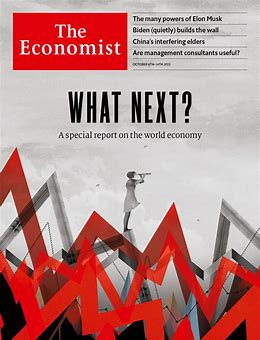
Anand notes “The Economist” has prospered since the 19th century, despite the collapse of the newspaper industry in the late 20th and early 21st centuries. He argues it survives and prospers because of editorial development of international’ news through consensus of its experienced and educated writers. One might accept his observation but with reservation because of a recent survey request from the “Economist” for reader response.

The “Economist” survey form is daunting because it infers a pricing scheme based on digitalization of its articles. Having received the survey, some (like me) choose to throw it away.
The appeal of “The Economist” is in its editorial opinion of the world. Those who have traveled around the world are fascinated by the editorial opinions of a group of educated generalist opinion writers. Their survey may have been to solicit better reader connectivity, but it read like a prescription for higher prices for publication.
The threat of digitization of the “Economist” may ruin its appeal to many readers. It seems the “Economist” would change if it follows what seems the intent of their survey. The “Economist” survey seems like a digitization of their work to make it more connected to an untraveled public. They risk falling into the trap of “breaking news” rather than an insightful editorial opinion about non-western cultural policies and beliefs. They would be following the lead of many newspapers that couldn’t adjust to the interconnected digital world and had to close their doors.

Anand’s book is interesting and seems largely correct about the road to economic success, i.e., people and companies adjusting to the reality and understanding of an increasingly interconnected world.
The concern one may have about the interconnected world is that it homogenizes society. Anand’s interconnected world implies free-will is a fiction.

 REVIEWS AND VIEWS OF LIFE