
Blog: awalkingdelight
Books of Interest
Website: chetyarbrough.blog
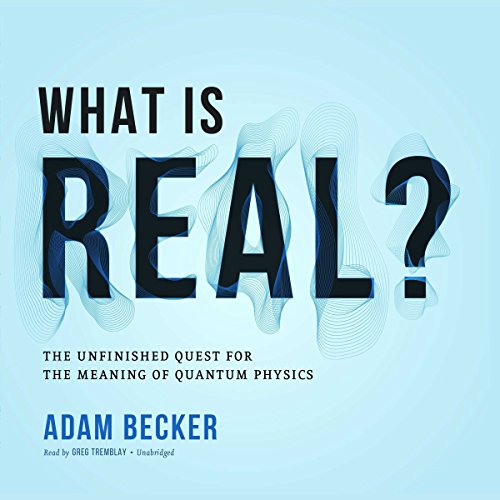
“What is Real” The Unfinished Quest for the Meaning of Quantum Physics
By: Adam Becker
Narrated by: Greg Tremblay

Adam Becker (Author, American astrophysicist, philosopher with BA’s from Cornell, and a PhD in the philosophy of physics from University of Michigan.)
Adam Becker explains a mystery that surrounds the concept of quantum mechanics. The theory of quantum mechanics continues to confound Einstein’s disagreements about quantum physics. No one, including Albert Einstein’s and Niels Bohr’s discussions, has fully agreed on the fundamentals of quantum mechanics. There are theories about quantum mechanics but proof about “What is Real” remains a mystery.


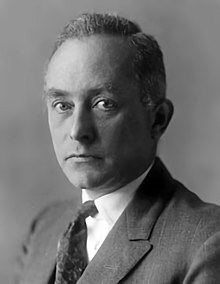
Becker explains in broad terms the Copenhagen interpretation of quantum mechanics. The Copenhagen interpretation came from the work of Niels Bohr, Werner Heisenberg, and Max Born. Study of the sub-atomic world is based on the Copenhagen mathematical theory created in 1925-1927. The theory argues quantum mechanics is inherently probabilistic, not deterministic. (The term probabilistic is only reference to a collapse or disappearance of an expected proton when sent through a split screen. It is not suggesting that quantum physics results are not reliable tools. Quantum physics has been found to be a reliable, accurate, and dependable tool for the desired effects when applied in the tech world.)
Interestingly, Becker suggests Werner Heisenberg tried to cover up his support and belief in Nazism. Becker suggests Heisenberg’s ineptitude as a manager of the research and experimentation process is the cause of Germany’s failure, not any sympathy for holocaust victims.
Einstein argues the only reason quantum mechanics appears probabilistic is because of an undiscovered fundamental law about the sub-atomic world. Einstein believes all physics theory must obey the law of locality which postulates physics laws must be based directly on related and surrounding causes.
Becker notes John Stewart Bell experimentally proves Einstein is wrong and that quantum effects violate the principle of locality.

Bell’s proof is mathematical and based on experiment. His calculations and experiment show two light particles can have spin characteristics that correlate with each other at a distance, non-locally. This quantum entanglement is dubbed “spooky action at a distance” by Einstein. Einstein, Boris Podolsky and Nathan Rosen argue entanglement (“spooky action at a distance”) is not proof of non-locality. Einstein believes there is an undiscovered cause for the appearance of non-locality’s entanglement. The argument against locality is called the EPR paradox after its theorists’ last names. Bell proves through experiment that “spooky action at a distance” is real and that the Copenhagen interpretation of quantum mechanics is wrong.

John Stewart Bell (1928-1990)
Bell’s theorem verifies that “spooky action at a distance” is no paradox by proving that quantum mechanics reflect a non-local phenomenon.
Hugh Everett, a physicist who studied under John Wheeler, published a paper with the idea that non-locality is evidence of another reality, another world with the same people experiencing a different course of life. The collapse or disappearance of a quantum particle is evidence of another reality, another world. For example, an incident of a near drowning would be survival in another reality that simultaneously exists in a different world.
Hugh Everett (1930-1982, died at age 51)
Hugh Everett proposed a many worlds theory of quantum mechanics based on Bell’s theorem of non-locality.

Everett was a student of physics professor John Wheeler who had worked with Niels Bohr.

John Wheeler (1911-2008)
Wheeler became an early supporter of Everett’s many worlds theory.
Wheeler popularized the terms “black hole”, quantum foam”, “neutron moderator”, and “it from bit”. He participated in the Manhattan Project during WWII and worked at the Hanford Site where he helped Dupont build a nuclear reactor in Richland, Washington. Wheeler became skeptical of the many worlds’ hypothesis in later years because of what he called its “metaphysical baggage”.

The significance of Becker’s book is in his explanation of Bell’s theory that disagrees with Einstein’s theory of locality. Einstein presumes missing variables will explain “spooky action at a distance”. Becker notes most physicists still believe in the Copenhagen theory of quantum mechanics despite Bell’s theory and proof that quantum mechanics allow for non-local affects. All the answers for “What is Real” proposed by Becker seem to contradict themselves or lack common sense. However, they still may be true or valid. They are just unproven or unobservable by repeated experiment.

 REVIEWS AND VIEWS OF LIFE