

Blog: awalkingdelight
Books of Interest
Website: chetyarbrough.blog
“The Covenant of Water”
By: Abraham Verghese
Narrated by: Abraham Verghese

Abraham Verghese (Author, American physician, Professor of the Theory and Practice of Medicine @ Stanford University Medical School.)
As an immigrant, Abraham Verghese began working in America as a hospital orderly. His hospital experience led him to pursue a medical degree. His experience as a world traveler and physician gives weight to his writing about medical diagnosis, brutal loss of life, societal norms, the importance of belief, and human vulnerability. Verghese tells a story from the beginning of the twentieth century through two world wars. Its story is of two physicians (one from Sweden another from Scotland), and a resolute lower caste family in India.

The author of “The Covenant of Water” emigrated to America when Haile Selassie was replaced by a Marxist military government in Ethiopia. One wonders if cultural conflict of interest may be more pernicious when land masses are separated by bodies of water. “The Covenant of Water” implies otherwise. Like any lasting covenant between parties, respective self-interests must be addressed and respected. When they are not, all parties suffer. At one point, Verghese suggests “The Covenant of Water” washes away life’s troubles. The tragedies he recounts suggest the real truth is that life’s troubles never wash away. Troubles remain within us in memory and only truly disappear in death.
India’s Saint Thomas Christians date back to the 3rd century. An estimated 4,000,000 St. Thomas Christians live in 21st century India.

Verghese’s story holds together through the generations of an Indian Christian family from the early 1900s through two world wars and the beginning of the 70s. Part of the story’s interest is in Great Britain’s colonization of India and its historical perspective. At the forefront of the story, there is the inevitable cultural conflict in any countries’ colonialization of another. Verghese shows no clear line can be drawn between exploitation and improvement of a colonized society whether its native American in North America, Aboriginal in Australia or of a lower caste family of a minority religion in India. Verghese interweaves an insightful story that magnifies reasons why cultural difference is only overcome on a person-to-person basis. India will always be India to its native citizens. Today, a similar truth is being played out in Gaza and Israel. Palestine will always be Palestinian just as Israel will always be Israeli.
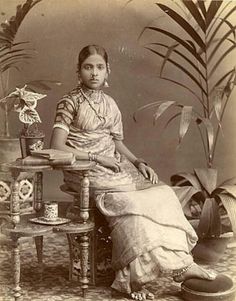
Verghese’s story begins with an India wedding betrothal of a 12-year-old girl to a 40 something widow who has lost his wife to illness.
The betrothal is made at the recommendation of the husband’s relative who as a matchmaker researches the background of the betrothed’s family. The chosen bride is naturally afraid to leave her family and the groom is unsure of what he wishes to do. The matchmaker assures the groom the betrothal is a good one for him, and the marriage is consummated. The young girl travels from her home to her new husband’s property many miles away. Her greatest unhappiness is in leaving her mother but she is greeted by her new household by a helpful older woman. The young girl is comforted by her Christian beliefs and receives an omen of welcome by a massive bull elephant that had been saved by her new husband.
The incongruity of ages in this marriage is disconcerting to many listener/readers. Verghese non-judgmentally explains the culture of India in the early 1900s.
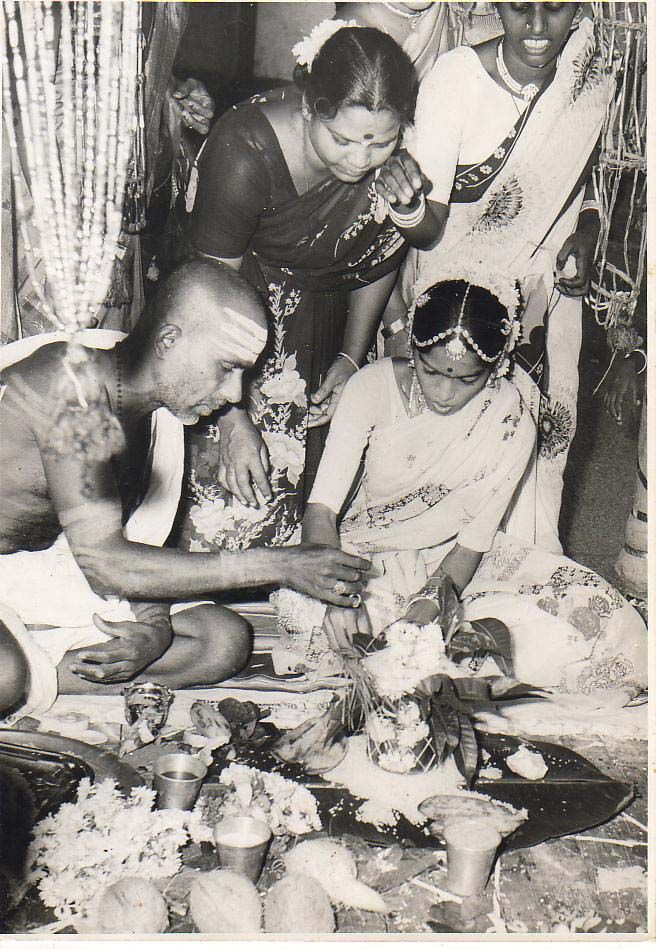
(World travelers will recognize remnants of that betrothal culture exist in India today.) The husband has a two-year-old son from his former marriage. He is a landowner as a result of personal ambition and hard work. He is not rich but is well respected by the people that know him. The husband treats his new bride with respect, and she begins to care for the household and her new stepson. They first have intimate relations when she turns 17. Their first child is a daughter who has a developmental problem that limits her intellectual growth. After two miscarriages, she has a boy who is a binding connection for the story. She grows to love her husband who dies when his child wife reaches her thirties. She becomes the matriarch of the clan.

This sets the tenor of Verghese’s story. It is a long, long, some might say too long story that repeatedly reminds one of how important it is to respect other people’s cultural beliefs while all life is filled with hardship and change.
Listener/readers will get a glimpse of India’s, as well as Great Britain’s, and Sweden’s cultures with the introduction of a Scottish and Swedish surgeon. What the main characters hold in common is that they have underlying respect for the life of others in any culture, whether rich, poor, educated, or unschooled. The two doctors, the child bride and her son are heroes and victims of their times.

The Swedish doctor travels the world to settle in a remote part of India to recreate a refuge for victims of leprosy. The Scottish doctor, after a life-threatening injury, becomes a patient of the Swedish doctor to be figuratively reborn by his experience after the Swede’s death. As true of the India family, the Scottish doctor’s life is dramatically changed by tragedy. The Swede dies at the refuge after having rehabilitated the Scottish physician’s burned hands. The Scott has been introduced to supporters of the Swede’s practice at the Leper colony and he evolves into a business owner/manager that makes him wealthy.
The son of the India child-bride saves a young child from drowning in a flood that whisks him and a nearly dead victim to the Swedish doctor’s clinic where the physically unable Scottish surgeon directs the boy in how to incise the babies throat to save the baby from asphyxiation. The young boy saved the babies life and overcame a hearing deficiency to become a social leader of his village in India during and after WWII.
The young boy, now a man, falls in love with a woman of his age that he had met when he saved the nearly drowned baby. They marry and have a child of their own. The child dies in a tragic accident. The loss of the child is felt to be the fault of each parent which tears their relationship apart. It never mends as the tragedy of their relationship continues to unfold. Their marriage falls apart. At this point the Scottish doctor re-enters the story with an unexpected revelation about the wife who leaves and returns because of the loss of their child. What is meant by “…loss of their child” is an added chapter to this tragedy that extends the story beyond one’s imagination.
Verghese shows himself to be an excellent writer but to some listener/readers the denouement of his story is a step too far for one’s imagination.
Every human being has a life story. A few human beings in Verghese’s book show that respect for every life carries the hope of civilization. Without respect between those who are different, Verghese shows why human dysfunction and tragedy will remain a condition of human society.

 REVIEWS AND VIEWS OF LIFE