

Audio-book Review
By Chet Yarbrough
Blog: awalkingdelight)
Website: chetyarbrough.blog
Gender and Our Brains (How New Neuroscience Explodes the Myths of the Male and Female Minds.)
By: Gina Rippon
Narrated by: Hannah Curtis

Gina Rippon (British Author, neurobiologist, received a PhD in physiological psychology, professor at Aston Brain Centre, Aston University in Birmingham, England.)
Gina Rippon develops an argument, reinforced by literature but indeterminant by science, that there is little intellectual or social difference between the sexes. Like white dominance of the western world, Rippon implies difference between the sexes has been institutionalized and biased by society.
Though Rippon does not reach back to fossil evidence of human beings, one might make a case for the beginning of biased human socialization in the discovery of homo habilis males and females that lived 2.4 to 1.4 million years ago in Eastern and Southern Africa. Ironically, “homo habilis” is Latin for “handy man”.
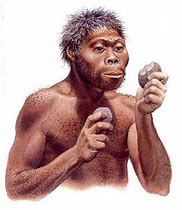
The vary choice of identification of the oldest known fossil is a reminder of the influence of socialization and gender discrimination by the actions and definitions of science researchers. ((Hardly a surprise when only 38% of the population of Science, Technology, Engineering and Mathematics’ (STEM) bachelor’s degrees are held by women.)) Conceivably, in the beginning of history men dominated women because of inherent physical strength and a division of labor that set sexual bias for generations to come.

In “Gender and Our Brains”, Rippon is raising the chicken and egg paradox for the origin of male and female identity.
Is one born with a gender identity like a chicken or is one born as an egg with a chicken’ identity determined by socialization?
Having been raised by a mother with the only consistent father figure in the family being an older brother, this reviewer’s belief is as clouded as the conclusions reached by Rippon. There is as much evidence for being born as a chicken as an egg in the history of science and sociology. The conclusion one may draw from “Gender and Our Brains” is “let people choose to be whom and what they desire to be”.
Society should neither condemn nor deny a person’s sexual preference. Just as racial and ethnic minorities should not be discriminated against, neither should those who choose a sexual identity.

Societal acceptance and equality of opportunity should be the same for all. There is no justification for denial of equal rights and opportunities based on what one becomes as an individual whether one’s life is an inherent or learned difference. The only reason sexual identity is a controversial question is because societies lean toward a “we/them” mentality. Why should one care whether one identifies as male or female if they make a positive contribution to society. America is founded on the principles of equal treatment and opportunity for all, not just a white, largely male, majority.
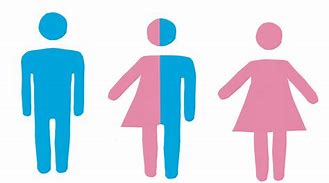
Rippon’s conclusion is that human beings may or may not have a sexual identity when they are born. Science experiments and studies give no distinct answer to inherent sexual identity.
If sexual identity is inherent (which is neither proven or unproven by science), socialization is shown to influence sexual identities maturation and how men and women behave toward each other. Rippon argues if sexual identity is partly determined by socialization, then socialization is where equality of the sexes should and can be reinforced.
Rippon makes a convincing argument that there is minimal difference between men and women except in their role in human reproduction.

Many literary stories believe in the equality of the sexes. Rippon’s fundamental point is that all humans are born equal whether male, female, or other. Her inference is that the world needs to get over discrimination and promote equal rights and opportunity for all because any natural origin of sexual identity remains a scientifically indeterminant puzzle.

 REVIEWS AND VIEWS OF LIFE