

Audio-book Review
By Chet Yarbrough
Blog: awalkingdelight)
Website: chetyarbrough.blog
Mrs. Bridge
By: Evan S. Connell
Narrated by: Sally Darling

Evan S. Connell (American Novelist, 1924-2o13., died at age 88.)
Evan Connell captures a woman’s middle-class life in the twentieth century. “Mrs. Bridges” is a story of a twentieth century woman whose life begins in the middle-class and rises to the upper middle-class. She marries, has three children (one boy and two girls) with a husband who becomes a highly successful lawyer. Her son is characterized as moderately intelligent with two sisters, one sister characterized as smart and haughty and another quiet and reserved. The story is set in middle America.
In 1959, “Mrs. Bridge” received the National Book Award in fiction. The novel became a moderately successful movie, “Mr. and Mrs. Bridge”, starring Paul Newman and Joanne Woodward.
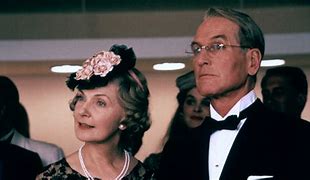
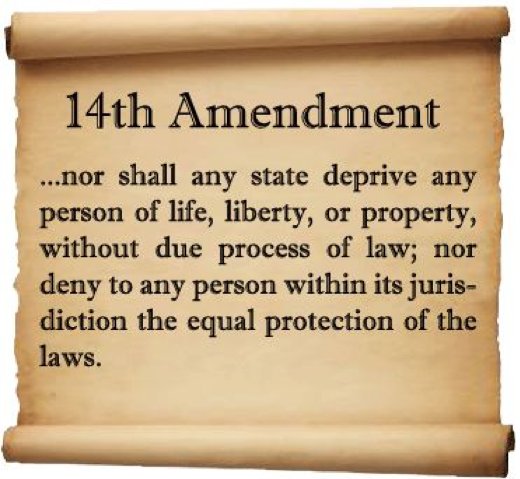
“Mrs. Bridge” will resonate with many women’s and men’s aspiration in America. It is a reminder of what it is like to be an American in a world ruled by white men, i.e., not women or people of color. “Mrs. Bridge” is a wife slowly becoming aware of an evolving society that is far from the ideals of equality of opportunity outlined by the 1868′ 14th Amendment.

The Bridge’s smart and haughty daughter graduates from high school, chooses not to attend college, and decides to move from the Midwest to New York. She moves to Greenwich Village and finds a job as a manager’s assistant while living a bohemian life that mystifies her mother.
The son chooses to go to college and appears on his way to becoming an engineer with a fascination for measurement and construction. He seems to have a plan to achieve his father’s success. However, he rebels in a different and similar way to his sister by dating girls who do not reflect the staid relationship of his parents. On the one hand, the son strives to emulate his father, on the other, he rejects the privileges of wealthy upper-class existence in white America.


She turns to religion. Ironically, she abandons her religious obsession, marries a plumber’s son who drops out of college to take over his uncle’s business with the ambition of becoming a financial success like his new wife’s father. That goal is unrevealed in Connell’s story, but he shows their marriage is rocky, presumably because of their societal upbringing. The husband unjustifiably strikes his wife. He apologizes but Connell infers the reason for their conflicts is because of the different economic circumstances in which they were raised. The Bridge’s young daughter is accustomed to having housework done by servants while the plumber’s son is self-reliant and an ambitious doer. The story infers they stay together but it is an untold exploration of their remaining lives.

Nearing the end of this family’s story, Connell illustrates the growing boredom in Mrs. Bridges’ life.
The children grow away from her. She feels a sense of loss of purpose in life. Housework is now entirely done by servants. The children no longer listen to her or seek her advice. Her husband is consumed by his work. No one seems to need or care about her. The only solace seems to be in wealthy women friends who are experiencing a similar ennui. One of these upper-class women commits suicide. Mrs. Bridges suggests to her husband that she should see a psychiatrist for her growing depression. Her husband suggests that is nonsense and the idea is dropped.
The life of the Bridges family is disrupted by WWII. The son chooses to leave the university and enlist in the Army. The implication is that life goes on for the family as it had before, but the experience of war is only reinforcing the dynamics of their family’s socialization.
Self-interest permeates human life. In a capitalist culture, self-interest is measured by wealth.

One suspects some who have lived this twentieth century life see themselves in Connell’s story of the Bridges family. In socialist culture, self-interest is measured by power. In a communist culture, self-interest is a combination of wealth and power as evidenced by Russia’s and China’s rule in the 21st century.

The value of Connell’s “Mrs. Bridge” is in its dissection of American society, and not just of its time but of today.
Its story implies American wealth should not be a measure of human value. The gap between rich and poor is a measure of how far America is from the intent of the Constitution’s statement “all men are created equal”. Connell’s story infers the statement in the American Constitution should have been “all people are created equal”, not just men. In being created equal, the 14th Amendment stipulates all citizens are to have equal rights in pursuit of life, liberty, and property.
Connell masterfully shows the strength and weakness of American society. Its strength lies in freedom to exploit human self-interest. Its weakness is in believing wealth is a measure of human value.
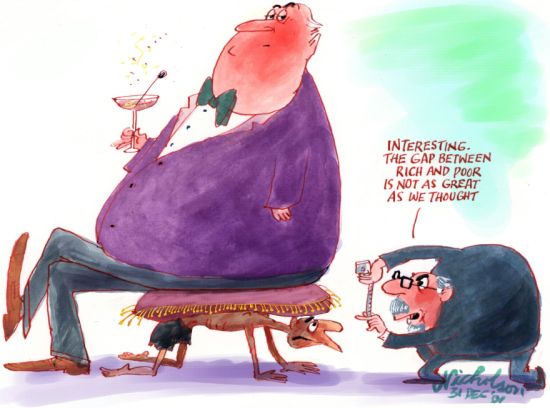
There must be no discrimination in society based on sex, race, religion, or ethnicity for equality of opportunity to evolve. That is aspirational in America, but whether equal opportunity can ever be achieved is problematic based on the nature of human beings.

 REVIEWS AND VIEWS OF LIFE
2 thoughts on “EQUALITY OF OPPORTUNITY”