

Audio-book Review
By Chet Yarbrough
Blog: awalkingdelight)
Website: chetyarbrough.blog
Helgoland (Making Sense of the Quantum Revolution)
By: Carlo Rovelli, Erica Segre-translator, Simon Carnell
Narrated by: David Rintoul

Carlo Rovelli’s book title, “Helgoland”, refers to a small island in the North Sea, off the coast of Germany. Werner Heisenberg, a pioneer in quantum mechanics theory, visits the island to think about the mystery of matter and energy and how it works at a subatomic level.

Werner Heisenberg (German theoretical physicist, pioneer of the theory of quantum mechanics. Born 1901, died 1976 at the age of 74.)
Rovelli explains this 20-year-old wunderkind had been given an assignment by Niel’s Bohr to determine how a quantum works in a subatomic environment. (A quantum is the minimum amount of a physical property’s interaction with the substance of the world.) The author suggests Heisenberg chooses Helgoland to think about his complicated assignment because he suffers from allergies which would not be aggravated by the austere island’s environment.
Rovelli argues that Heisenberg believes the known postulates of physics, rather than a new theory, held the key to the quantum world.

Using the tools of known physics, Heisenberg observed and recorded the actions of quantum particles. What he found was their actions could be measured mathematically with the addition of a matrix of numbers to finite calculations of known physics phenomena. The matrix introduced the principle of probability rather than certainty to quantum action at a sub-atomic level. This revelation overturned the certainty principles of cause and effect presumed by the Einstein’ physics community.

At a subatomic level, Heisenberg’s observation and number matrix postulate probability rather than certainty as a fundamental law guiding the principle of existence.
Rovelli goes on to explain this fundamental change in the understanding of physics is elemental but not substantively different for life as we know it. The author argues life remains relational at all scales of existence, just as it did before quantum mechanics became physics guiding principle. However, quantum physics remains mysterious and has led to new ideas like the many worlds’ hypothesis, the Copenhagen interpretation, and the Broglie-Bohm theory.
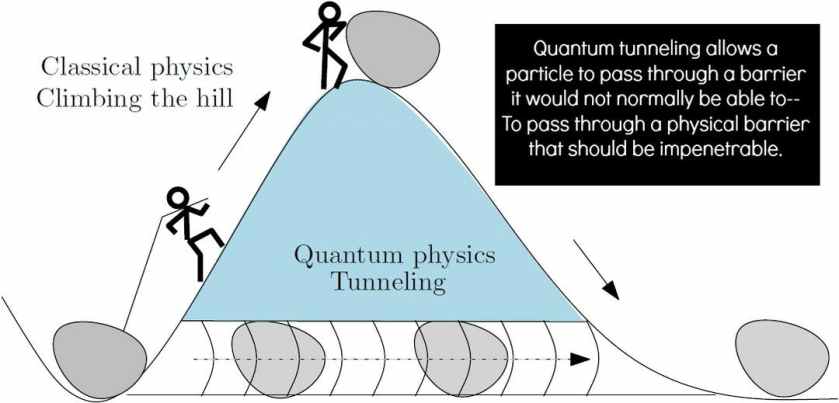
What Rovelli concludes in “Helgoland” is that what humans see, hear, feel, and think are based on relational understanding of the world.
Rovelli argues the world is a material place, but its substantive reality is based on life’s perceiver. This is a comforting and terrifying argument. It explains why humans can be so right about what is perceptually true and advantageous but also wrong and disastrous because of misleading perceptions.

 REVIEWS AND VIEWS OF LIFE