

Audio-book Review
By Chet Yarbrough
Blog: awalkingdelight)
Website: chetyarbrough.blog
Hubert Humphrey (The Conscience of the Country)
By: Arnold A. Offner
Narrated by: Jonathan Yen
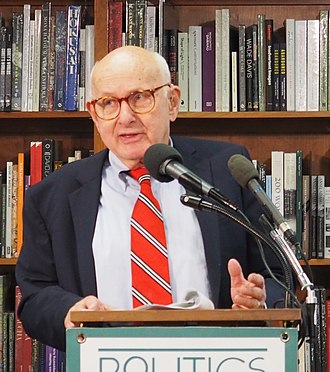
Arnold A. Offner (Author, American historian, president of the Society for Historians of American Foreign Relations.)
Arnold Offner offers a biography of Hubert Humphrey, a former Minneapolis, Minnesota Mayor, U.S. Senator, and Vice President of the United States. Offner notes Humphrey ran for President in 1960 but was defeated by John F. Kennedy.
Hubert Humphrey (1911-1978, died at age 66, V.P. 1965-1969, Senator 1971-78)

What makes this biography interesting is that few American V.P.s are remembered, let alone biographized. The V.P.s who are remembered are only those who become Presidents. Even then, most American Vice Presidents are not remembered. Three exceptions are Theodore Roosevelt, Harry Truman, and Lyndon Johnson.
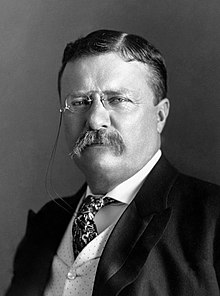


There are 16 V.P.s to become Presidents of the United States. Out of 46 Presidents, 16 V.P.s (approximately 34%) became President. Eight became President because of a President’s death in office.
- John Tyler-Only 1 month as V.P. when William Harrison died from an illness contracted at his inauguration.
- Millard Fillmore became President after the death 1.5 years into Zachary Taylor’s presidency.
- Andrew Johnson replaced Abraham Lincoln.
- Chester A. Arthur replaced James Garfield after he was assassinated by Charles Guiteau, only 6 months after serving as President.
- Theodore Roosevelt replaced William McKinley in his second term when he was assassinated by an anarchist.
- Calvin Coolidge replaced Warren Harding who died halfway through in first term.
- Harry S. Truman replaced Franklin Roosevelt after he had served 3 months in his 3rd term.
- Lyndon B. Johnson replaced John Kennedy after his assassination.

The strength of democracy is in a candidates’ skill in representing the will of his/her supporters. The weakness of democracy is in a candidates’ dependence on the wealth of special interests that contribute to their candidacy.
Humphrey’s biography is an interesting example of the strength and weakness of American Democracy. On the one hand, one person can change the course of democratic government. On the other hand, a candidate for President cannot be elected without the support of people and businesses that contribute a lot of money.
Money comes with strings. The influence of special interests and the power of elected representatives distort objectivity.
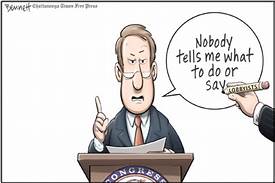
Offner shows the choice of running mates for Vice President in an American democracy is based on two qualities. The first is how a V.P. candidate increases voter base for the prospective President. The second is the skill that a V.P. may have in rallying political support for the President’s ticket. V.P.s in their positions as possible President replacements have little visibility to the public. Vice Presidents are forgotten in public memory unless they become President. Even as Presidents, if they fail to become impactful, they are forgotten.

Offner shows Humphrey wished to be President, but he had little chance of achieving that goal for two reasons.
One, he did not come from a wealthy family and two, his political base came from his experience as a mayor of Minneapolis, Minnesota and as a relatively new Senator for the State. Though Offner shows Humphrey had great political skill, his only realistic avenue to the Presidency is by being Vice President.
Offner shows Humphrey as a prime mover in civil rights.
Fight for civil rights is not shown as a singular political maneuver but a lifelong pursuit by Humphrey. Offner shows how Humphrey became a civil rights leader in his home State. After becoming Vice President, Humphrey successfully pushed for the greatest civil rights legislation since Reconstruction after the civil war.
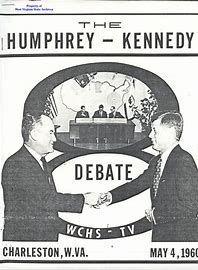
The importance of money in American elections is made clear when Humphrey runs for President against John Kennedy. The wealth of the Kennedy family doomed Humphrey’s chances.
Humphrey is characterized as an indefatigable debater and negotiator in a Congress held hostage by a 2/3’s cloture rule that gave civil rights legislation little chance of passage because of southern opposition. With the help of Mike Mansfield, the Democratic Senate Majority Leader, Humphrey maneuvers the Senate to approve the Civil Rights Act of 1964 despite the 2/3s cloture rule. It prohibited discrimination in public places, provided for integration of schools and other public facilities. It also made employment discrimination illegal.

American involvement in Vietnam did not begin with Johnson. America’s entry into Vietnam began soon after WWII because of America’s paranoia over Russian Communist infiltration in Asia and the 1950s growth of the Viet Minh’ guerillas. The Viet Minh were a guerrilla force led by Ho Chi Minh to contest French colonization of Vietnam. The Viet Minh were supported by both Stalin and Mao and their respective communist beliefs.

After Johnson’s American expansion into North Vietnam, Offner notes Ho Chi Minh demanded total withdrawal of America, the right of South Vietnam to vote on whether they wished to be a part of one country, and Vietnam to be left to govern their own territory.
Ho Chi Minh (1890-1969, died at age 79, President of the Democratic Republic of Vietnam.)
These terms were unacceptable to Johnson. Retrospectively, that would have been the best, least costly, and most diplomatic action that could have been taken by America.
Offner explains President Johnson requires his Vice President, above all, to be loyal. Offner shows Humphrey was loyal, at least until 1965, when he sent a memorandum to Johnson recommending an exit strategy. Johnson ignores Humphrey’s memorandum. The rest is history. Therein lies the risk of Democracy in America.
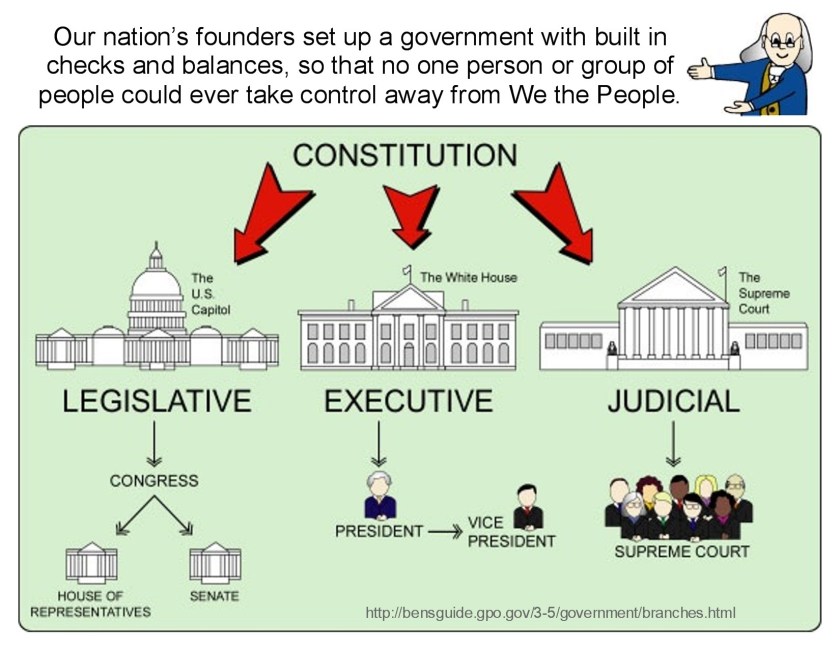
The checks and balances of Democracy fail to protect America from the mistakes of Vietnam, Iraq, and Afghanistan because money and power influence Democratic elections, policies, and Presidents. This is the risk both Republican and Democratic Presidents have noted. (Dwight Eisenhower’s comments about the Military/Industrial Complex, and Barack Obama’s address to the Senate on campaign finance reform.)
The last chapters of Offner’s book recount the race for the Presidency after Johnson’s speech saying he will not run for another term. Humphrey chooses to run for President with Muskie as his choice for V.P. In the end, Humphrey and Muskie are defeated with the return to political office of Richard Nixon and his soon to be revealed corrupt V.P., Spiro Agnew.
As Churchill noted in 1947, “Democracy is the worst form of government, except for all the others.”

 REVIEWS AND VIEWS OF LIFE