
Books of Interest
Website: chetyarbrough.blog
Moby Dick
Author: Herman Melville
Narration by: Anthony Heald
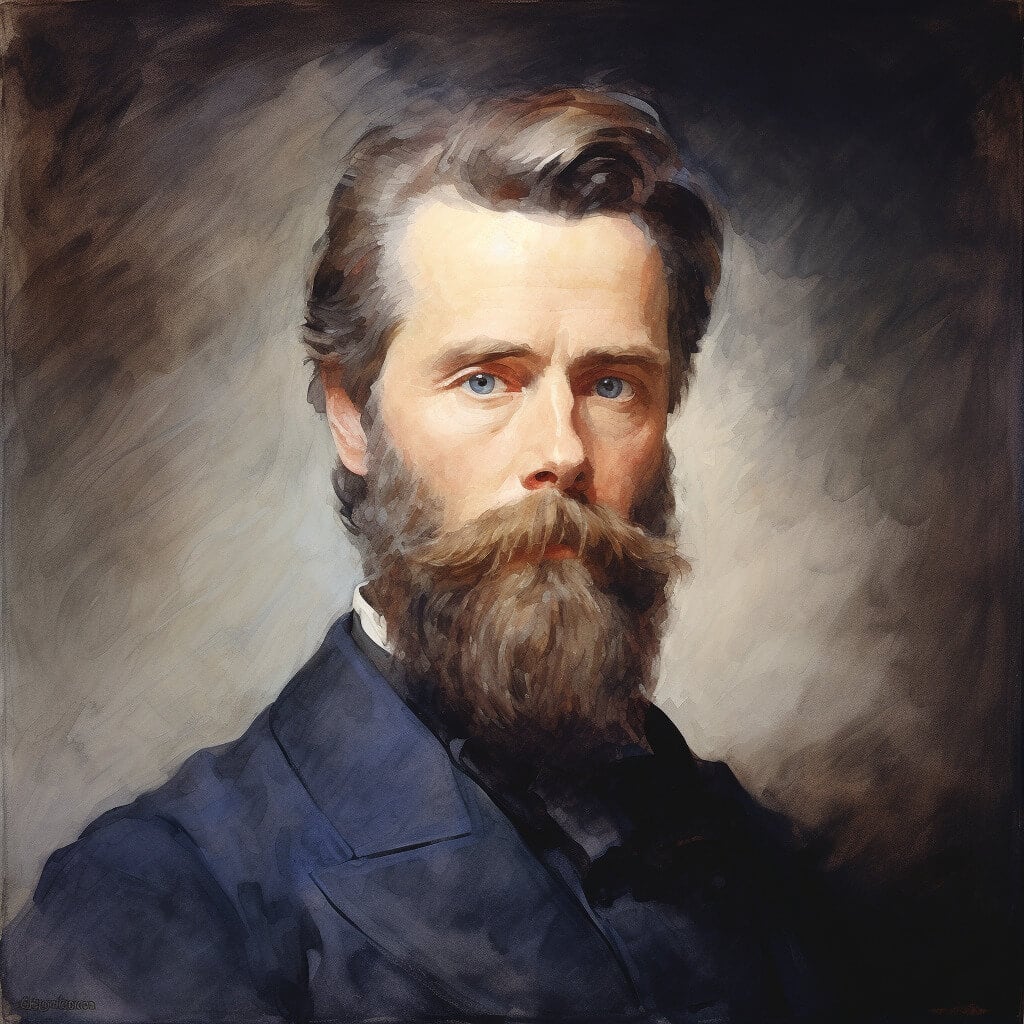
Painting of Herman Melville (1819-1891, American novelist, short story writer, and poet.)
Interestingly, Herman Melville’s “Moby Dick” is a reflection of his personal experience on the sea between 1839 and 1844. He first sailed on a merchant vessel in 1839. Between 1841 and 1843 Melville sailed on long voyages seeking sperm whales and right whales on the Acushnet which sailed out of New Bedford, Massachusetts. He chose to join the Navy on the USS United States and served from 1843-1844. He had an intimate understanding of what he wrote about.
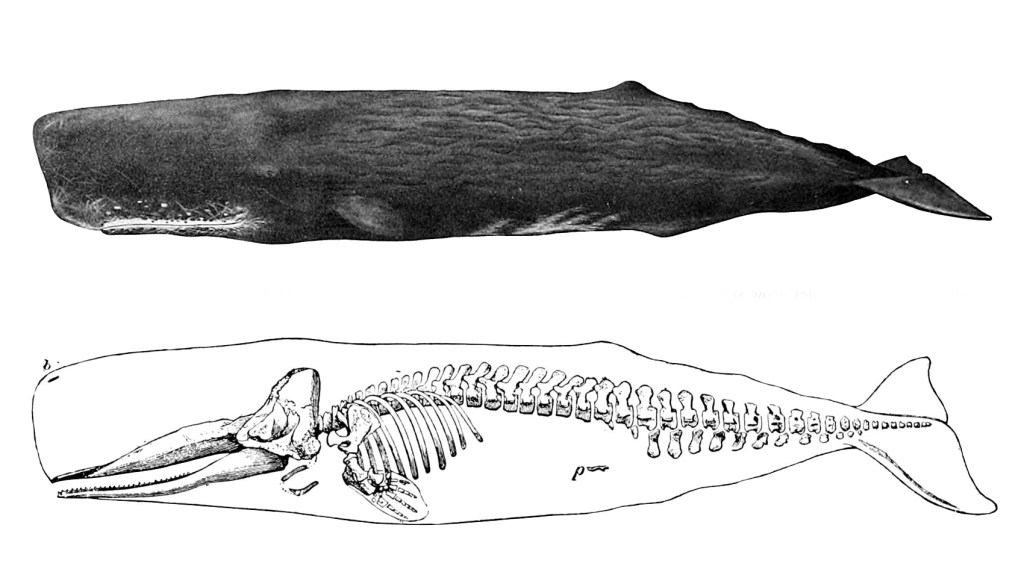
Sperm Whale
An interesting side bar to “Moby Dick” is information about whales. Whale hunting and harvesting is important in the 19th century for the collection of the spermaceti organ in a Sperm whale’s head. Spermaceti is taken out of the organ by men dipping buckets into the head cavity of the whale. The sperm whale roamed the Pacific, Indian Ocean, the South Atlantic, and offshore grounds of the equator. Other whales had spermaceti but not in the quantities of the Sperm whale. Aside from spermaceti harvesting, whalebone is collected for corsets, umbrella ribs, buggy whips, fishing rods, and for the carving arts, for tools, furniture accents, and sailor scrimshaw works. Whale steak, and fried whale scraps became popular for some consumers. In sum, Melville shows how whaling offered the global economy a boost in the 19th century.
Whale spermaceti.
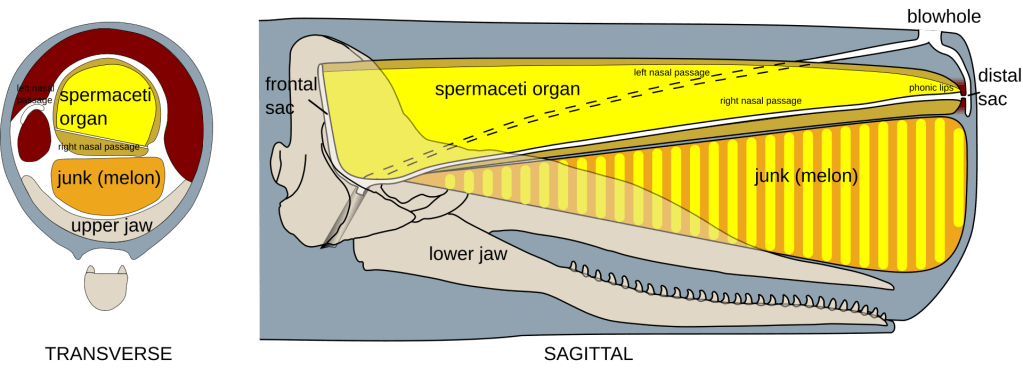
The value of spermaceti is for candles, ointments, and cosmetics because of its waxy, crystalline purity. Spermaceti value declined for two reasons. One, intense whaling in the 19th century killed nearly 200,000 sperm whales and their species decline made it more expensive to hunt and, as it always was, dangerous to kill. Along with the cost and danger of hunting whales, a significant reason for change is that industrial substitutes like kerosene, petroleum lubricants, and synthetic waxes and oils replaced spermaceti’s utility. In 1946, an International Whaling Commission is formed to regulate whaling. Finally, in 1982, the IWC created a global moratorium on commercial whaling.
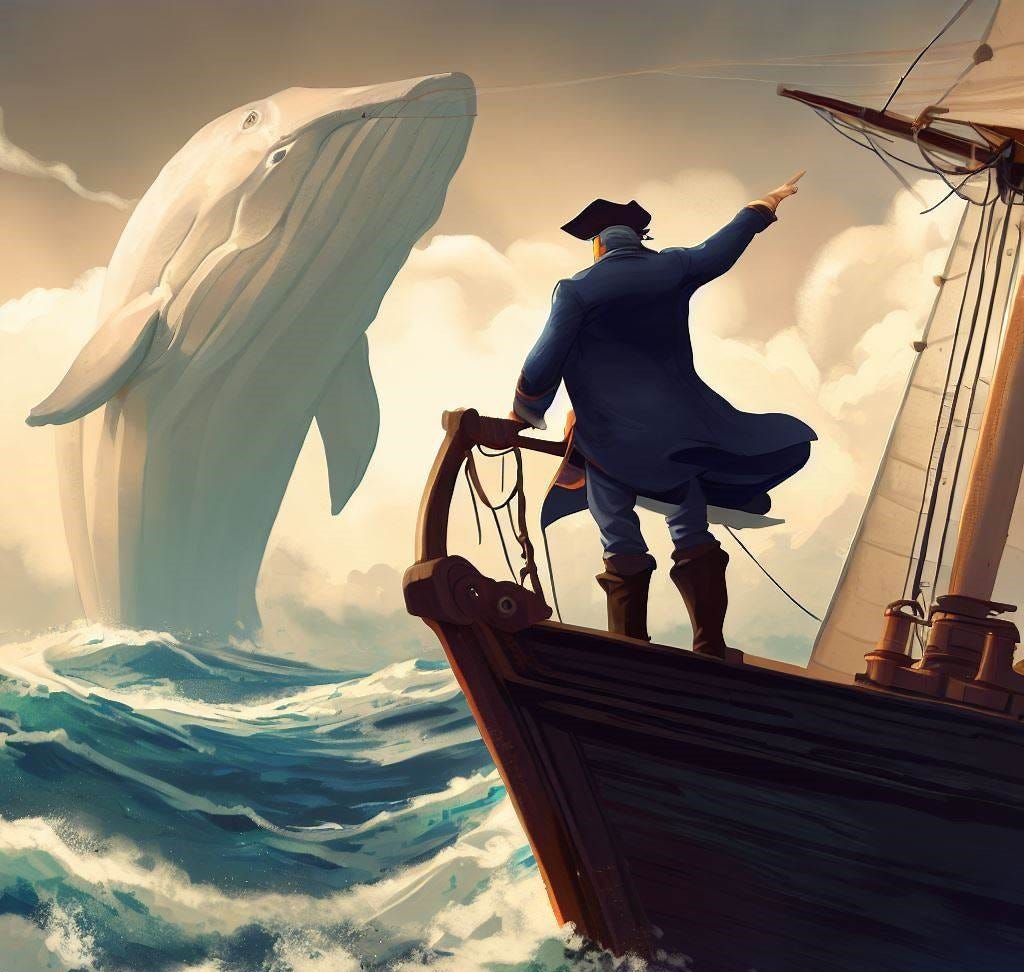
The main characters of “Moby Dick” are Ishmael, Captain Ahab, Queequeg, Starbuck, Stubb, Flask, and of course, the great white whale.
Ishmael is like Melville, a novice on a first voyage with Captain Ahab. Queequeg is a native islander whose father is a chief or king of an island from which Queequeg came. Melville describes Queequeg as a calm self-possessed whale harpooner who is a former cannibal who worships (in long trances) a wooden idol called Yojo. He is powerfully built, beautifully tattooed, and graceful in his movement. Queequeg’s character shows generosity and quiet wisdom and becomes a close friend and confident of Ishmael. They become brothers who are neither subordinate nor superior in their relationship.
As the story progresses, listeners become acquainted with Starbuck, Stubb, Flask and finally, Captain Ahab. They sale together on a ship out of Nantucket called the Pequod. Starbuck is the first mate, a Nantucket Quaker who is deeply religious, principled, and brave while being suspicious of Captain Ahab’s behavior. In contrast, Stubb and Flask are mates who follow Captain Ahab wherever and however he leads. Stubb and Flask believe life is “meant to be”, without fear or favor because they are whaleman who obey their orders.
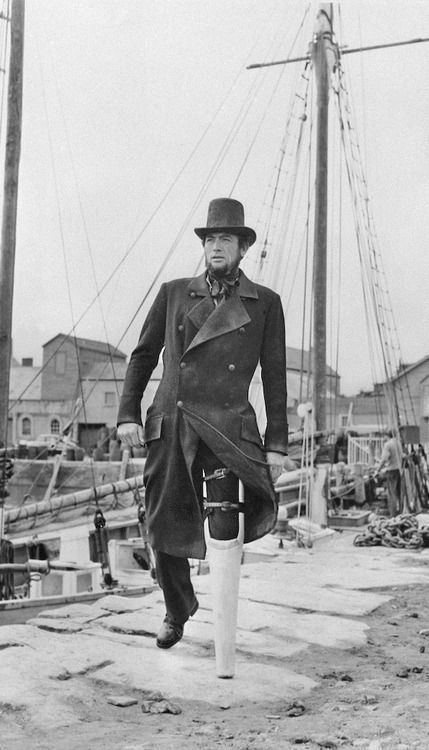
Captain Ahab, as acted by Gregory Peck in 1956, is an imposing, and enduring figure with a scarred face and ivory leg.
Ahab appears later as he comes from his cabin on the Pequod several chapters later in the book. He is pale, gaunt, and storm-beaten with a fierce intensity of purpose. Ahab has charisma but he is monomaniacal and terrifying because of his fierce desire to find and kill Moby Dick, a white whale that severed his leg in an earlier voyage. He views Moby Dick as a malevolent force in the universe that can only be subdued by the American will to conquer, dominate, and transcend the limits of the human condition, i.e. a condition imposed by nature, fate, God, or the inscrutable forces of life.
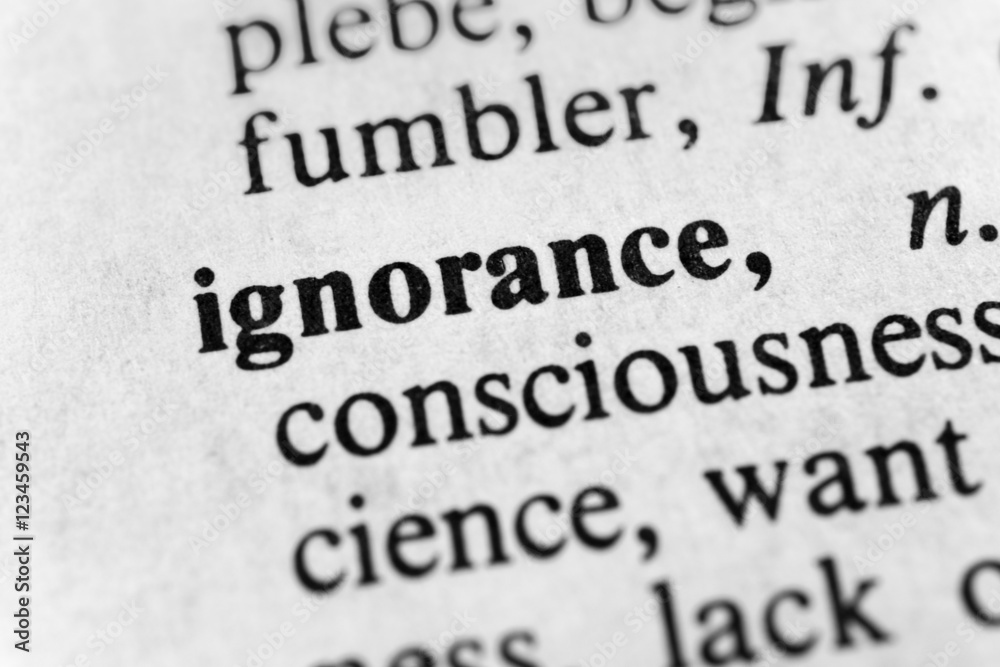
Ahab, to some, is a symbol of ignorance.
Ahab refuses to recognize his fallibility and the randomness of living in a world over which he has limited control. Ahab finally harpoons Moby Dick but the rope of his harpoon wraps around his neck and drownds him in the sea. He is bound by his obsession for control over a universe’s indifference. Ahab reminds one of a leader who wishes to impose meaning on a meaningless world. Ahab refuses to see the limits of his power over the unknown, a feeling one can see in errant leaders of the world today.

 REVIEWS AND VIEWS OF LIFE