

Books of Interest
Website: chetyarbrough.blog
“How Medicine Works and When It Doesn’t” Leaning Who to Trust to Get and Stay Healthy
By: F. Perry Wilson MD
Narrated By: Shawn K. Jain, F. Perry Wilson

F. Perry Wilson MD (Author, Harvard graduate with honors in biochemistry, attended medical school at Columbia College of Physicians and Surgeons. He is a practicing nephrologist at Yale New Haven Hospital.)
Doctor F. Perry Wilson is a physician with a biochemistry degree from Harvard, and a medical degree from Columbia College of Physicians and Surgeons. Wilson works at Yale New Haven Hospital where he specializes in kidney issues. Wilson’s book is a problematic view of doctor/patient relationship and what a patient can or should believe about a physicians’ medical diagnosis and treatment. A problematic view is not Dr. Wilson’s intent, but it is a conclusion a reader/listener may arrive at as he/she completes “How Medicine Works and When It Doesn’t”.
Dr. Wilson argues any advice from medical professionals may be listened to with skepticism but not disdain.

In general, that argument seems logical and fairly balanced. Wilson infers skepticism extends to trained medical professionals and the medical industry in general. The reason a lay person may accept that conclusion is based on personal experience and rationality.

As one who has been diagnosed with heart trouble from blocked arteries and medical treatment for an alleged heart attack, the last ten years have been an educational journey.
The first cardiologist who reviewed details of a physical weakness felt while working, suggested the weakness may have been caused by a mild heart attack. After a heart scan, the cardiologist found an artery serving the heart had a blockage. The doctor recommended a stent be inserted to clear the blockage. After surgery, the cardiologist noted the stent could not get through the blockage. Changing cardiologists seemed a prudent action considering the doctor’s failure.
A new cardiologist recommended regular check-ups, stress tests, and medicine to address the cause of the blockage.

Ten years have passed and there have been no further incidents, but relocation required finding a third cardiologist who reviewed medications, conducted further tests. The new cardiologist recommended continued medical treatment largely based on statin prescriptions and further tests. Here is where Dr. Wilson’s book becomes problematic to a patient seeking medical advice from trained medical specialists.
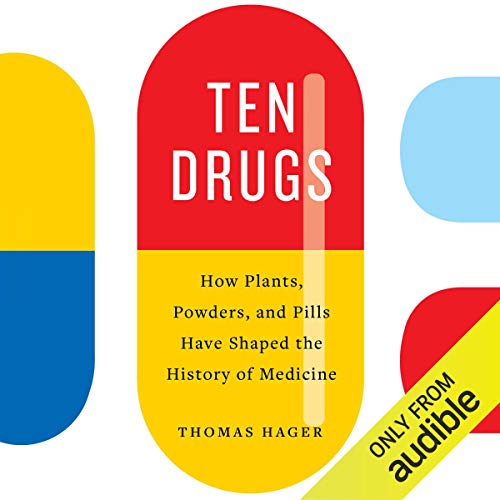
As noted by Thomas Hager in “Ten Drugs”, the relationship between statins and blocked arteries as a cause of heart attacks is somewhat unclear. The unclearness is not that taking stains reduce cholesterol but that statins have side effects. Science-based tests show statins do reduce cholesterol but inhibit memory, reduce cognition, and may cause liver and kidney damage. To add to negative side effects, there is medicine producing industry’ bias that promote statins because they are big revenue producers.
What Doctor Wilson’s book reminds one of is the mid twentieth century game show “Who Do You Trust”. Wilson infers truth is only science-based probability, not certainty.
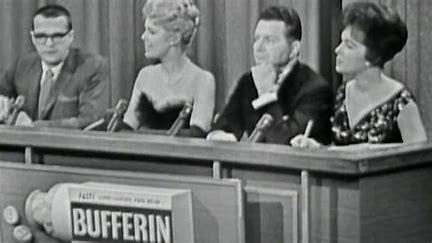
What both doctor and patient know is based on experience and education, not certainty. For both doctor and patient, it comes down to “Who Do You Trust”.
Wilson’s book is an important example of why patients should use their intuition to trust or change doctors when their health is at risk.
Doctors have spent the greater part of their lives understanding human medical problems and the effect of drugs in treating patients. Patients are unlikely to have had the same level of training or understanding about their own health or the health of the general population. What a patient is left with is the principle of trust. If one trusts the doctor who is prescribing and/or treating one for their illness, the probability of good outcome is logically better.
Doctor Wilson acknowledges profit motive for pharmaceutical companies drives their relationship with the medical profession and the public.
He offers concrete examples of mistakes that have been made by the pharmaceutical companies like the Thalidomide prescriptions that harmed unborn children. Of course, mistakes get made in every discipline of life. The other side of mistakes are the incredible success of vaccines for polio, smallpox, and our world’s most recent crises, Covid 19.

The conclusion one draws from Wilson’s book is trust is the most important characteristic of a patient’s relationship with a physician.
This is not meant to suggest one should shop for a doctor that tells one what they want to hear but to depend on the education and experience of a person who knows more about medicine and its effects than you.

 REVIEWS AND VIEWS OF LIFE