

Books of Interest
Website: chetyarbrough.blog
“Understanding the Mysteries of Human Behavior”
By: Mark Leary
Great Books Lecture: Professor Mark Leary
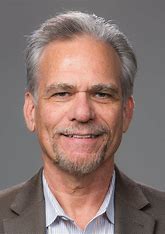
Mark Richard Leary (Professor of psychology and neuroscience at Duke University.)
Professor Leary offers an introduction to the psychology of who we are and why we act the way we do. Leary takes a Darwinian, as well as clinical, view of human nature. He attempts to unravel the mystery of personality, why humans are different, what self-esteem is and why it is important, and how understanding psychological process may help us become more self-aware, and emotionally healthy.
Homo sapiens have only been on earth an estimated 300,000 years on a planet estimated to be 4.6 billion years old.
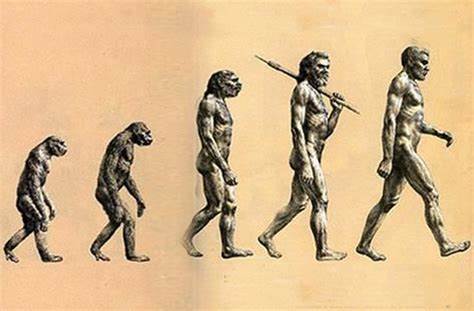
Leary suggests the psychology of homo sapiens is probably not much different today than when they first became sentient. The inference made is that our emotional and intellectual framework evolved from ontological experience and genetic inheritance. The history of human nature is written in our genes and the memes created by the nurturing of human life. Our nervous system evolved through Darwinian natural selection intent on preserving itself. Along with genetic evolution of the human neurological system, social and emotional responses to the environment were formed by inherited memes. (Richard Dawkins, an evolution biologist, defined “meme” as an inheritable behavior.)
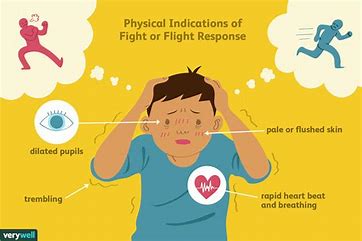
Leary explains fear, fight, or flight responses are heritable behaviors.
Dawkins suggests they are inherited memes and Leary suggests they are why most humans fear snakes, the dark, approaching strangers, and the unknown. Leary goes on to explain emotional responses like embarrassment, stress, and hurt feelings are inheritable physiological responses to inter and intra social relationships. He also explains more people, more noise, more urbanization subliminally affects human behavior.
Interestingly, Leary notes hurt feelings are shown to stimulate portions of the human nervous system that literally register physical pain.

That pain can make mountains out of mole hills and cause disproportionate physical response and verbal abuse. He notes human’ self-control is often difficult to exercise when feelings are hurt.

Somewhat bizarrely, Leary notes California tried to legislate self-esteem in school curriculum.
California reasoned feeling good about oneself would instill confidence and self-worth. The mistake is that self-esteem does not mean the same thing to everyone. It is not like gas that powers an automobile. Self-esteem comes from the many experiences children have with parents, teachers, other people, and personal accomplishment. Government cannot legislate all of the interactions in one’s life. It is not that self-esteem is unimportant, but it comes from broad societal experience and personal accomplishment. A classroom education is only a small part of life’s experience, let alone accomplishment.
Leary touches on memory and why we forget. Humans see an event but only recall events by reconstructing their occurrence. In that reconstruction, details are often manufactured rather than accurately recalled. Reconstruction rather than precise memory is the reason for mistakes made by eyewitnesses to events, and more particularly, crime.

There are many more insights to human behavior in Leary’s lectures.
He suggests dreams are not a source of discovery but a way of clearing one’s brain of errant, inconsequential fragments of synaptic events. A surprising lecture suggests there is experimentally proven existence of humans having psychic abilities. There is much to be learned about human behavior and relationship from Leary’s lectures.

 REVIEWS AND VIEWS OF LIFE