

Audio-book Review
By Chet Yarbrough
Blog: awalkingdelight)
Website: chetyarbrough.blog
The Code Breaker
By: Walter Isaacson
Narrated by: Kathe Mazur, Walter Isaacson

Walter Isaacson (American author, journalist, and professor.)
Walter Isaacson is an interesting and thorough historian as shown in his biographies of Steve Jobs and Leonardo DaVinci. “The Code Breaker” is a history of the human genetic code’s discovery and its societal importance. The stories of Francis Crick, and James Watson are fairly well known because of their discovery of the structure of DNA. They received the Nobel Prize for their discovery in 1962. Less well known are Rosalind Franklin, and Maurice Wilkins.
There are three avenues of knowledge in the book’s title “The Code Breaker”. One is the brief bios of the human genetic code breakers, two, the monumental risk in genetic code’s discovery and three, the potential reward of its discovery.

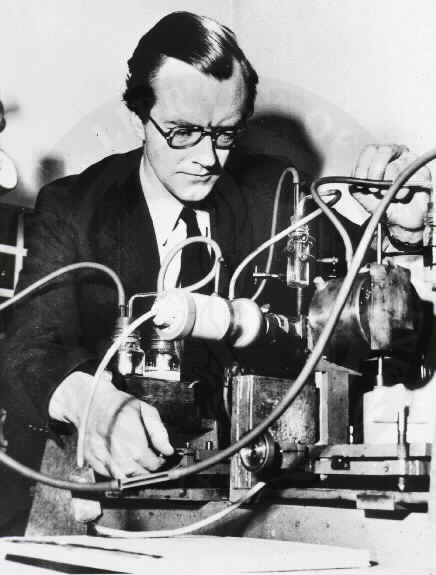
Maurice Wilkins (1916-2004)
In the late ’40s and early ’50s, as a biophysicist, Maurice Wilkins did diffraction studies of DNA.
Isaacson suggests Wilkins’ studies aided Crick’s and Watson’s discovery of DNA’s structure in 1953. However, Crick and Watson were at a standstill and may never have discovered the structure of DNA if Rosalind Franklin had not introduced X-ray crystallography to their search. Isaacson implies Franklin would have received the Nobel Prize for DNA’s structure but she died at age 37 in 1958. Isaacson notes the Nobel is not given posthumously. (That is not quite true because the Nobel Prize had been awarded posthumously, twice, i.e., once for literature and once for physiology. One wonders if inequality may not have had something to do with the Nobel decision. Isaacson notes Ms. Franklin was somewhat prickly in her relationship with others, not that it would be a reason for Franklin’s lack of Nobel recognition.)

After discovery of the structure of DNA, the next great advance in science is made by a Spanish microbiologist, Francisco Mojica. Mojica discovers what becomes known as CRISPR in 1993. CRISPR is an acronym for “clustered regularly interspaced short palindromic repeats”. It is the arrangement of the genetic code letters in the structure of DNA that can be read forward and backward. It is a written code for the description of a single gene.


Isaacson introduces Jennifer Doudna and Emmanuelle Charpentier to his biographic history of DNA. They are co-discoverers of what becomes known as CRISPR-Cas9. This is a gene editing tool discovered by Doudna’s team of scientists that could find anomalies in a gene’s genetic code and, with the aid of a virus, implant a revised code or modify a gene that causes harm to its host. That discovery opens a door to human control of genetic code. In principle, CRISPR-Cas9 takes the place of nature’s random selection of who or what a living thing becomes. It is a tool that can change the course of life for all living things; more particularly the lives of human beings who suffer from diagnosed diseases or illnesses.
Doudna and her scientific team’s work is with prokaryotic cells rather than eukaryotic cells.
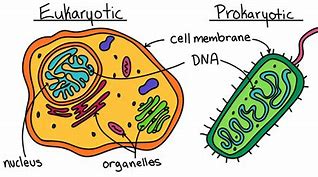
Eukaryotic cells have a nucleus with genetic material while prokaryotic cells have no nucleus with free floating genetic material. Humans have many prokaryotes but they are not enclosed within a nucleus. That leaves a door open to other scientists to claim precedent over Doudna’s pioneering work on the genetic code.
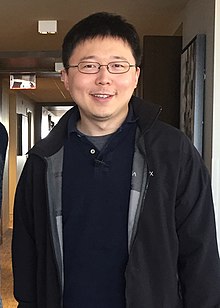
Feng Zhang (Chinese American biochemist.)
Zhang opens the door to eukaryotic cell modification with CRISPR-Cas9 which suggests he becomes the discover of human genetic code breaking before Doudna.
Doudna takes Zhang to court over a patent issue on CRISPR-Cas9 and eventually wins the patent right for genetic code breaking and its medical potential. There are a number of other scientists involved in Isaacson’s book but Doudna, Charpentier, and Zhang seem most consequential for understanding the significance of genetic code breaking.
CRISPR-Cas 9’s discovery and use gives science a tool for human’ control of evolution rather than Darwinian natural selection’s control .
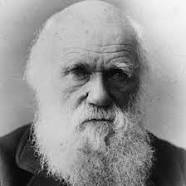
The remainder of Isaacson’s history is an exploration of the good and bad potential of that discovery for the human race. Without doubt, the world’s recovery from Covid19 is due to CRISPR Cas9’s use in finding a vaccine for the pandemic. On the other hand, Cas9 opens the door to indiscriminate gene modification.

This brings up the story of Jiankui He who modified the genetic code of one of the twins of a Chinese family whose husband had AIDs.
Jiankui’s medical intervention violated Chinese law and ethics rules set by the Academic Committee of the Department of Biology. At the same time, it was found that Jiankui botched the use of the CRISPR Cas9 tool. He was sentenced to three years in prison and the equivalent of a $430,000 fine.
James Watson is now in his 90s.
The last chapters of Isaacson’s book address the controversial comments of James Watson about race and intelligence and his fall from grace despite being co-discoverer of the structure of DNA.
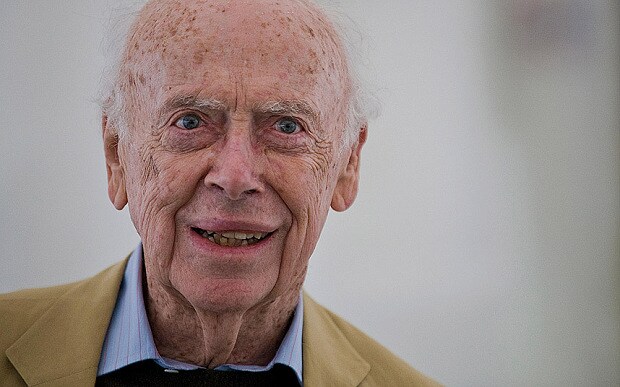
At a visit by Isaacson and Doudna to Watson’s home when he is 90, one cannot forget nor forgive Watson’s blind spot about race but understand his unshakable belief in the value human modification of genes to cure disease and his admittedly controversial ideas of enhancing human looks and intelligence.

Is behavioral hope a genetically identifiable characteristic by CRISPR-Cas9? Is it possible to modify human genes to create a more empathetic world? Or is gene manipulation a Mary Shelley nightmare with societies’ death like Dr. Frankenstein’s monster that dies from sorrow and guilt from the death of its creator?
The final significant note of “The Code Breaker” is Doudna’s and Emmanuelle Charpentier’s receipt of Nobel Prizes in 2020 for their discovery of CRISPR-Cas 9. By the end of “The Code Breaker”, a listener understands how the human race may become happy, healthy, or dead with control of the genetic code. Breaking the genetic code becomes a matter of human volition rather than nature’s decree. In whose hands will humans choose to be?

 REVIEWS AND VIEWS OF LIFE
2 thoughts on “HAPPY,HEALTHY,OR DEAD”