

Audio-book Review
By Chet Yarbrough
Blog: awalkingdelight)
Website: chetyarbrough.blog
The Girls in the Wild Fig Tree (How I Fought to Save Myself, My Sister, and Thousands of Girls Worldwide.)
By: Nice Leng’ete
Narrated by: Nneka Okoye
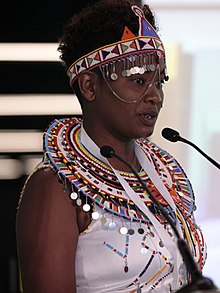
Nice Nailantei Leng’ete (Author at Age of 31 or 32, Graduate of Kenya Methodist University.)
Nice Leng’ete offers the story of her life in “The Girls in the Wild Fig Tree”. A large part of her story is about her life from age 4 to 10 years of age. She is born into a Christian family in Kenya. The final chapters address the lessons of her life and her journey to adulthood. Her father and mother die early in Leng’ete’s life. She explains both her parents died from AIDs. (Auto Immune Disease is first diagnosed in Kenya in 1984. By 1996, it is estimated that 10.5% of Kenyans were living with HIV, the virus that causes AIDs. The virus weakens a person’s immune system by destroying cells that fight disease and infection.)
Leng’ete is born into a blended family of two mothers. She explains the patriarchal Maasai culture is polygamous and her father had children from another wife.
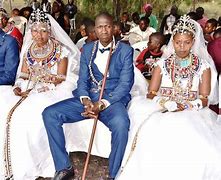
Though her father dies when she is but 6 or 7, she recalls him as a leader of his village. Her father enriches their Maasai community by working with the Kenyan government to establish a natural preserve managed by local young men of their village. Leng’ete’s memory of both her father and mother seem to have formed her character. Her memory of her parents is that they loved each other and raised her to become the woman of this story.

Leng’ete is from southern Kenya, born into an East African tribe of the Maasai people.
Leng’ete shows herself to be an unconventional woman as well as an extraordinary Maasai. She breaks many international misogynist beliefs as well as Maasai traditional roles for women in her native country.

Leng’ete’s poverty, youth and ambition lead her to live with three young men to afford a place to live in Kenya’s capital city. She is at once encouraged by the help she receives. On the other hand, she is surprised by the duplicity of a Nairobi’ con man that dupes her into believing he is an agent for international models. What Leng’ete does not forget is her village and Maasai traditions that suppress women and her village’s potential for cultural change.
Leng’ete returns to her village to work with local leaders to change the tradition of female genital mutilation (FGM). Leng’ete understands her culture and recruits a local male friend to open a door to some of the village elders. That door could not be opened by a woman without the help of her male friend. At the beginning of Leng’ete’s return she notes none of the elders would stay when she began to speak. With the help of her male friend’s participation in the meetings, a few elders began to listen. Without the elders’ understanding, she knows there is little chance for cultural change. The elders power and influence were needed.

Cultural change begins to show promise when a few elders stay and begin to listen to Leng’ete. Her objective is to explain how the the tradition of FGM diminishes Maasai’ culture.
Based on the advice of Leng’ete’s deceased father, she begins by asking questions of the elders to get them to think about the consequence of genital mutilation of women. She asks elders of the village if they think their partners enjoy sex. When they say no, she asks would they like their partners to enjoy sex? They say, yes. These questions open a door to understanding the consequence of women’s genital mutilation.
Leng’ete notes in her book that men are circumcised as a traditional path to manhood but the consequence is rarely death.

There are various reasons for genital cutting in different cultures. In the Maasai, FGM is a rite of passage into adulthood and a pre-requisite for marriage. In men, it is penile foreskin cutting but in females it is removal of the clitoris, a female sex organ that is a source of female sexual pleasure. Leng’ete explains to the elders how genital cutting of women’s genitals often cause excessive blood loss, infection, and high fevers that cause the death of women in their tribe. In the past, such deaths were believed to be unrelated to the cutting but to supernatural causes. In truth, Leng’ete notes many of the deaths are from unsterile instruments and imprecise cutting of the clitoris.
The broader cultural reality of FGM is that it reinforces sexual inequality.
Leng’ete tells the story of her older sister, Soila, who survives FGM and has children but is brutally abused by her husband. Her husband beats her and blames it on his drinking when it is implied to be related to Maasai patriarchal culture. Soila is trapped in the tradition of Maasai culture that says when a woman is married she is married for life. Leng’ete confronts Soila’s husband with the truth of his abuse. Surprising to Leng’ete, the husband gives up the tradition of life-long servitude of a wife by saying Soila is now Leng’ete’s responsibility. He releases Soila from their marriage, contrary to Maasai cultural tradition.
Leng’ete manages to get a college education but on her way she is hired as a social case worker in Kenya. That experience leads to organizational success that leads her to become a public speaker at a Netherlands event about women’s sexual and reproductive rights. She returns to Kenya to give another speech about the same subject to the Maasai, including village elders.

Leng’ete becomes the first woman to ever receive Kenya’s Black Walking Stick award which signifies leadership, respect and power within her community.
This is a brave story of a great woman who illustrates the truth that all human beings are equal, while a very few are the greatest among us.

 REVIEWS AND VIEWS OF LIFE
3 thoughts on “THE CUT”