
Audio-book Review
By Chet Yarbrough
Blog: awalkingdelight)
Website: chetyarbrough.blog
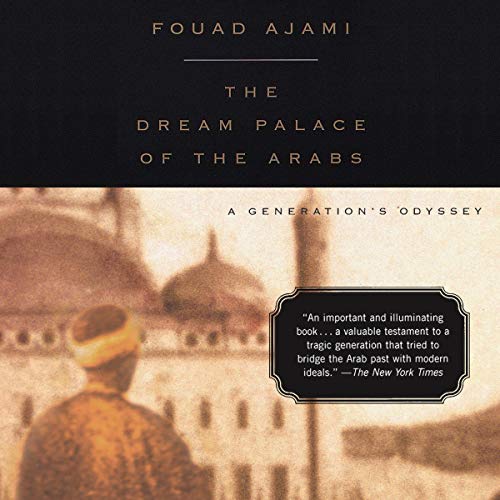
The Dream Palace of the Arabs
By: Fouad Ajami
Narrated by: Qarie Marshall
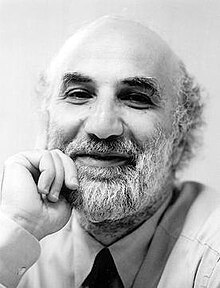
Fouad Ajami (Author, Lebanese-born American University Professor, former senior fellow at Stanford University’s Hoover Institution.)

Fouad Ajami offers a glimpse of Arab history in “The Dream Palace of the Arabs”. It is a glimpse because of Ajami’s personal view of Arab history as an Americanized Lebanese Christian. This is not to minimize his scholarly review but to contextualize objectivity, a weakness of all chroniclers of history.

The amount of detail offered by Ajami is difficult for a listener because of the many nuances of his enlightening history of the Middle East. The complicated mixture of different religions and Arab identities overwhelm a listener’s thoughts. Putting aside that concern, Ajami’s book is a treasure of facts and information a reader/listener will appreciate.

Arab culture is steeped in language as has been noted by other historians and writers.

One remembers the remarkable international, cosmopolitan, and sophisticated reputation of Lebanon. Some of Lebanon’s troubles are explained by Ajami. Lebanon, like Ajami’s history of the Middle East, is a complex ethnic, religious, and political country. Like the youthful history of America, the ancient history of the Middle East is riven with conflict. Ajami explains Arab identity often conflicts with religious differences in the Middle East.
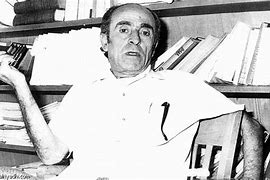
Khalil Hawi (Poet, 1919-1982, Lebanese poet,)
Ajami often refers to the beauty of Arab poetry and its reflection on and understanding of the complex relationship between being an Arab, a Muslim, a Christian, some other religion, and/or part of a particular familial sect. Ajami writes of Kahlil Hawi, one of the most famous Lebanese poets of the 20th century. Hawi commits suicide in 1982. Some say it was because of his resentment of other Arab government’s silence about the Israeli invasion of Lebanon in the so-called “Operation Peace of Galilee”, led by former Israeli Prime Minister Ariel Sharon.
Nizar Qabbani (1923-1998, Syrian diplomat, poet, writer and publisher.)
Ajami also recalls Nizar Tawfiq Qabbani, a Syrian diplomat, poet, writer, and publisher. Qabbani wrote about Arab empowerment against foreign imperialism and dictatorship.

Naguib Mahfouz (1911-2006, Egyptian Novelist.)
Ajami refers to Naguib Mahfouz Abdelaziz Ibrahim Ahmed Al-Basha, an Egyptian writer who won the 1988 Nobel Prize in Literature. He is more colloquially known as Mahfouz and is known for realist literature and existentialism.
Money is power and, as Lord Acton said, power corrupts.

Ajami’s references to Arab poets are not a mere side story. The poets offer insight into the tumultuous history of the Middle East. Ajami also addresses the impact of oil’s discovery on the political nature and culture of the Middle East. He argues the discovery and wealth of oil changed Middle Eastern culture that took on a more aggressive government posture toward modern borders, many of which were created by foreign governments.

Ajami addresses Saddam Hussein and his invasion of Kuwait.
He explains Saddam Hussein denied the history of borders among some Middle Eastern nations. Ajami notes Hussein looked at Kuwait’s oil riches as something due Iraq for its longer role as an independent nation. Of course, many Middle Eastern borders were changed by foreign powers. Ironically, Iraq only became an independent nation in 1932, Kuwait in 1961. The attempt by ISIS and Abu Bakr al-Baghdadi to create their own autocratic state out of existing bordered countries is another example of Arab leaders’ desire to rule the Middle East.
Anwar Sadat (1918-1981, President of Egypt 1970-1981, Assassinated.)

Ajami argues the assassination of Sadat reflects Arab discontent with ancient Middle Eastern countries history. Ajami acknowledges Sadat’s death is seen by some as a penalty for American influence in the Middle East. Many Arabs felt Sadat was an out-of-control authoritarian ruler in Egypt. Sadat’s imperial control was increasingly rejected by Egyptian citizens. Sadat’s peace agreement with Israel may have been a last straw.

Ajami believes Sadat became isolated from Middle Eastern intellectuals which made many more ambivalent about his leadership. There was a growing feeling that Sadat had abandoned his people, particularly poor and disaffected Egyptians.
On the other hand, Ajami notes Sadat’s assassination reinforces ISIS’ objective of consolidating Middle Eastern countries into one power bloc. Middle Eastern conflicts are shown to be more than differences in religions. The drive for independence from the West and consolidation of Middle Eastern political interests is an on-going movement.
Hosni Mubarak takes and holds the title of Egyptian President for 30 years after Sadat.

For a brief time, Mohammed Morsi and the Muslim Brotherhood ruled Egypt. After one year, the Brotherhood was overthrown by the military. The military intervened because they felt the Brotherhood did not have the experience needed to operate as a governing body.
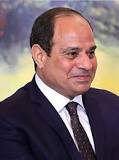
The Muslim Brotherhood lasted for one year when the former military officer, Abdel Fattah el-Sisi, took power.
Having visited Egypt (if our guide is a believable measure of El-Sisi’s acceptance) governance improved. However, as tourists, we were told not to walk freely in the city without accompaniment. There was a tourist-bus bombing around the Egyptian pyramids when we were there. There is little doubt that conflict between secular and religious leadership in Egypt remains.
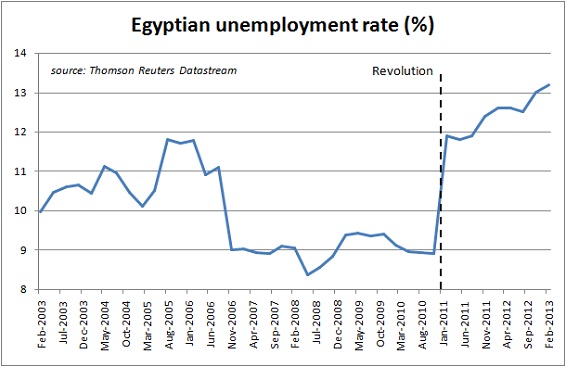
Ajami infers discontent with Mubarak is only partly related to his authoritarianism. One might argue that the characteristic of power is that it corrupts fair and equal treatment of the governed. Governance, whether secular or religious, seems increasingly unmanageable in Egypt– causing citizen discontent before revolution, later, and now. One wonders how long El-Sisi, or any leader will be able to govern Egypt with the challenge of its population growth and high unemployment.
Religion will continue to roil the Middle East because equal opportunity and economic poverty leave few options to its citizens. Citizens often turn to religion when faced with insurmountable problems.

The last chapter of Ajami’s book eviscerates the Israeli/Palestinian “Declaration of Principles” agreement of 1993. It was a land for peace agreement. In retrospect, Ajami notes the agreement offered little peace and no lasting benefit for peace between Israel and Palestine. He notes the widening gap in economic growth between Israel and Palestine and adjacent countries like Jordan. Ajami notes Israel holds all the cards in the deal because Palestine only falls deeper into poverty and down a blind alley of dysfunctional statehood.

If human leaders cannot ameliorate the hardship of life, citizens are often left with only hope, faith, and belief in religion. Arabs, like all people of the world, are on their own. Their customs and beliefs are what they are because of the circumstance of their lives. Belief and hope in religion will evolve based on what works to reduce human hardship. One may turn to religion or secularism with each to play their part in human survival. The key is in the freedom to choose, without fear or favor, those aspects of religion or secularism that serve human peace and happiness.

 REVIEWS AND VIEWS OF LIFE
One thought on “ONLY FREEDOM”