DEATH ROW

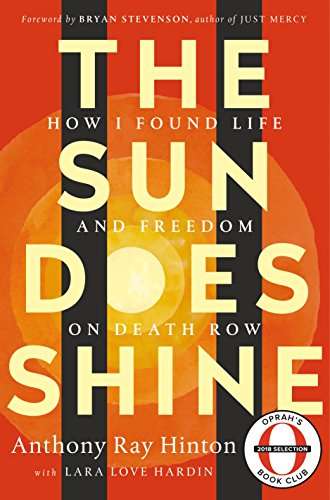
The question raised by “The Sun Does Shine”–is death row a necessary function of society? Anthony Ray Hinton’s life story challenges its efficacy.

Books of Interest
 Website: chetyarbrough.blog

“The Sun Does Shine

By: Anthony Ray Hinton with Lara Love Hardin

Narrated by: Kevine R. Free

Anthony Ray Hinton’s life experience argues the death penalty for any crime should be abolished. Hinton states 1 in 10 people on death row have been wrongfully convicted. He spent 28 years on death row for crimes he could not have committed. His legal representation is poorly executed, in part, because he did not have enough money to pay for his defense.

Anthony Ray Hinton

Hinton’s 1 in 10 ratio of wrongful conviction is questioned but not denied by:

  1. The “Death Penalty Information Center”
  2. DNA evidence that has exonerated sentenced death row prisoners, and
  3. statistical studies that show 1 in 25 criminal defendants sentenced to death have been found innocent.

Hinton’s “The Sun Does Shine” tells of his conviction by an Alabama court for robbery and murder of two fast-food restaurant managers in Birmingham, Alabama.

Appointment of a defense attorney is required by law, but their compensation and the accused’s poverty deny an adequate defense. Hinton’s story shows how the State of Alabama’s law enforcement and judicial system manufactured false evidence to convict and put him on death row.

Hinton’s mother, childhood friend, and religious belief support him through his false imprisonment and pending death by electrocution. His electrocution is postponed because of repeated challenges, but he remains on death row for 28 years. Hinton’s imagination and good will sustain him through his ordeal. He imagines traveling the world, marrying and divorcing beautiful women, and meeting the Queen of England.

He remembers the blinking electric lights and smell of burning human flesh when each prisoner is electrocuted. He recalls the first woman to be electrocuted. He acknowledges many of the death-row’ prisoners committed horrible crimes but suggests they are victims of society because of their upbringing, and/or untreated or incurable mental dysfunctions. Hinton does not believe the guilty deserve execution for what he believes are societies’ failures.

It is the Executive Director of the Equal Justice Initiative, attorney Bryan Stevenson, who comes to Hinton’s aid and eventually gets his case before the U.S. Supreme Court in 2014. Stevenson works on Hinton’s case for over 20 years with numerous blocks thrown up by the Alabama legal system. The original judge in the case insists throughout his life that Hinton was guilty even though falsified evidence convicted him of the crime.

After release, Hinton becomes a world-wide celebrity, acquainted with famous people like President Obama, Queen Elizabeth II, Nelson Mandela, and Oprah Winfrey.

His book suggests he was entertained by some famous actors and billionaires who wished to have his story told to audiences that presumably might affect a change in the American judicial system.

The question raised by “The Sun Does Shine”–is death row a necessary function of society? Anthony Ray Hinton’s life story challenges its efficacy.
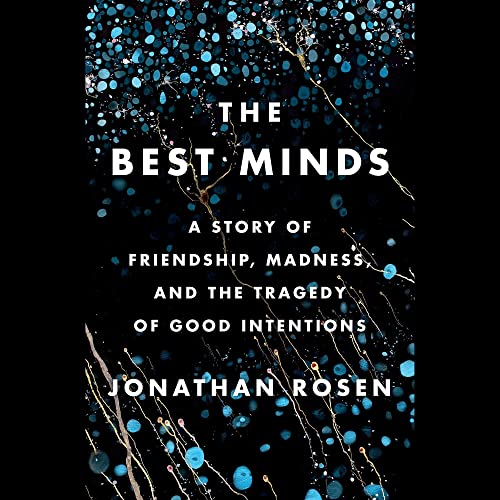
SCHIZOPHRENIA

Being one of “The Best Minds” is of little help in coping with schizophrenia’s symptoms.

Blog: awalkingdelight

Books of Interest
 Website: chetyarbrough.blog

“The Best Minds” A Story of Friendship, Madness, and the Tragedy of Good Intentions

By: Jonathan Rosen

Narrated by: Jonathan Rosen

Jonathan Rosen (Author, Yale graduate–Accepted but dropped out of a PhD English program at Berkeley.)

Jonathan Rosen tells the story of his boyhood and adult friendship with Michael, a boy of his age who excels academically and professionally as a young graduate of Yale. Michael has a mental breakdown in his early twenties. He is diagnosed as schizophrenic. Rosen compares his years of adolescence with Michael’s.

Rosen’s stricken friend excels in every academic and business pursuit he undertakes before his slip into schizophrenia. In reflecting on the boy’s relationship, Rosen explains his perception of himself is as a grade school and high school plodder who prefers literature to math and the sciences. In contrast, Rosen suggests Michael’s academic qualities give him the ability to read, understand, and recite literary and science subjects with the ease of a savant. Michael reads everything with speed and understanding while Rosen labors over his studies.

The irony of Rosen’s perception of himself is that despite their differences, both he and Michael are accepted at Yale.

Rosen becomes an editor of the University’ newspaper, and later, a published author. Michael aspires to the editorship of the Yale paper, tries to become a published author, but is unsuccessful. Before graduation, Michael is recruited by a prestigious publicly held investment firm and seems on his way to great wealth and success. Instead, Rosen explains Michael leaves the investment company and begins to lose his way in life. Michael slips into a schizophrenic state that diminishes his eidetic memory and gives him a combination of debilitating psychological symptoms. At the height of Michael’s illness, he threatens his mother with a knife. With the persuasion of his father, Michael agrees to admit himself to a psychological ward which finally diagnosis his schizophrenia.

Michael, Rosen’s brilliant childhood friend, is admitted to a psychiatric ward for treatment designed to isolate and medicate its patients into a fog of confusion that is designed to lessen paranoid depression.

Rosen’s long introduction of himself and Michael seems prelude to an explanation of the ineptitude of the American psychiatric industry. Michael’s journey is an indictment of the American system of treatment for mental dysfunction. Michael is eventually discharged but is placed in a group home with other patients suffering from mental dysfunction. They share bedrooms with medications designed to isolate and offer palliative care that deadens their psychological symptoms.


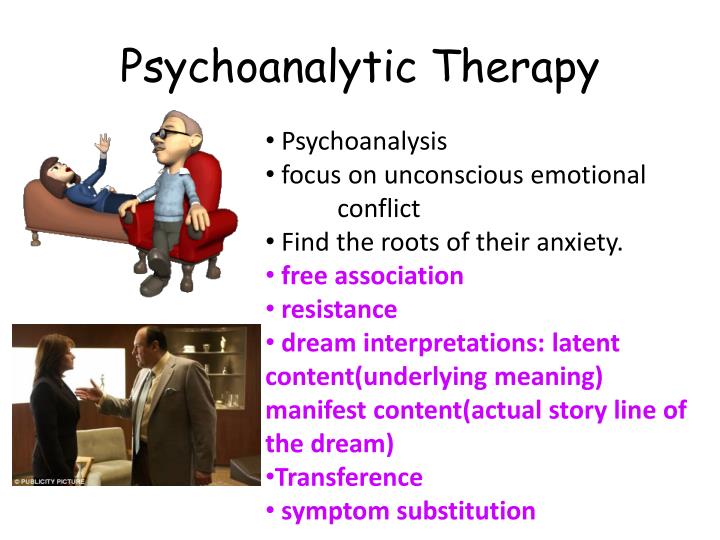
Michael continues his treatment with the aid of minimal income from a government disability program that helps pay for his accommodation and psychoanalytic therapy.

He is directed to reengage life by his therapist with work as a clerk at a Macy’s Department Store. Michael’s father is incensed by the therapist’s diminishment of his son’s accomplishments and begins a campaign to have Yale reengage his son in pursuit of a law degree. With the help of Yale’s faculty, Michael is readmitted to the University.

Ironically, the Yale faculty and students become a caring haven that helps Michael cope with his medical condition.

However, Yale’s help is only palliative, not curative. Michael remains schizophrenic, only ameliorated by drugs and the calming influence of Yale students and faculty. His paranoia continues and becomes more severe when his father dies.

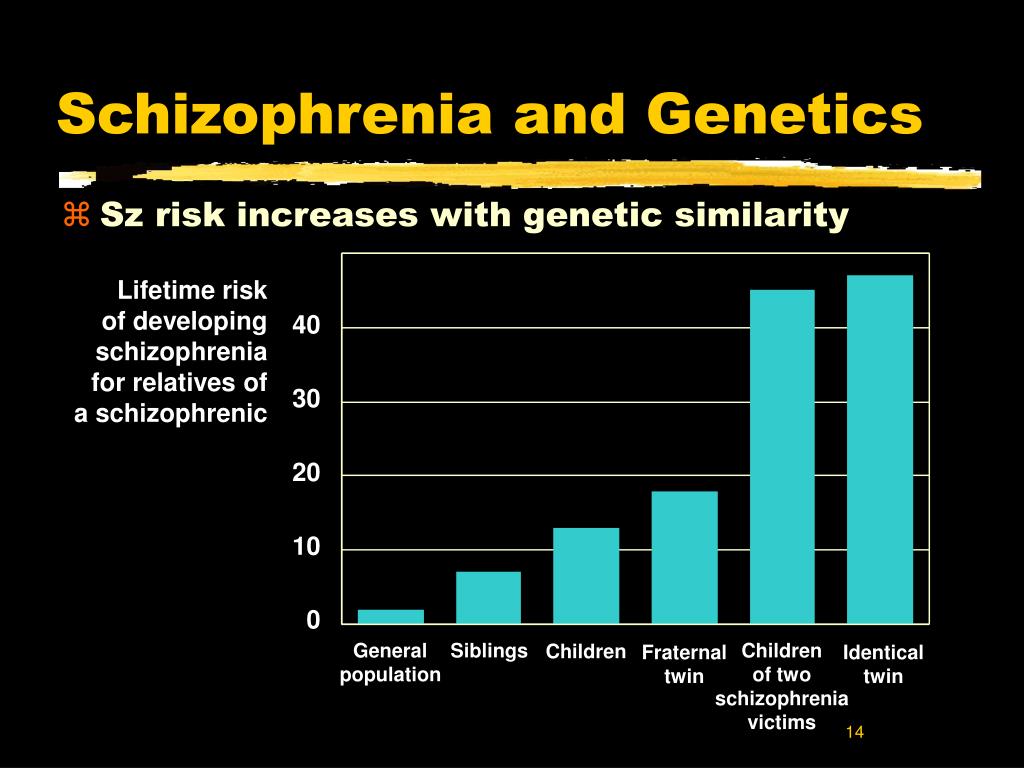
Schizophrenia affects only 1% of the population but has a higher risk of contraction from first degree relatives. (Michael’s grandmother was diagnosed with the disease.)

Michael seems on a road toward managed recovery with a detailed intellectual explanation of what schizophrenia is to him and how it creates delusional images that threaten his existence. His intellectual ability to explain his illness to the public attracts book publishers and the film industry to offer him over a million dollars for a book and film about his life. As this financial windfall becomes real, Michael and his fiancé plan to marry.

On June 17, 1998 Michael B. Laudor stabs his pregnant fiancé, Caroline Costello.

In a schizophrenic episode, Michael grabs his fiancé from behind, stabs her several times, and cuts her throat. Michael leaves her to die on their kitchen floor. Rosen notes that Michael quit taking his medication. He lost control in an episode of paranoia that viewed his fiancé as a maleficent alien presence. It seems a recurrence of what happened with his mother when he was thankfully convinced by his father to voluntarily commit himself to a hospital ward.

What becomes increasingly clear in Rosen’s biographical story is that there is no cure for schizophrenia.

Schizophrenic treatment is a life-long process that requires medication and a support system from caring caregivers, both professional and familial. Being one of “The Best Minds” is of little help in coping with schizophrenia’s symptoms. It requires lifelong assistance because it affects a person’s thinking, emotions, and interactions with the world.

Michael is charged with second-degree murder but is found not guilty by reason of mental defect. He is eventually committed to the Mid-Hudson Forensic Psychotherapy Center in New Hampton, New York in which he remains as of 2023.

(This is a terrible and tragic story. Rosen’s detailed research shows Caroline Costello was a good person, willing to help others, intending to adopt her husband’s faith, and trying to care for Michael in his struggle with an incurable brain dysfunction.)

RESPECT

Every human being has a life story. A few human beings like those in Verghese’s book show that respect for every life carries the hope of civilization.

Blog: awalkingdelight

Books of Interest
 Website: chetyarbrough.blog

“The Covenant of Water”

By: Abraham Verghese

Narrated by: Abraham Verghese

Abraham Verghese (Author, American physician, Professor of the Theory and Practice of Medicine @ Stanford University Medical School.)

As an immigrant, Abraham Verghese began working in America as a hospital orderly. His hospital experience led him to pursue a medical degree. His experience as a world traveler and physician gives weight to his writing about medical diagnosis, brutal loss of life, societal norms, the importance of belief, and human vulnerability. Verghese tells a story from the beginning of the twentieth century through two world wars. Its story is of two physicians (one from Sweden another from Scotland), and a resolute lower caste family in India.

Water surrounds the world like an agreement that ties all people together, for better or worse.

The author of “The Covenant of Water” emigrated to America when Haile Selassie was replaced by a Marxist military government in Ethiopia. One wonders if cultural conflict of interest may be more pernicious when land masses are separated by bodies of water. “The Covenant of Water” implies otherwise. Like any lasting covenant between parties, respective self-interests must be addressed and respected. When they are not, all parties suffer. At one point, Verghese suggests “The Covenant of Water” washes away life’s troubles. The tragedies he recounts suggest the real truth is that life’s troubles never wash away. Troubles remain within us in memory and only truly disappear in death.

India’s Saint Thomas Christians date back to the 3rd century. An estimated 4,000,000 St. Thomas Christians live in 21st century India.

Verghese’s story holds together through the generations of an Indian Christian family from the early 1900s through two world wars and the beginning of the 70s. Part of the story’s interest is in Great Britain’s colonization of India and its historical perspective. At the forefront of the story, there is the inevitable cultural conflict in any countries’ colonialization of another. Verghese shows no clear line can be drawn between exploitation and improvement of a colonized society whether its native American in North America, Aboriginal in Australia or of a lower caste family of a minority religion in India. Verghese interweaves an insightful story that magnifies reasons why cultural difference is only overcome on a person-to-person basis. India will always be India to its native citizens. Today, a similar truth is being played out in Gaza and Israel. Palestine will always be Palestinian just as Israel will always be Israeli.

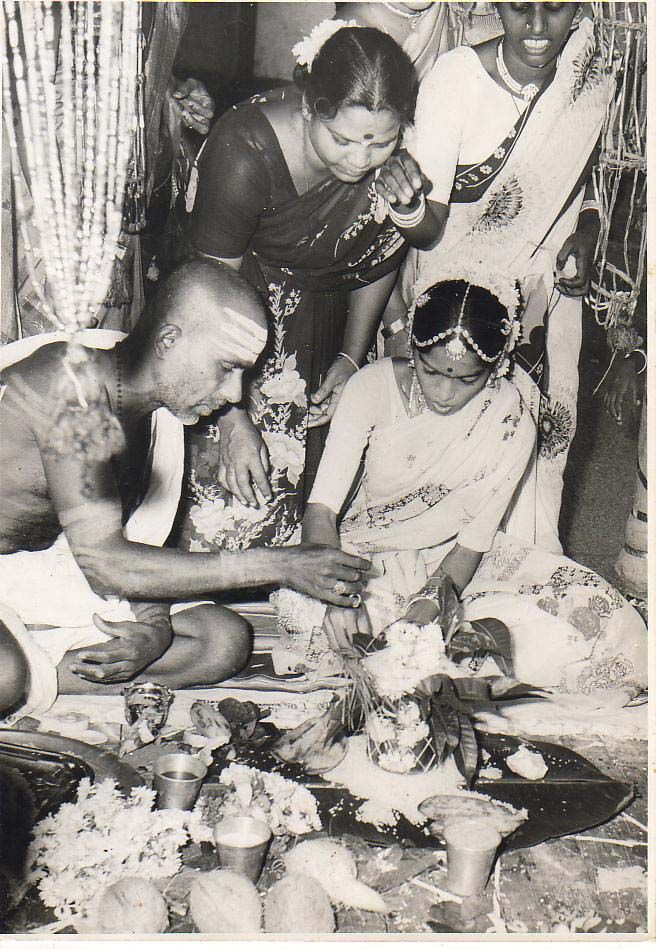
Verghese’s story begins with an India wedding betrothal of a 12-year-old girl to a 40 something widow who has lost his wife to illness.

The betrothal is made at the recommendation of the husband’s relative who as a matchmaker researches the background of the betrothed’s family. The chosen bride is naturally afraid to leave her family and the groom is unsure of what he wishes to do. The matchmaker assures the groom the betrothal is a good one for him, and the marriage is consummated. The young girl travels from her home to her new husband’s property many miles away. Her greatest unhappiness is in leaving her mother but she is greeted by her new household by a helpful older woman. The young girl is comforted by her Christian beliefs and receives an omen of welcome by a massive bull elephant that had been saved by her new husband. 

The incongruity of ages in this marriage is disconcerting to many listener/readers. Verghese non-judgmentally explains the culture of India in the early 1900s.

(World travelers will recognize remnants of that betrothal culture exist in India today.) The husband has a two-year-old son from his former marriage. He is a landowner as a result of personal ambition and hard work. He is not rich but is well respected by the people that know him. The husband treats his new bride with respect, and she begins to care for the household and her new stepson. They first have intimate relations when she turns 17. Their first child is a daughter who has a developmental problem that limits her intellectual growth. After two miscarriages, she has a boy who is a binding connection for the story. She grows to love her husband who dies when his child wife reaches her thirties. She becomes the matriarch of the clan.

This sets the tenor of Verghese’s story. It is a long, long, some might say too long story that repeatedly reminds one of how important it is to respect other people’s cultural beliefs while all life is filled with hardship and change.

Listener/readers will get a glimpse of India’s, as well as Great Britain’s, and Sweden’s cultures with the introduction of a Scottish and Swedish surgeon. What the main characters hold in common is that they have underlying respect for the life of others in any culture, whether rich, poor, educated, or unschooled. The two doctors, the child bride and her son are heroes and victims of their times.

Each of the main characters in Verghese’s book have unique life stories but a common thread of belief is respect for the life of all, cultural acceptance and understanding, and life-long pursuit of education.

The Swedish doctor travels the world to settle in a remote part of India to recreate a refuge for victims of leprosy.  The Scottish doctor, after a life-threatening injury, becomes a patient of the Swedish doctor to be figuratively reborn by his experience after the Swede’s death. As true of the India family, the Scottish doctor’s life is dramatically changed by tragedy. The Swede dies at the refuge after having rehabilitated the Scottish physician’s burned hands. The Scott has been introduced to supporters of the Swede’s practice at the Leper colony and he evolves into a business owner/manager that makes him wealthy.

The son of the India child-bride saves a young child from drowning in a flood that whisks him and a nearly dead victim to the Swedish doctor’s clinic where the physically unable Scottish surgeon directs the boy in how to incise the babies throat to save the baby from asphyxiation. The young boy saved the babies life and overcame a hearing deficiency to become a social leader of his village in India during and after WWII.

The young boy, now a man, falls in love with a woman of his age that he had met when he saved the nearly drowned baby. They marry and have a child of their own. The child dies in a tragic accident. The loss of the child is felt to be the fault of each parent which tears their relationship apart. It never mends as the tragedy of their relationship continues to unfold. Their marriage falls apart. At this point the Scottish doctor re-enters the story with an unexpected revelation about the wife who leaves and returns because of the loss of their child. What is meant by “…loss of their child” is an added chapter to this tragedy that extends the story beyond one’s imagination.

Verghese shows himself to be an excellent writer but to some listener/readers the denouement of his story is a step too far for one’s imagination.

Every human being has a life story. A few human beings in Verghese’s book show that respect for every life carries the hope of civilization. Without respect between those who are different, Verghese shows why human dysfunction and tragedy will remain a condition of human society.

RELIGION AND SCIENCE

Evolution may ultimately reveal the truth of life and death but neither religion nor science have been historically infallible nor unerring.

Blog: awalkingdelight
 Website: chetyarbrough.blog

Scientism and Secularism: Learning to Respond to a Dangerous Ideology

By: J.P. Moreland, Dan Egeler-Forward

Narrated by: Mathew McAuliffe

J. P. Moreland (Author, American philosopher, theologian and Christian apologist.)

“Scientism and Secularism” is a disappointing polemic on an important but highly biased assessment of religion and science. No one escapes the bias of belief because of their life experience. J. P. Moreland’s life experience leads him to believe God is the proven origin of life. For many that is not how they became believers or non-believers. Belief in God is an evolutionary belief just as truths of science have evolved with newer discoveries.

The horrible consequences of religious belief have murdered millions of human beings.

Moreland’s book is a tiring replication of faith not factual certainty or proof of God’s existence. Religion, like science, has evolved over centuries of human existence.

Maybe there is God, but Moreland’s God is only Moreland’s God, a God founded on faith not proof.

Who in their right mind would not want a God that is omniscient and omnipresent that ultimately ensures the fair treatment during life and after death?

As a discipline, philosophy addresses fundamental questions about the nature of reality, knowledge, and existence. It plays an important role in science because it provides a framework for empirical evaluation, but categorization as a philosopher is not evidence of truth. At best, Philosophy is only a beginning of knowledge, not proof of knowledge.

Moreland denies evolution but history shows both religion and science have evolved over the centuries with immeasurable pain and gain for society. Moreland argues Darwin is wrong about the evolution of man. Moreland argues the randomness of genetic selection and time are not an experimentally proven explanation of the perfection and distinction of animal species. Really?

The only area of agreement one may have with Moreland is that great achievements in the world of ideas and things could not have been created without the existence of both religion and science. Evolution may ultimately reveal the truth of life and death but neither religion nor science have been historically infallible nor unerring.

POWER OF BELIEF

The power of belief in science or religion both leads and misleads humanity. Humans may not forgive but they often forget.

Blog: awalkingdelight
 Website: chetyarbrough.blog

The Hiding Place

By: Corrie ten Boom, Elizabeth Sherrill, John Sherrill

Narrated by: Wanda McCaddon

This is the life story of Corrie ten Boom and her experience in WWII. It is an autobiography written with the help of the Sherrills who have written or co-authored over 30 books translated into more than 40 languages. Though Ms. ten Boom and the Sherrills have passed, “The Hiding Place” is a paean to religious belief that has sustained civilization.

The belief eulogized in “The Hiding Place” is Christian, but it could be any faith. Whether Islamism, Hinduism, Buddhism, Shintoism, Sikhism, Judaism, Taoism, Confucianism, Caodaism, humanism, naturalism, “…ism” is belief in something greater than oneself.

Corrie ten Boom’s biography illustrates the opposing forces of a human need for belief in something greater than oneself. As noted by other authors, the civilizations that exist today would never have grown without belief in an “…ism” greater than the individual, family, or tribe. Corrie ten Boom is a believer in the Christian Bible and its Word. That belief drew her and her family to protect Jews from the Nazi occupation of the Netherlands.

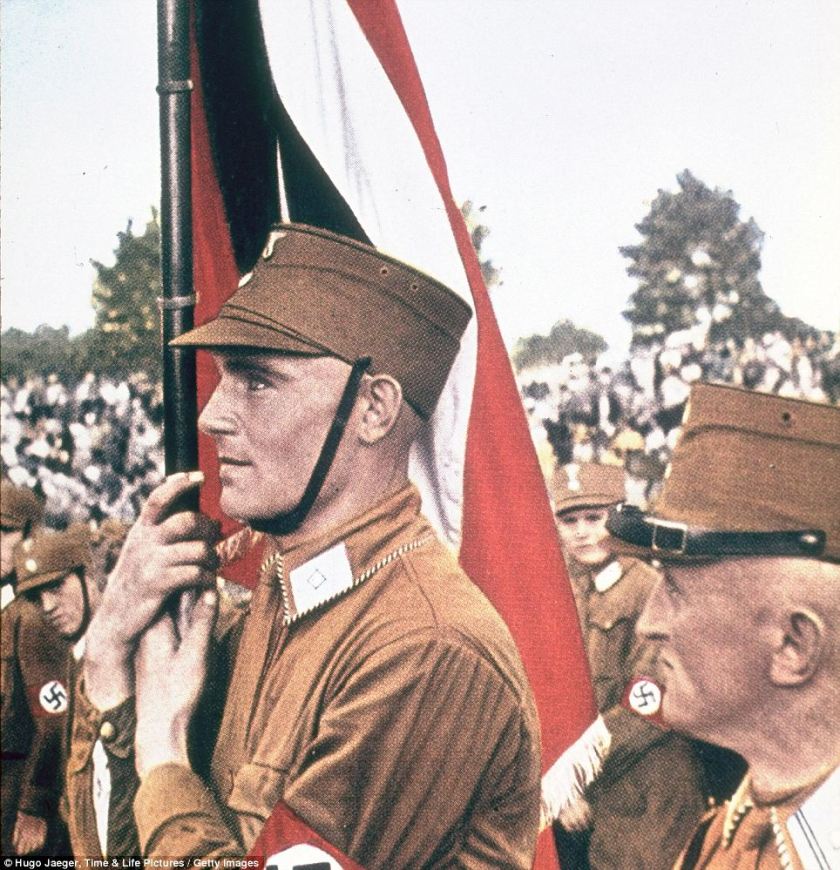
The rise of Nazism in Germany was a political ideology, secular in its origin, and loosely based on belief in science.

Science is a systematic method of gaining knowledge about nature, its causes and consequence. Like every belief system, science is based on human cognition which can lead or mislead humanity. Neither science nor religion have omniscient or omnipresent insight to the nature of the universe because of the human mind’s limitations and interpretations of facts and events. Religion, like science, can lead and mislead civilization because of human limitation and interpretation.

Thankfully, Corrie ten Boom’s family’s belief in the Bible led them to aid Jews when they were persecuted by the false science of German Naziism.

The relevance of “The Hiding Place” resonates today in the conflict between Palestinians and Jews in Israel and Palestine. One can see a conflict between religion and science in the tragedy that is unfolding in Gaza. Both Hamas and the Jews use their religious beliefs and the science of war to kill each other. As in all war, there is no winner. The death of 6,000,000 Jews in WWII and the slaughter of Jews at the festival in Israel are horrid and unforgivable, but can they or should they be used as justification for the horror of what is happening in Gaza?

She follows her religious belief to do what she could to save her Catholic family and Netherland’s Jews from Nazi’s societal and science ignorance. What forgiveness there is in Corrie ten Boom’s book is only in the acceptance of the Word in her Bible. The power of belief in science or religion both leads and misleads humanity. Humans may not forgive but they often forget.

GENDER, RACE, LIFE

There is something interesting about Oyeyemi’s story, but its fundamental value is in its creativity, not its revelations about race and gender or America’s failure to equitably deal with social dysfunction.

Audio-book Review
By Chet Yarbrough

Blog: awalkingdelight
 Website: chetyarbrough.blog

Boy, Snow, Bird

By: Helen Oyeyemi

Narrated by: Susan Bennett, Carra Patterson

Nigerian author raised in London since the age of four.

Helen Oyeyemi tells the complicated life of a 20-year-old woman who chooses to run away from home. In the 20th century, running away from home was a child of 13 to 17, not 20. Today, being 20 and running away from home implies a 21st century economic reality. Every run-away has their own reason for leaving home. It can be a social, economic, emotional, or a combination of reasons. Oyeyemi’s main character, Boy, seems a combination. However, societal dysfunction seems at the heart of her story.

Boy is a young white woman who is unhappy with her father who abuses her emotionally with a trace of physical abuse. Boy in preparation for her flight secrets enough money to take a bus ride from New York City to the Boston area. Something is odd about Oyeyemi’s main character. Why would a parent name their daughter “Boy”?

Boy explains her father demands participation in his rat catching business that supports their family. Her father explains Boy’s mother is dead and that this is their life now. The story drags a bit in its first chapters because Boy seems a typical run-away looking for whatever work she can find to pay her rent and eat.

Boy meets her future husband whom she commits to but not for love but an undefined need that may be as simple as security or companionship.

Boy’s future husband is an educated historian who chooses to leave a professorship to become an artisan who makes odd jewelry. He has a young daughter from a former marriage and has disappointed his family by abandoning his professorship. His daughter’s name is Snow. Snow is characterized as a blond grade school age beauty with excellent social skills that endears her to others.

With this character introduction, the story takes a dramatic turn. Boy becomes pregnant. Her child is black rather than white.

Her new husband, who appears white, is of mixed parentage. He has an obviously black sister who is estranged from their mother though he stays in touch with her. Boy names her newborn “Bird”. Boy decides to send Snow to live with her husband’s sister while she raises Bird. The separation of Snow from her father and Boy estranges her from her stepmother. However, she manages to become a private detective in her new home with her father’s sister.

Oyeyemi further complicates her unusual story with a reveal about Boy’s life with her father. Her father is a transgender woman who cared for Snow’s mother after she had been raped by a black man. She became pregnant with Boy.

An author in Oyeyemi’s epilogue becomes interested in Boy’s life. The author begins researching Boy’s life. She finds Boy’s mother’s death had left her to the care of a transgender “father”. The dynamics of these many relationships reveal the complications of gender and race in American society. There is something interesting about Oyeyemi’s story, but its fundamental value is in its creativity, not its revelations about race and gender or America’s failure to equitably deal with social dysfunction.

SEPARATE NOT EQUAL

Reflecting on “Blood Brothers”, a listener understands America is a long way from the ideal of equality. Being equal does not mean everyone can be the greatest heavy-weight boxer in the world. Equality means every citizen can choose to be the best version of themselves without being repressed by the society in which they live.

Audio-book Review
By Chet Yarbrough

Blog: awalkingdelight
 Website: chetyarbrough.blog

Blood Brothers (The Fatal Friendship Between Muhammad Ali and Malcolm X)

By: Randy Roberts Johnny Smith

Narrated by: David Drummond

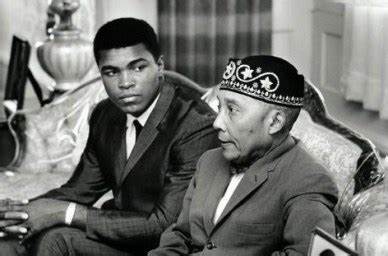
Randy Roberts and Johnny Smith offer a nuanced and well-written view of Muhammed Ali, his fame, his skill as a heavy weight boxing champion, and figure head for the Nation of Islam (NOI). The author’s juxtapose Ali and Malcolm X as “Blood Brothers” who shed light on the unquestionable value and horrendous harm religious belief can impose on society.

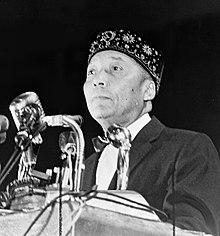
Roberts and Smith show human nature is an unconquerable beast that both leads and misleads humanity. The maturity and personal growth of Muhammed Ali and Malcolm X is revealed in “Blood Brothers”. They both become members of NOI, an American faction of Islam, that preaches Black America can only be equal through separation from non-black people. Elijah Muhammed, a self-proclaimed Messenger of Allah, creates a fellowship of Black Muslims (NOI) who insist on a Black American nation, independent of American governance. Elijah Muhammed insists–in order to become democratically free and equal to non-Black American citizens, an independent Black American nation must be formed.

What Roberts’ and Smith’s history shows is NOI’s flaw is in belief that separate can ever be equal based on race, religion, or color.

Though self-worth and pride can be immeasurably enhanced by exclusionary race, religion, or difference what is missed is the truth of human nature. Human nature is riven with self-interest based on money, power, and/or prestige. Elijah Muhammed and other leaders of religion are human. Religious leader’s self-interest drains the life out of Divinities force. In one sense, NOI offers a sense of pride and equality for Black Americans but in another, it creates further discrimination and inequality with separation and distinction from others.

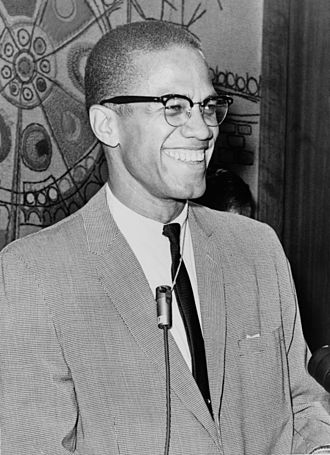
Roberts’ and Smith’s story of Malcolm X, and to a lesser extent, Muhammed Ali’s friendship, show how religion can bring people together, but also tear them apart. Malcolm X evolves from an intelligent street punk to an insightful leader of the Muslim religion. Malcolm becomes a favorite of NOI until he challenges its leader (Elijah Muhammed) for abandoning what he believes is a fundamental tenant of the faith, marriage chastity. Malcolm X exposes extra-marital affairs of Elijah Muhammed as evidence of the leader’s fall from faith. As his disaffection grows, Malcolm X begins to believe separate cannot be equal and that NOI’s belief in separation of the races is a violation of a faith that says Allah or God created all humankind.

Elijah Muhammad (Leader of NOI 1934-1975, Born in 1897 as Elijah Robert Poole, Died at age 77 in 1975.)

Malcolm X is a teacher of Ali before his break with the leader of NOI. Malcolm X appeals to Ali’s innate ability as a fighter and doggerel actor for truth and justice. Ali is put in the position of following Malcolm’s differences with Elijah Muhammed or staying within the Nation of Islam. The authors infer Ali looks at Elijah Muhammed as the father he wishes he had while Malcolm X as a brother who has been led astray.

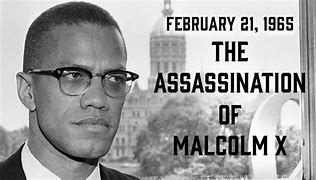
To the authors, the assassination of Malcolm X by NOI’s followers is inferred by Ali to be a threat to his life if he forsakes NOI’ beliefs. When Elijah Muhammed dies, some years after Malcolm’s assassination, Ali revises his view of NOI and leans more toward the teachings of his former friend, Malcolm X. Ali moderates NOI’s anti-white sentiment.

Reflecting on “Blood Brothers”, a listener understands America is a long way from the ideal of equality. Being equal does not mean everyone can be the greatest heavy-weight boxer in the world. Equality means every citizen can choose to be the best version of themselves without being repressed by the society in which they live.

SOCIETIES’ EVOLUTION

Audio-book Review
By Chet Yarbrough

Blog: awalkingdelight
 Website: chetyarbrough.blog

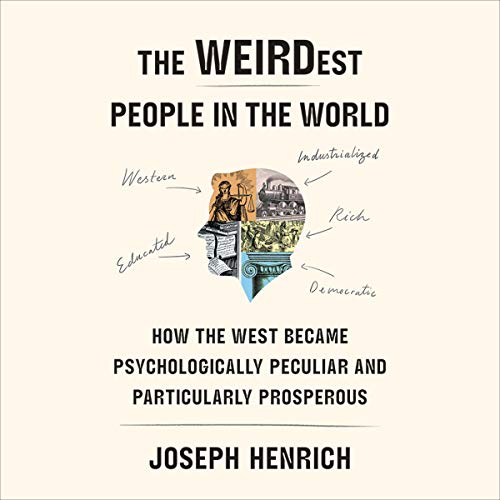
The WEIRDest People in the World (How the West Became Psychologically Peculiar and Particularly Prosperous)

By: Joseph Henrich

Narrated by: Korey Jackson

Joseph Henrich (American author, professor of human evolutionary biology at Harvard, former professor of psychology and economics at the University of British Columbia.)

Joseph Henrich writes an explosive book focusing on social evolution. The explosion is in the first half of the book. The remainder has a few firecrackers but no explosions. His erudite research infers much of the world will either evolve in a western world way or degrade into an economically and politically poorer and disruptive society that distrusts the western world and foments military and political opposition. If Henrich’s analysis carries some truth, one hopes the western world will persist within a more secular religious belief system that will preserve the earth’s environment.

Henrich’s argument is that the rise of religion and the concept of gods and God changed the world from tribalist, kinship’ enclaves to nation-state societies. In the early days of human habitation, Henrich’s research suggests tribes of people developed society based on kinship. However, societies evolution into larger communities is burdened by the limitations of kinship. Henrich suggests history shows political and economic relationships fall apart when kinship is the sole cohesive force of society. Both kinship and religion remain important, but religion became the more significant and cohesive part of society. Kinship’s weakness is that it limits the size of community. The growth of religion incorporated kinship to provide greater social cohesion for larger political and economic systems. Rather than kinship as the only cohesive force of society, people began to believe in something more than familial relationships. With the creation of religion, the idea of a supreme being and a moral center for “the-many-rather-than-the-one” offers a concept of societal cohesion beyond kinship.

TRIBES OF THE WORLD

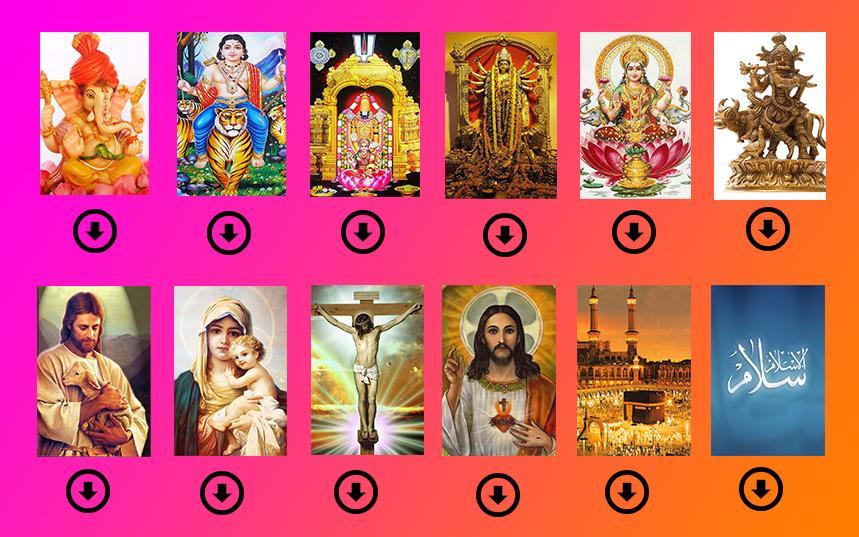
The big five religions, Christianity, Judaism, Islam, Hinduism, and Buddhism became a cohesive force for nation-state development. (Of course, there are more religions than these five, but they account for 78% of the world’s population.) Religious belief provides a societal force that expands the concept of tribal communities to nation-state and, to a degree, eastern and western hemispheric cohesiveness.

However, it seems the world (particularly the western hemisphere) is becoming more secular.

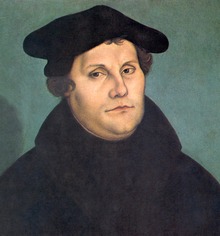
One may argue advances in science erode religious beliefs. However, Henrich infers that erosion became a landslide in the western world with Martin Luther’s posting of the 95 Thesis on the Castle Church on October 31, 1517. Luther’s posting marks the beginning of the Protestant Reformation. Henrich argues the power of religion evolves with the church’s holiness, social objectivity, and political fairness being challenged by the public. Luther exposes the perfidy of the church for selling indulgences for parishioners to erase their sins to pave their way to heaven.

Whether the motivation is the posting, innate human curiosity, or the invention of the Guttenberg press (1440), history shows the public began to learn how to read and write. The public wishes to understand the world as it is, rather than how leaders of the church report their interpretation of God and the Bible.

The consequence of these two sociological conclusions benefited the western hemisphere more than the eastern hemisphere. One concludes that may be related to the way religion is viewed in the west versus the east, with the caveat that such a generalization ignores the reality that many eastern hemisphere countries have predated, if not exceeded, the economic and social growth of the west.

However, it seems those eastern hemisphere countries that have emphasized religion over secular human interests have lagged behind western economic and social growth. Henrich’s sociological studies imply a balance is needed between religious and secular belief for economic and social growth to achieve peace among nations. It seems nations of the world need to reconcile belief in religion with the social needs of society for earth to survive as the home of humanity.

Henrich ends his sociological analysis with two fundamental requirements for civilizations’ continued advancement. Contrary to an oft assumed cause being the lone genius that invents something new or discovers some unknown truth of science, Henrich suggests interconnectedness and diversity are the foundation of civilizations’ advance.

If Henrich’s theory of society is correct, humans need to quit killing each other and embrace diversity with the tools of technological communication and innovation that will come from respect for different cultures. From that foundation, innovation will change the world and earth will have a chance to become a place of peace and prosperity.

ECONOMIC EVOLUTION

The demographics of life demand better care of the human population and the environment. Power, whether from individual wealth or ruling authority, needs to be refocused on service.

Audio-book Review
 By Chet Yarbrough

Blog: awalkingdelight)
 Website: chetyarbrough.blog

Braiding Sweetgrass: Indigenous Wisdom, Scientific Knowledge and the Teachings of Plants

By: Robin Wall Kimmerer

Narrated by: Robin Wall Kimmerer

Robin Wall Kimmerer (Author, Professor of Environmental and Forest Biology, PhD from the University of Wisconsin-Madison.)

Robin Wall Kimmerer’s “Braiding Sweetgrass” channels a movement for economic change around the world. Capitalism and socialism are evolving in similar ways to respond to the world’s ecological crises. Neither economic system is capable of dealing with the crises because of the governing weaknesses of their evolution. Capitalism, like socialism, is driven by human nature’s self-interests. With capitalism, unbridled self-interest views individual wealth as a measure of success. Socialism views unbridled power as a measure of success. Neither freedom of capitalism nor the power exercised in socialism will stop earths’ despoliation.

Kimmerer tries to convince listeners to recognize their self-interest is in caring for the ecology of earth and its environmental and human diversity.

This is not a new argument. Sir David Attenborough, Jonnie Hughes, Joseph Marshall III, Charles Mann, Barry Lopez and others make similar arguments. Even though they may be right, human’ interest in balancing ecology and diversity will only happen with governance that is neither purely capitalist nor purely socialist.

Kimmerer, as a scientist and descendent of the Potawatomi Indian nation, has dedicated her life to nurturing the earth with her education as a botanist. She reflects on her spiritual beliefs, historic values of her heritage, and her education to change the direction of earth’s despoilation. Attenborough and Hughes write about the importance of rewilding the world. Joseph Marshall III argues science offers the opportunity to rebalance the relationship between humanity and nature. Charles Mann recalls the history of William Vogt and Norman Borlaug with Vogt arguing for conservation while Borlaug argues for scientific research to deal with overpopulation and hunger. A more sanguine view is taken by Barry Lopez who simply catalogues and implies the demise of earth because of human habitation.

At times, Kimmerer’s solutions are too mystical and spiritual. Some of her tales will dispirit listeners. On the other hand, some of the mythology she writes about is entertaining, if not actionable.

The character of “Windigo” is a representation of the weakness of capitalism and its extremity that entails the growth of greed. Her tales of the creation of humanity reflect on the strengths and weaknesses of human nature.

What Kimmerer offers listener’s is contemplation, if not realistic solutions for earth’s despoilation.

What is wrong with capitalism and/or socialism that can be corrected to stop earth’s deterioration? It is in a middle way where money and power are not ends in themselves but tools for improvement. Service to all species of life is an objective that can only be achieved with money and power. A cultural shift is required to understand what can be done. There needs to be a shift from manufacturing and industrial growth to a service-based economy. With the advent of technology, particularly A.I. that shift is happening.

Homelessness, hunger, disease, natural disasters, pollution, mental dysfunction, failing public education, racial and religious discrimination are all solvable problems in the world. Money and power are the tools that can be used to solve those problems, but it requires the will of governments to manage those tools to focus on service to society, not manufacture of things that do not conserve the environment. This is evident in the too-long story written by Kimmerer. There is an element of irony in her book because that is what her Indian heritage practiced hundreds of years ago. Indian tribes had no need for money, but their Chiefs used their power to care for land and its diversity that served their people’s needs.

Money has become synonymous with power in both capitalist and socialist economies.

Even Indian societies in America have adopted that reality with the building of Casinos. What is missing is how that power is being used. Kimmerer explains power should be used to serve the earth’s rebirth and the needs of all life. The obvious point is that without earth’s rebirth, human society ends. The future of the world is dependent on service, not manufacturing. The demographics of life demand better care of the human population and the environment. That job can be fulfilled with a reorientation of the world’s economic rewards and punishments. Power, whether from individual wealth or ruling authority, needs to be refocused on service.

BROKEN

Laurel Snyder’s story is as interesting and satisfying in its end as in its beginning.

Audio-book Review
 By Chet Yarbrough

Blog: awalkingdelight)
 Website: chetyarbrough.blog

My Jasper June

By: Laurel Snyder

Narrated by: Imani Parks

Laurel Snyder (American Author, Poet, writer of children’s books, and PBS commentator.)

“My Jasper June” is a beautifully rendered story of life by Laurel Snyder. Snyder shows different ways of coping with life’s broken parts. It takes place in Atlanta, Georgia, but it could be in Anywhere, America. It is a story of a 13-year-old girl, her friend, and her family. Every parent who has a teenage child will be entranced by Snyder’s tale.

Having lived long, older reader/listeners know every life has broken parts. We either recover from the broken parts or we lose our way.

Snyder’s novel of a family who loses a son from drowning may be at the extreme end of life’s broken parts, but every life is touched by loss and hardship.

Snyder shows how a mother, father, and daughter respond to a child’s loss in their family.

Snyder’s story explains a broken part in life is suffered individually. Being broken comes in many forms. It may be a death of a loved one, failure in work, failure as a mother-father-daughter-son, failure in intellect, failure in physical health, so on, and on. Every person is broken in their own way. Care for broken parts is often lost in a fog of grief and despair. That grief and despair only disappears with time, understanding, and action.

Snyder’s novel shows grief is ameliorated with acceptance and reworking of one’s perspective.

Snyder’s story is not just about a death in the family. There are many ways Snyder’s story resonates with its reader/listeners. The most significant is in ways of coping with broken parts of one’s life. Some run from problems, but as the boxer Joe Louis famously said, “You can run but you can’t hide.” Snyder shows healing from broken parts can only begin with being honest with yourself and those around you. Understand how you are broken and explain the broken parts to those who are important to you. Snyder shows with understanding of what is broken, plans can be made, and actions taken.

Snyder’s novel shows–only with honesty of explanation can one’s relationship with another be restored.

Laurel Snyder’s story is as interesting and satisfying in its end as in its beginning.